
Surrounding us in the air, in contact with the soil, on everyday objects, and even on our skin are billions of microorganisms—bacteria, viruses, fungi, and parasites. While the majority of these are harmless or beneficial to our bodies, certain harmful pathogens take advantage of opportunities to enter the body and cause infections. Various illnesses, including colds, the flu, diarrhea, food poisoning, and certain skin infections, can spread through germs. Sometimes infection spreads via contaminated hands, sometimes from unclean food or drinking water, and other times through an infected person’s cough, sneeze, or close contact. Not all infections spread in the same way, so prevention methods can vary depending on the type of infection.
Preventing infection does not require massive expenses or complex techniques. By following a few very simple everyday behaviors and hygiene rules in a scientific manner, it is possible to protect yourself and your family from more than 90 percent of infections. In this comprehensive blog, we will discuss how common infections enter the body, which daily habits stop the spread of germs, and simple, effective rules to keep every family member germ-free.
How Does Infection Spread? (The Chain of Infection)
Understanding how germs travel from one person to another or from the environment into the body makes stopping infections much easier. In medical science, this is known as the “Chain of Infection”:
Source of Germs (Infected Person / Surface)
↓
Portal of Exit (Sneezing, coughing, stool, saliva, blood)
↓
Mode of Transmission (Hands, air, food, water, mobile screen)
↓
Portal of Entry (Eyes, nose, mouth, broken skin)
↓
Falling Ill (Person with weak immunity)
Essential Everyday Habits to Prevent Infection
1. Proper Hand Hygiene: The First Fortress Against Infection
Our hands are the most active parts of our body, and unfortunately, they are the largest medium for transferring germs. Our hands come into contact with various objects throughout the day—door handles, mobile phones, money, shopping bags, railings of public transport, and various surfaces. Some of these may harbor germs.
Eating food with unwashed hands or touching the eyes, nose, and mouth can allow certain germs to enter the body. Therefore, keeping hands clean is critically important.
When should you wash your hands?
- Before preparing food and before eating.
- After using the toilet.
- After coughing, sneezing, or blowing your nose.
- After returning home from outside.
- After handling garbage.
- Before and after caring for a sick person.
- After handling raw fish, meat, or eggs.
- After changing a baby’s diaper.
- After cleaning pets or their waste.
2. Drink Safe and Clean Drinking Water
Contaminated water can cause various types of stomach infections and diarrhea. Even if water looks clear, it can contain disease-causing pathogens. Therefore, one cannot determine whether water is safe simply by looking at its color or smelling it. Boil water, purify it properly, or use safe drinking water according to local health guidelines. Boiling water helps destroy many types of pathogens.
3. Household Environment & Surface Sanitization (Clean Surfaces)
Even when we keep our homes clean, there are specific areas known as germ hotspots.
- Smartphones: The Invisible Warehouse of Germs: Various studies have shown that a person’s smartphone screen can harbor up to 10 times more bacteria and germs than an average toilet seat! This happens because we take phones into the bathroom, place them on dining tables, and use them with unwashed hands.
- The kitchen is the primary hub for food-borne illnesses:
- Keep chopping boards separate: Use one dedicated cutting board for raw fish and meat, and a completely separate board for salads or vegetables.
- Kitchen sponges and cloths: Because dish-washing sponges or foams stay damp, billions of bacteria breed there. Disinfect sponges by soaking them in boiling water at least once a week, or replace them regularly.
- Cover cooked food: Do not leave cooked food at room temperature for more than 2 hours. Refrigerate leftover food immediately after it cools down, and reheat it thoroughly before eating again.
4. Protect Others During Coughing and Sneezing
Some respiratory infections can spread to others through tiny droplets dispersed in the air when an infected person coughs, sneezes, speaks, or breathes. The mode of transmission varies depending on the pathogen.
Cover your mouth and nose with a tissue when coughing or sneezing. Dispose of the tissue safely after use and wash your hands. If a tissue is not available, it is best to cough or sneeze into the crook of your elbow.
5. Bathroom Cleanliness & the ‘Toilet Plume Effect’
When flushing a toilet commode, the swirling water disperses invisible water droplets or aerosols several feet into the air, carrying harmful bacteria from feces and urine.
Precaution: Always close the lid before flushing the commode. In addition, always keep toothbrushes at least 4 to 5 feet away from the commode inside a closed cabinet or cover.
6. Maintain Proper Home Ventilation
Many people focus on keeping the house clean but overlook the importance of ventilation. Some respiratory pathogens spread easily in closed, crowded rooms, especially where airflow is low.
Whenever possible, open windows to allow natural airflow. Take extra precautions if many people are together in a room or if someone has a respiratory infection. Increasing ventilation does not mean all germs will disappear, but combined with other preventive habits, it helps reduce the risk of infection.
7. Keep Personal Items Separate
Never share towels, washcloths, toothbrushes, razors, nail clippers, or combs with others. This increases the risk of skin infections, dental problems, and blood-borne hepatitis.
8. Keep Nails Short and Clean
Dust, harmful bacteria, and parasite eggs collect under long nails. Clip your nails short and keep them clean at least once a week.
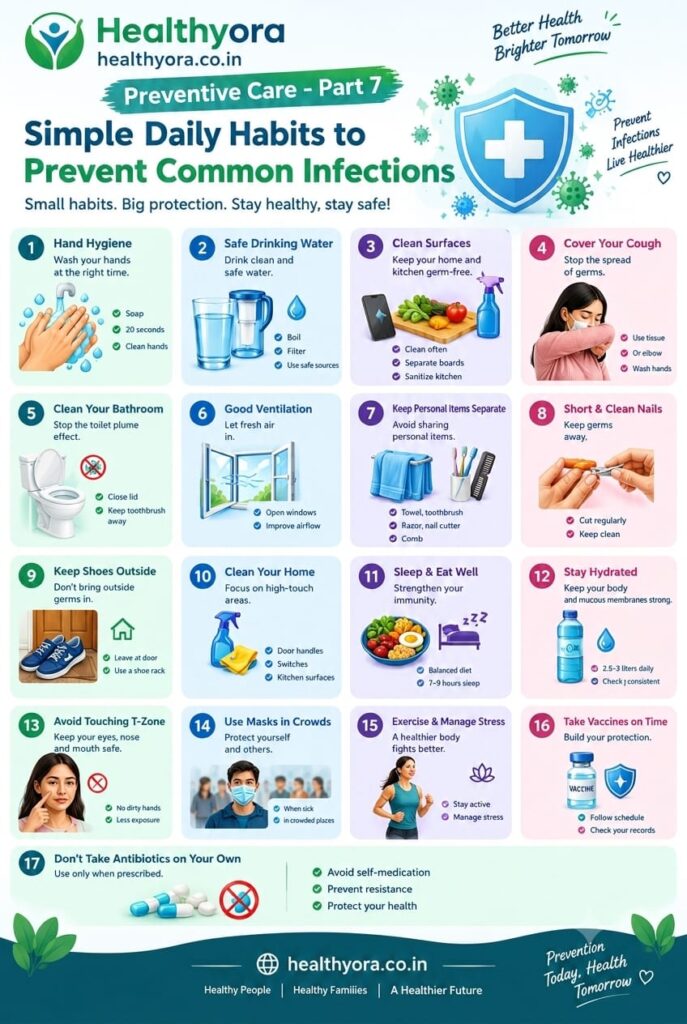
9. Keep Shoes Outside
Do not bring shoes into your bedroom after returning from outside. Leave shoes outside the door or on a designated rack, as dirt and dangerous bacteria from outside roads adhere to the soles of shoes.
10. Keep the House and High-Touch Items Clean
Keeping everything in the house sterile is not realistic. However, regularly cleaning areas that are touched frequently is beneficial.
These include door handles, faucets, tables, mobile phones, switches, and kitchen counter tops. If someone at home suffers from a contagious illness, more attention to cleaning may be required.
11. Prioritize Adequate Sleep and Balanced Nutrition
Adequate sleep and nutritious food are important to maintain the normal function of the body’s immune system. Sleep deficits, chronic malnutrition, and uncontrolled health conditions can impact overall health.
Include vegetables, fruits, lentils, whole grains, nuts, and protein sources as needed in your daily diet. Drink sufficient water and try to regularly reduce high consumption of excess sugar, salt, and ultra-processed foods.
12. Drink Adequate Water & Stay Hydrated
The slippery lining or mucous membrane inside our nose, throat, and respiratory tract acts as natural glue to trap germs. When the body is dehydrated, this lining dries up and cracks, allowing germs to easily come into contact with the bloodstream. Maintain bodily hydration by drinking at least 2.5 to 3 liters of pure water daily.
13. Habit of Not Touching the ‘T-Zone’
Our forehead, eyes, nose, and mouth together are referred to as the T-Zone. The internal mucous membranes of these organs are very sensitive, and this is where respiratory viruses enter most easily. Cultivating a conscious habit of not touching the T-Zone with unwashed hands cuts the risk of infection in half.
14. Conscious Use of Masks in Crowded Places
If you are suffering from a cold, cough, or fever, wear a simple surgical mask to protect family members and colleagues. Additionally, wearing a mask regularly in dusty environments or densely crowded public transport protects the lungs from airborne bacteria and allergens.
15. Exercise Regularly and Manage Stress
Regular physical activity is beneficial for cardiovascular, muscular, metabolic health, and overall well-being. Walking, cycling, swimming, or exercising according to your capability can be made part of daily life.
However, exercising does not mean you will never catch an infection. Exercise must be seen as part of a healthy lifestyle.
16. Get Necessary Vaccines on Time
Vaccination is extremely important in preventing infections. Vaccines help the body’s immune system prepare against specific pathogens. As a result, the risk of certain infections can decrease, and even if an infection occurs, the risk of severe illness or complications can be reduced.
Not just children, but adults also may require specific vaccines depending on age, health condition, prior vaccination history, occupation, travel, and other risks.
17. Do Not Use Antibiotics on Your Own Whim
Many consider taking antibiotics whenever they have a cold, cough, sore throat, or fever. But most common colds and coughs are caused by viruses, and antibiotics work against bacteria—not viruses. Using antibiotics unnecessarily can cause side effects and increase the problem of antibiotic-resistant bacteria. Taking unnecessary antibiotics kills beneficial bacteria in the body and allows harmful bacteria to develop resistance against the medication.
Recognize Symptoms of Infection and Seek Treatment When Needed
Fever, cough, sore throat, diarrhea, vomiting, redness on the skin, or pus in a wound can all be symptoms of various illnesses. Not all symptoms are caused by infection; therefore, self-diagnosing based on symptoms alone is not advisable.
Seek immediate emergency medical care if you experience shortness of breath, severe chest pain, unusual confusion, fainting, severe dehydration, or other dangerous signs. In children, symptoms such as abnormal lethargy, inability to feed, or significantly reduced urination must also be treated with serious attention.
Emergency Red Flags to See a Doctor
Most common infections resolve within 7 to 10 days through the body’s own immune system. However, if you notice certain warning signs, consulting a medical specialist immediately is essential:
- High fever of 102°F or higher lasting for more than 3 consecutive days.
- Difficulty breathing or severe chest pain.
- Dehydration due to continuous vomiting or diarrhea (dry tongue, lack of urination, sunken eyes).
- Severe headache accompanied by neck stiffness and sensitivity to light (signs of meningitis).
- Blood in cough or sputum.
- Blood-colored blisters or rash spreading rapidly across the skin.
Conclusion
The internal immune defense system of our body depends on how we wash our hands, what food we eat, how clean we keep our living spaces, and how well we take care of our bodies every day. Preventing infection does not mean isolating completely from all germs. Rather, it means developing habits in daily life that reduce the risk of infection and help keep yourself and others protected.
Instead of spending thousands of dollars at the hospital and enduring physical distress after falling ill, adopting healthy habits for just a few minutes every day is far easier, more enjoyable, and cost-effective.
Take care of yourself, stay healthy, stay conscious, and build a healthy life through small daily habits.
Frequently Asked Questions
1. What is the easiest way to prevent infection?
Ans. Washing hands properly, consuming safe food and drinking water, taking precautions when coughing or sneezing, and getting necessary vaccines are vital ways to reduce the risk of infection.
2. How often should a toothbrush be changed?
Answer: A toothbrush should be changed every 3 months. In addition, if you recover from severe viral flu, tonsillitis, or any major oral infection, you should discard the old toothbrush and start using a new one immediately after recovering to prevent reinfection.
3. Can vitamins or special foods prevent all infections?
Ans. No. A balanced diet supports the body’s normal immune system, but no specific food or vitamin can prevent all infections.
4. How long is cooked food safe to keep outside?
Answer: Cooked food is safe to keep at normal room temperature for a maximum of 2 hours. On hot days or when room temperature is high, it should not be left out for more than 1 hour. Beyond that, food-spoiling bacteria begin to multiply at double the rate very rapidly.
5. Can infection occur even after taking a vaccine?
Ans. Yes. No vaccine provides 100 percent protection in all cases. However, specific vaccines help reduce the risk of the associated infection or severe illness.
6. Can hand sanitizer be a complete substitute for hand-washing?
Answer: No. If hands are dusty, greasy, or visibly dirty, sanitizers cannot work effectively.
Disclaimer
The information provided in this article is for educational and informational purposes only and should not be considered medical advice, diagnosis, or treatment. Always consult a qualified doctor or healthcare professional regarding any medical concerns, symptoms, or before making changes to your diet, exercise, or treatment plan. Never ignore professional medical advice or delay seeking treatment based on information from this website. Healthyora and the author are not responsible for any decisions or actions taken based on the content of this article.