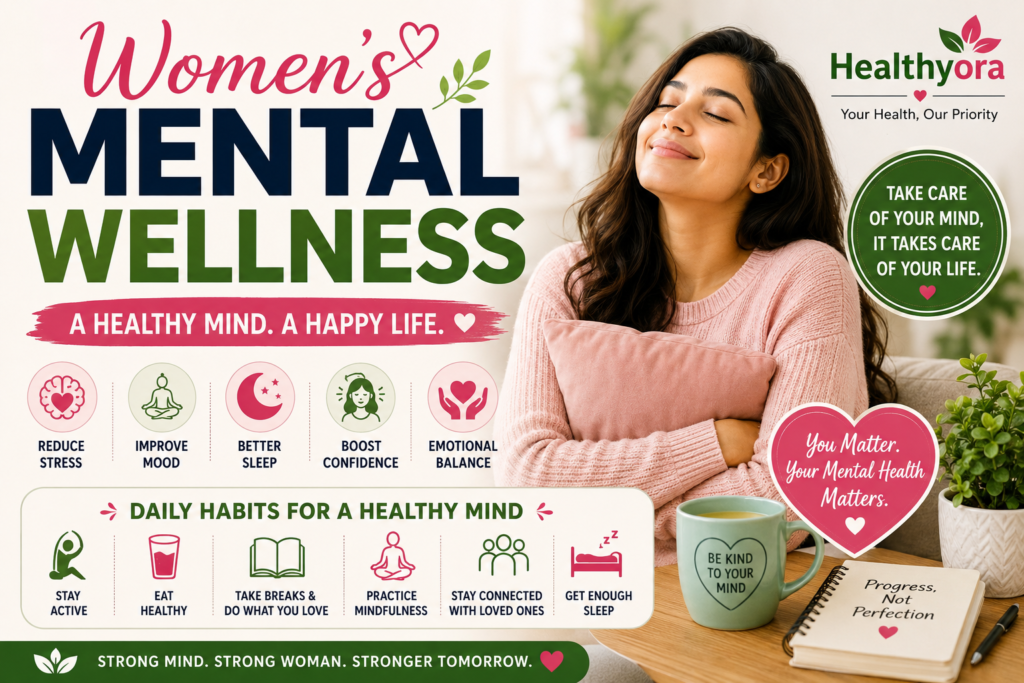
Women’s health does not mean just physical wellness. A woman can only be truly healthy when, alongside physical health, mental and emotional health is also in good condition. Managing households, raising children, taking care of the elderly, and simultaneously proving one’s competence in the workplace—women constantly undergo intense mental pressure while performing these multifaceted responsibilities. But amidst the crowd of fulfilling these responsibilities, society and family often overlook women’s mental well-being; even women themselves suppress their inner emotional pain, dismissing it as something “women just have to endure.”
Multiple studies by the World Health Organization (WHO) have shown that women are nearly twice as likely as men to suffer from Depression and Anxiety Disorders. Long-term stress, sleep problems, excessive overthinking, or emotional exhaustion are the primary reasons for this.
Mental health is not a luxury; just like physical wellness, it is a foundational pillar of a woman’s survival. When mental health suffers, the body’s immune system weakens, hormonal balance gets disrupted, and the joy of daily life is lost. Therefore, taking care of one’s mental wellness is not a luxury—it is an essential part of a healthy life.
Why Mental Wellness Matters for Women
When mental wellness is in good shape, a woman can handle daily life pressures and challenges relatively better. Prolonged stress or emotional exhaustion can lead to:
- Always feeling tired
- Sleep problems
- Decreased focus
- Getting angry easily
- Overthinking
- Decreased motivation
- Loss of self-confidence
Therefore, along with the body, taking care of the mind should also be part of the daily routine.
Common Causes of Stress in Women
Although every woman’s life circumstances are different, some common factors can increase mental stress:
1. Work and Career Pressure
Work deadlines, long working hours, and career-related uncertainty often create mental stress.
2. Superwoman Syndrome & Emotional Burnout
Breaking down completely mentally and physically while trying to be 100% perfect in every aspect of family and career.
3. Financial Concerns
Worries about income, savings, household expenses, or future security are also common causes of stress.
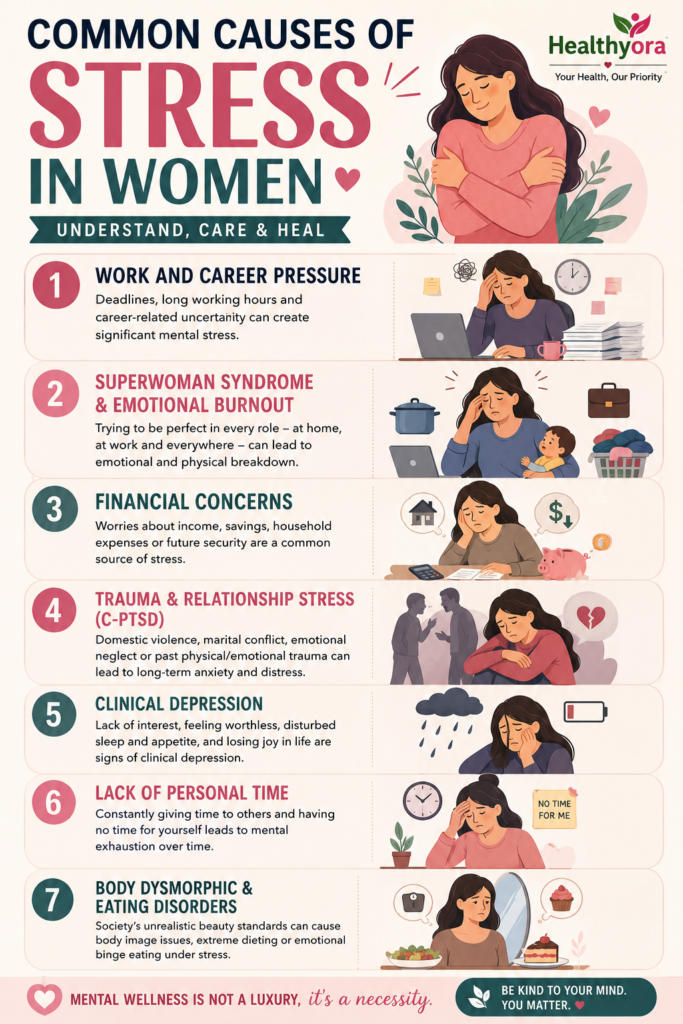
4. Trauma & Relationship-Induced Stress (C-PTSD)
Domestic violence, marital discord, emotional neglect, or conflict with friends, as well as chronic anxiety resulting from past physical or emotional trauma.
5. Clinical Depression
Finding no enthusiasm in any activity, feeling worthless, disruption of normal sleep and eating patterns, and losing all joy in life.
6. Lack of Personal Time
If a woman has no time left for herself while dedicating time to everyone else, she can gradually become mentally exhausted.
7. Body Dysmorphia & Eating Disorders
Suffering from an inferiority complex about one’s body under societal pressure of unrealistic beauty standards, extreme dieting, or stress-induced eating (Emotional Binge Eating).
Women’s Mental Health and Hormones
Women’s mental health does not depend solely on external circumstances; it is intricately connected to the internal hormones of their body.
1. The Relationship Between Estrogen, Progesterone, and Serotonin
The primary female hormone, Estrogen, directly stimulates the production of Serotonin and Dopamine in the brain. When estrogen levels suddenly drop in the blood, serotonin secretion decreases, triggering sudden intense sadness, irritability, and anxiety.
2. Premenstrual Syndrome (PMS) & PMDD
7 to 10 days before periods start, a sudden drop occurs in the levels of estrogen and progesterone hormones in a woman’s body.
- PMS (Premenstrual Syndrome): About 90% of women suffer from symptoms like abdominal pain, irritability, crying spells, or fatigue before their period.
- PMDD (Premenstrual Dysphoric Disorder): This is a severe form of PMS. Women suffering from this experience severe depression, feelings of panic, extreme hopelessness, and suicidal thoughts.
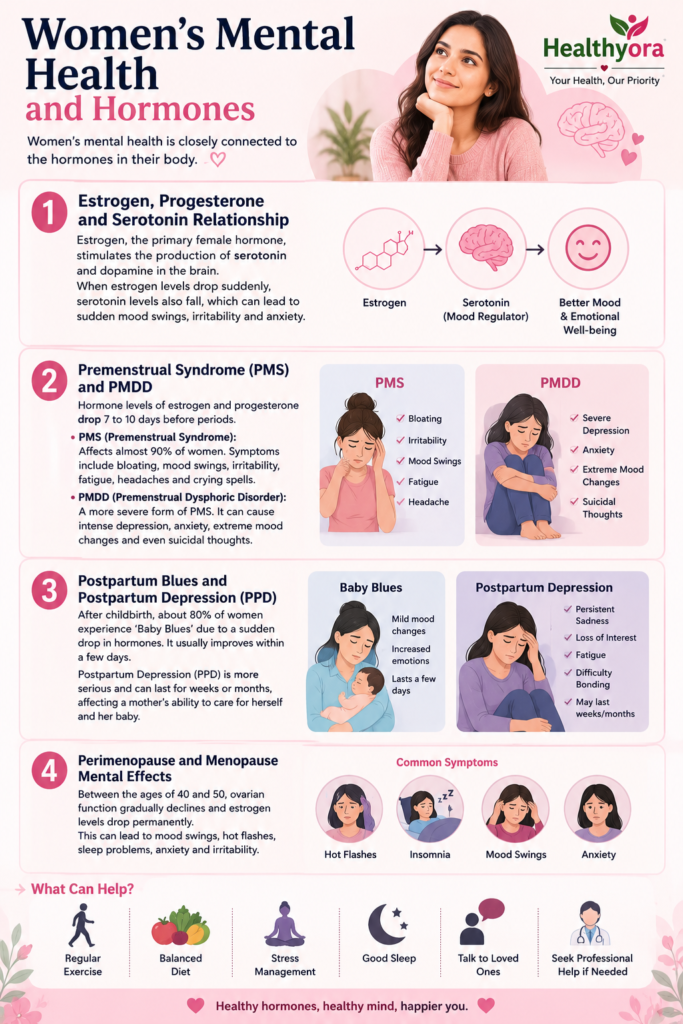
3. Postpartum Blues & Postpartum Depression (PPD)
In the first few days after childbirth, nearly 80% of women experience ‘Baby Blues,’ which occurs due to hormonal drop and resolves within a few days.
4. Mental Impact of Perimenopause and Menopause
Between the ages of 40 and 50, ovarian function gradually ceases in women. Due to the permanent decline of estrogen, hot flashes (sudden feeling of heat), insomnia, and severe mood swings occur during this time.
14 Mental Warning Signs That Should Never Be Ignored
When the mind gets exhausted and can no longer take pressure, it sends some clear warning signals:
1.Extreme Irritability & Outbursts of Anger
Sudden uncontrolled anger over trivial matters is the manifestation of long-accumulated stress in the mind.
2. Unexplained Crying & Loss of Emotional Control
Tearing up suddenly without reason, inability to compose oneself, and a persistent feeling of heaviness in the chest.
3.Loss of Pleasure
Developing a complete disinterest in activities that used to bring great joy before.
4.Social Withdrawal
Not wanting to meet relatives or friends, not answering phone calls, and an intense urge to keep oneself confined in a corner of the room all the time.
5.Insomnia or Extreme Changes in Sleep Patterns
Not being able to sleep for hours after lying down, unnecessary racing thoughts in the head, or not wanting to get out of bed all day.
6. Chronic Physical Fatigue
Feeling exhausted all the time even after adequate rest, and waking up in the morning feeling tired.
7.Chronic Guilt
Constantly putting oneself on trial with unfounded self-reproach and remorse.
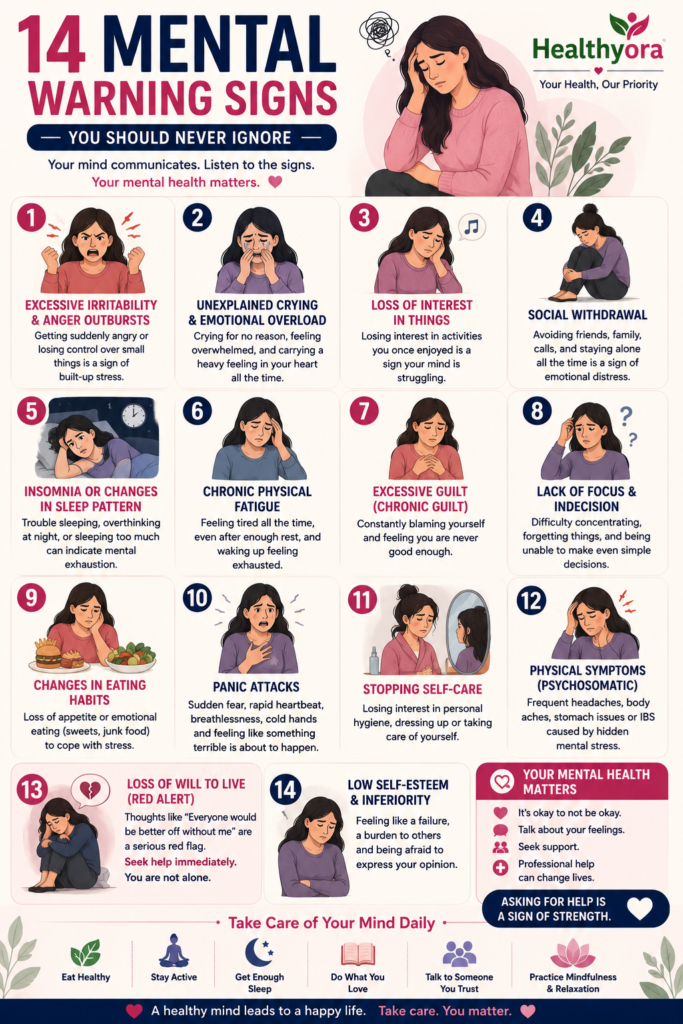
8. Severe Lack of Focus & Indecision
Inability to remember minor details of work and getting confused even when making very simple decisions.
9 Abnormal Changes in Eating Habits
Sudden complete loss of appetite or a tendency to binge on excess sweets and fast food for emotional comfort (Emotional Eating).
10.Panic Attacks
Sudden heart palpitations without reason, difficulty breathing, hands and feet going cold, and feeling as though something catastrophic is about to happen right now.
11. Completely Stopping Self-Care
Having zero interest in personal hygiene, grooming, dressing up, or looking after one’s appearance.
12. Physical Symptoms (Psychosomatic Symptoms)
Frequent headaches, migraines, chronic neck and back tension, stomach problems, or IBS—the root cause of which lies hidden in brain stress.
13. Losing the Will to Live (Red Alert)
Thoughts like “Everyone might be better off without me” are a sign of extreme danger. In such circumstances, seeking immediate help from a mental health professional without delay is mandatory.
14. Drop in Self-Confidence & Inferiority Complex
Feeling like a failure or a burden to society in front of others, and being afraid to express one’s opinion.
Practical Habits for Building Wellness & Mental Peace
- Learn to Say “No”
It is not possible for any human being to keep everyone happy all the time. Many women forget their physical and mental limits while helping others. It is not possible to take responsibility for every task. Politely saying “no” when necessary is part of maintaining healthy boundaries. - Practice Digital Detox
Being immersed in social media, news, or notifications all day prevents the brain from getting adequate rest. Therefore, try to take a digital break at a specific time during the day. - Physical Activity & Endorphin Hormone Release
Walk briskly, dance, swim, or do yoga for at least 30 minutes every day. When the body moves, endorphins are released from the brain, which naturally elevate mood and relieve mental fatigue. - Social Connection & Expressing Feelings
Do not carry your struggles alone. Express your feelings openly to at least one trusted friend, mother, sister, or life partner. This quickly reduces the excitability of the brain’s amygdala (fear center).
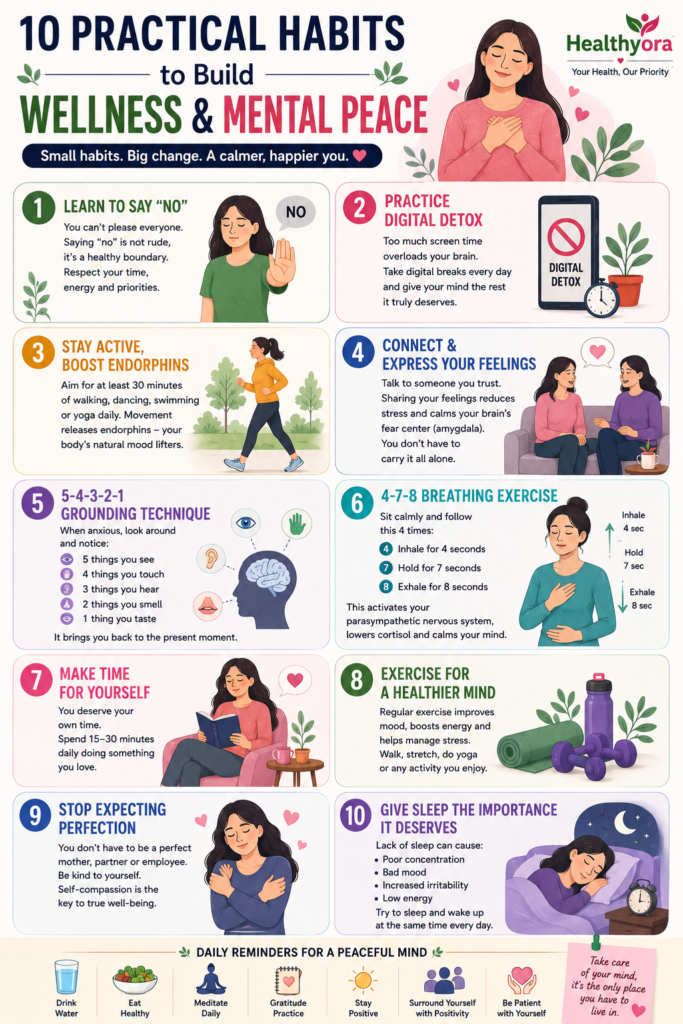
5. 5-4-3-2-1 Grounding Technique (To Relieve Anxiety)
Whenever you feel excessive anxiety or panic:
👉Check this Wellness Journal on Amazon
https://link.amazon/B09zRG8v7
6. 4-7-8 Breathing Exercise (Activating Parasympathetic Nervous System)
Sit quietly every morning and at night before sleeping. Inhale deeply through your nose for 4 seconds, hold the breath in your abdomen for 7 seconds, and exhale through your mouth as if blowing for 8 seconds. Repeat this process 4 consecutive times. This reduces cortisol hormone in the blood and calms the mind.
7. Make Time for Yourself
Setting aside some time for yourself every day is not selfish. Even just 15–30 minutes a day can be reserved for an activity you enjoy.
8. Exercise for a Healthier Mind
Regular exercise can help improve mood, increase energy, and manage stress. Brisk walking, yoga, stretching, or any other enjoyable physical activity can be done every day.
9. Stop Expecting Perfection
There is no need to put pressure on yourself to be a perfect mother, perfect employee, perfect partner, or perfect homemaker. Kindness and self-compassion towards oneself are vital components of mental wellness.
10. Give Sleep the Importance It Deserves
If there is a lack of sleep, the next day—concentration can decrease, mood can worsen, irritability can increase, and energy can drop. Therefore, try to sleep at the same time every day.
When to Seek Help from a Professional (Psychologist/Psychiatrist)?
Not all types of stress can be managed on one’s own.
If for a long period—
- There is excessive sadness or anxiety
- It is difficult to perform daily activities
- There are major changes in sleep or appetite
- You find joy in nothing
- You feel constant fear or hopelessness
- It feels difficult to manage yourself
Then it is important to speak with a mental health professional or healthcare provider.
Conclusion
In a woman’s health journey, mental wellness should never be seen as a secondary matter. Because the foundation of a healthy society is built through the hands of a healthy woman. You are not just someone’s mother, wife, daughter, or colleague; you are a complete human being made of flesh and blood. Pay attention to your mental health starting today. Love yourself, take care of yourself.
The most important thing is, give value to your feelings. There is no need to be strong all the time. Sometimes asking for help, taking rest, and taking care of oneself is also part of strength.
Frequently Asked Questions
1. What does mental wellness mean?
Ans. Mental wellness is the overall ability to manage one’s emotions, stress, relationships, and everyday challenges in a healthy way.
2. Can stress affect a woman’s physical health?
Ans. Chronic stress can affect sleep, energy, mood, and overall well-being.
3. Is it normal to have severe mood swings before periods?
Answer: Having mild PMS due to hormonal changes before periods is normal.
4. Does postpartum depression resolve on its own?
Answer: Common ‘Baby Blues’ resolves on its own within 2 weeks of childbirth. But Postpartum Depression (PPD) does not go away on its own; rather, if left untreated, it can persist for months.
5. What foods should be in the daily diet to maintain good mental health?
Answer: Colorful vegetables and fruits, eggs, fatty fish, Omega-3 fatty acids (flaxseeds, walnuts), magnesium-rich foods (pumpkin seeds, dark chocolate), and homemade yogurt for healthy gut bacteria are extremely beneficial for mental health.
6. Is a digital detox really necessary?
Ans. There is no need to stay completely technology-free. However, reducing excessive screen and social media use and taking regular digital breaks can be a healthy habit.
Disclaimer
The information provided in this article is for educational and informational purposes only and should not be considered medical advice, diagnosis, or treatment. Always consult a qualified doctor or healthcare professional regarding any medical concerns, symptoms, or before making changes to your diet, exercise, or treatment plan. Never ignore professional medical advice or delay seeking treatment based on information from this website. Healthyora and the author are not responsible for any decisions or actions taken based on the content of this article.