In our society, women seem to naturally play the role of multitaskers. If a woman is healthy, not only her own health but also the well-being of the entire family is largely ensured. Therefore, small daily healthy habits can bring about big changes in the long run. In today’s busy life, due to work pressure, family, children, mental responsibilities, and an irregular lifestyle, many women cannot pay sufficient attention to their own health.
Staying healthy doesn’t always require big changes. Rather, drinking enough water daily, consuming a balanced diet, exercising regularly, getting adequate sleep, managing mental stress, and getting regular health check-ups—these simple habits build the foundation for a healthy life in the long run.
In this detailed blog, we will discuss women’s physiological changes, an age-based health and nutrition guide, and a few simple daily habits that every woman can easily follow in her daily life.
Women’s Physiological Changes & Hormonal Balance
A woman’s health fundamentally depends on her body’s hormonal balance. In a woman’s body, levels of Estrogen and Progesterone hormones fluctuate every month and at different stages of life.
1. Iron Deficiency & Blood Loss (Anemia Risk)
Due to periods, women lose blood from their body every month. As a result, there is a risk of a drop in hemoglobin levels and developing anemia in women.
2. Loss of Bone Density (Bone Density Loss)
After the age of 30, a woman’s bone density naturally begins to decrease.
3. Thyroid & Polycystic Ovarian Syndrome (PCOS/PCOD)
Due to modern irregular lifestyles and stress, the prevalence of thyroid issues and PCOS (Polycystic Ovarian Syndrome) among women has increased dramatically.
Age-Based Health & Nutrition Guide (Separate Tips for 20s, 30s, and 40s+)
A woman’s physical needs change with every decade of life. The nutritional requirements of a 20-year-old young woman can never be the same as those of a 40-year-old woman.
1. In Your 20s
The 20s are the peak years of energy, but during this time, habits of irregular eating and staying up late often develop due to work or academic pressure.
- Diet: Consume plenty of iron-rich foods (spinach, beetroot, lentils) and protein so that period blood loss is replenished.
- Lifestyle: Build a habit of doing high-energy exercises at least 4–5 days a week and reducing outside junk food in favor of home-cooked meals.
2. In Your 30s
In her 30s, a woman’s busyness doubles—family responsibilities, pregnancy, child-rearing, and career pressure.
- Diet: Pay special attention to calcium (milk, yogurt, cheese) and Vitamin D3. Include antioxidant-rich fruits and healthy fats (nuts, chia seeds) in your diet.
- Lifestyle: Start strength training or weight-lifting exercises instead of relying only on cardio. Ensure at least 7–8 hours of quality sleep daily.
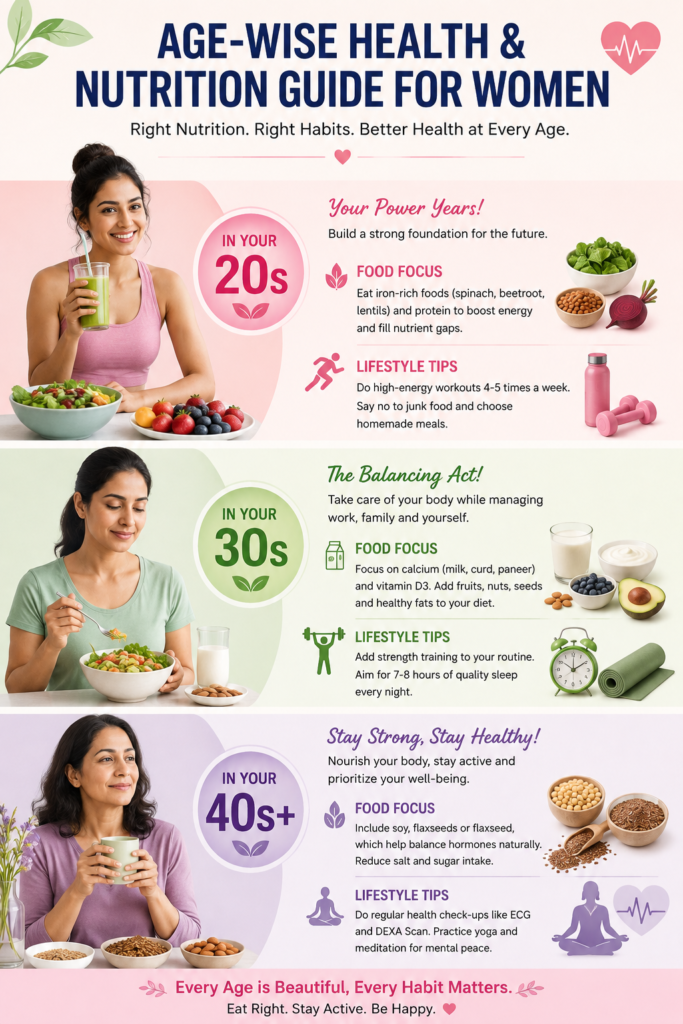
3. In Your 40s and Beyond
After 40, as estrogen levels begin to decrease in a woman’s body, hot flashes, mood swings, sudden weight gain, and the risk of heart disease increase.
- Diet: Include soybeans and flaxseeds in your diet, which naturally help make up for the estrogen deficiency. Significantly reduce the consumption of salt and sugar.
- Lifestyle: Get regular ECGs and Bone Density Tests (DEXA Scan). Practice yoga and meditation daily for mental peace.
Simple & Highly Effective Daily Wellness Habits
Even amidst your busiest schedules, adding the following habits to your daily routine will help you stay physically and mentally refreshed:
1. Start the Day with Proper Hydration & Detox
Instead of drinking tea or coffee right after waking up in the morning, start the day by drinking 1–2 glasses of lukewarm water. Drinking enough water reduces the risk of dehydration, relieves constipation, and accelerates metabolism or digestion. Generally, most healthy women need about 2–2.7 liters of water a day.
2. Ensure Adequate Iron & Folate in the Diet
To prevent anemia or blood deficiency, it is mandatory to include iron-rich foods in your daily diet. Regularly include spinach, taro greens, red amaranth, beetroot, dates, pomegranate, lentils, eggs, and liver in your meals. Consuming iron-rich foods alongside Vitamin C-rich fruits (such as lemon or amla) can help in iron absorption.
3. Maintain Calcium & Vitamin D3 Balance
Calcium deficiency is seen in many women. To keep bones and teeth strong, consume at least 1 glass of milk, yogurt, cheese, or soybeans daily. Along with this, spend at least 15–20 minutes in the morning sunlight every day. Vitamin D helps the body absorb calcium. A deficiency in Vitamin D can lead to:
- Weak bones
- Muscle pain
4. At Least 30 Minutes of Physical Activity or Walking Daily
You don’t always have to go to a gym to exercise. Walk fast (brisk walking), practice yoga, or do light free-hand exercises at home for at least 30 minutes every day. This keeps your heart healthy, increases blood circulation, and keeps your mood refreshed.
5. Reduce Excess Sugar & Processed Food
Regularly consuming excess soft drinks, cakes, cookies, chips, and fast food can increase weight gain, diabetes, and the risk of heart disease.
6. Pay Attention to Food Portions
Even if you eat healthy food, consuming it in excessive amounts can lead to weight gain. Therefore:
- Eat slowly
- Chew well in small bites
- Avoid overeating
7. Consume ‘Healthy Fats’ for Hormonal Balance
Good fats are required for hormone production. Include foods rich in Omega-3 fatty acids in your daily meals, such as almonds, cashews, walnuts, chia seeds, flaxseeds, and extra virgin olive oil or mustard oil.
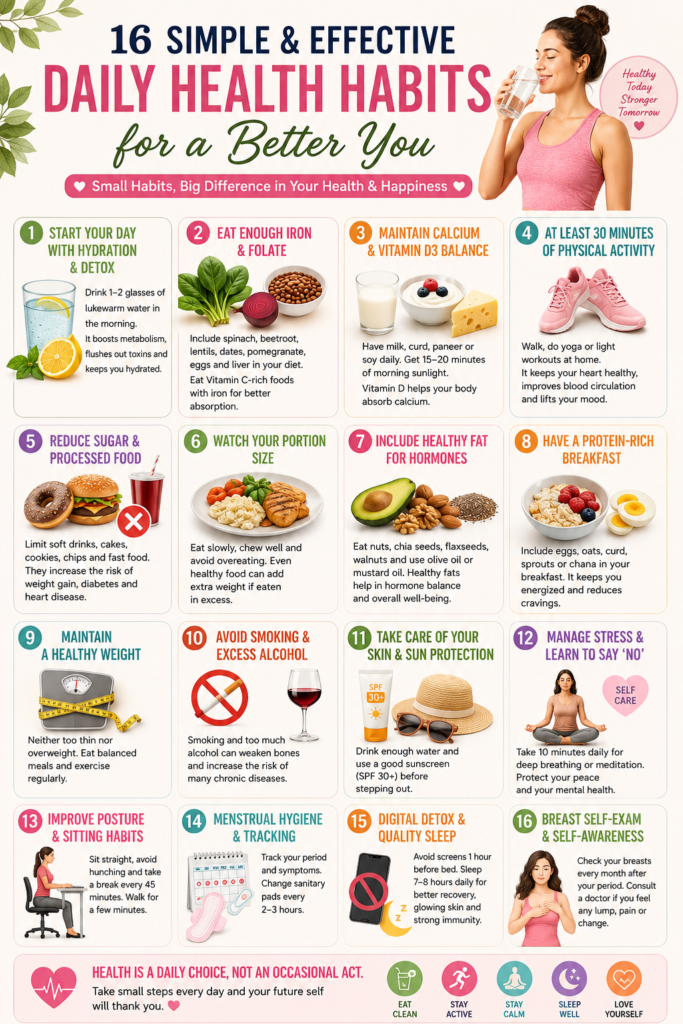
8. Protein-Rich Breakfast
Instead of starting the day with only carbohydrate-heavy foods or skipping breakfast, you can eat protein-rich foods like boiled eggs, oats, yogurt, sattu (roasted gram flour), or sprouted lentils for breakfast to maintain energy throughout the day and reduce cravings for frequent fast food.
9. Maintain a Healthy Weight
Being underweight or obese—both can affect bone health. Maintaining a healthy weight through a balanced diet and regular exercise is important.
10. Avoid Smoking & Excess Alcohol
Smoking and excessive alcohol consumption can negatively affect bone health in the long run and increase the risk of weakening bones.
11. Proper Skincare & Protection from Sun
Skin health depends more on internal nourishment than on external cosmetics. Besides drinking enough water, use a good quality sunscreen (SPF 30+) before stepping outside.
12. Stress Management & Learning to Say ‘No’
There is no need to take on every responsibility alone. Learn to politely say “no” to extra work or unnecessary responsibilities when needed. To relieve excess mental stress, practice deep breathing or meditation for 10 minutes daily.
13. Correct Posture or Sitting Position
Standing for long hours in the kitchen or slouching in front of a computer causes most women to suffer from lower back pain or neck pain. Keep your back straight while sitting, and instead of sitting continuously, get up every 45 minutes to walk around for a few minutes.
14. Menstrual Hygiene & Tracking
Track your regular period dates and symptoms in an app or diary. Sanitary pads should be changed every 2–3 hours.
15. Digital Detox & Quality Sleep
Turn off mobile, TV, or laptop screens at least 1 hour before sleeping at night. Getting 7–8 hours of deep sleep daily regenerates body cells, eliminates dark circles, and strengthens the immune system.
16. Breast Self-Examination & Self-Awareness
Perform a breast self-examination every month, one week after your period ends. If you feel any new lump, hard mass, or pain in the breast, do not feel shy and consult a gynecologist immediately. Breast cancer is 100% curable if detected at an early stage.
Maintain Personal & Intimate Hygiene (Daily Hygiene Tips Every Woman Should Follow)
1. Bathe Daily & Keep Body Clean
Bathing daily cleanses sweat, dust, and germs from the body. Especially:
- During hot weather
- After exercise
- When sweating excessively, keeping the body clean is even more important.
2. Keep the Intimate Area Clean
A woman’s intimate area naturally has the ability to clean itself. Therefore, avoid using excessively scented soaps or chemical-laden products. These products can disrupt the natural pH balance.
3. Wear Clean & Comfortable Underwear
It is also important to be conscious when selecting underwear. Always use cotton underwear and change it daily.
4. Maintain Menstrual Hygiene
Hygiene during menstruation is even more critical. Change sanitary pads regularly and dispose of used pads properly. If using tampons or menstrual cups, change them according to instructions.
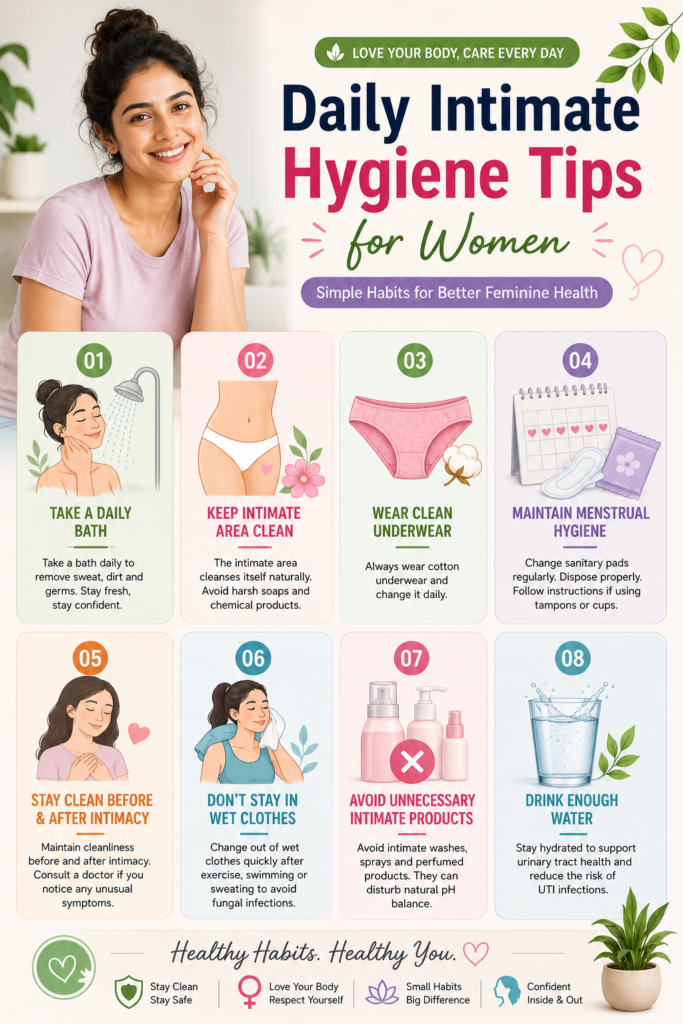
5. Maintain Cleanliness Before & After Sexual Intercourse
Maintaining cleanliness before and after sexual intercourse is important. If any unusual symptoms appear, consult a doctor instead of self-medicating.
6. Do Not Stay in Wet Clothes for a Long Time
After exercise, swimming, or excessive sweating, quickly change into dry clothes. Wearing wet clothes for extended periods can increase the risk of fungal infections.
7. Do Not Use Unnecessary Intimate Products
Many women regularly use intimate washes, sprays, or various scented products. It is best to consult a doctor before using any new product.
8. Drink Enough Water
Drinking enough water:
- Keeps the body hydrated.
- Supports the normal function of the urinary tract.
- Can help reduce the risk of UTI.
Common Mistakes Women Constantly Make
Building good habits is not enough to stay healthy; avoiding some mistakes made unknowingly is equally important:
1. Skipping Meals
Skipping breakfast or lunch in the name of losing weight causes a severe deficit of protein and nutrients in the body, which slows down metabolism.
2. Suppressing Symptoms
Ignoring slight bodily pain, extreme fatigue, or heart palpitations as minor issues and hiding them often causes major trouble later.
3. Self-Medication or Taking Pharmacy Drugs
Taking painkillers without a doctor’s advice for period pain or normal headaches severely damages the kidneys.
4. Not Getting General Health Check-ups
It is good to get a general health check-up once every year on a doctor’s advice. This allows many diseases to be detected in their early stages and timely treatment to begin.
When Should You Definitely Consult a Doctor?
Loving your body means listening carefully to its signals. Consult a specialist doctor without delay in the following situations:
- If there is excessive bleeding during periods or if periods occur multiple times a month.
- If there is chronic severe lower abdominal pain or discomfort during intercourse.
- If there is a sudden rapid weight gain or weight loss without any apparent reason.
- If suffering from severe depression, guilt, or anxiety continuously for more than two weeks.
Conclusion
There is a common saying in our society—”An educated woman means an educated family.” Similarly, “A healthy woman means a healthy and happy family.” Never neglect your health. Because a healthy woman is the foundation of not only her own health, but also the health and happiness of the entire family. Therefore, taking care of your health is not an extra luxury; it is your right and responsibility. Love yourself, take care of your body and mind, and enjoy a vibrant, long, and beautiful life!
FAQ (Frequently Asked Questions)
1. How many hours should one sleep every day?
Ans: 7–9 hours of quality sleep daily is recommended for most adult women.
2. Does skipping breakfast reduce weight?
Ans: No. Just skipping breakfast does not reduce weight. Weight control depends on a balanced diet, total calorie intake, and regular exercise.
3. How many times a year should a health check-up be done?
Ans: Generally, it is good to get a health check-up at least once a year. However, if there are long-term conditions like diabetes, high blood pressure, or other chronic diseases, more frequent tests may be necessary according to a doctor’s advice.
4. Does mental stress affect physical health?
Ans: Yes. Long-term mental stress can affect sleep, hormonal balance, heart health, and overall well-being.
5. How much water should a woman drink daily?
Ans: On average, a healthy adult woman should drink 2.5 to 3 liters (about 8–10 glasses) of water daily.
6. Which tests should women regularly get after the age of 30?
Ans: After the age of 30, a Complete Blood Count (CBC), Fasting Blood Sugar, Thyroid Profile (TSH), Vitamin D3, and B12 tests should be done at least once every year.
7. Is it safe for women to exercise during periods?
Ans: Yes, light exercise during periods (such as walking, light stretching, or yoga) is completely safe and beneficial.
Disclaimer
The information provided in this article is for educational and informational purposes only and should not be considered medical advice, diagnosis, or treatment. Always consult a qualified doctor or healthcare professional regarding any medical concerns, symptoms, or before making changes to your diet, exercise, or treatment plan. Never ignore professional medical advice or delay seeking treatment based on information from this website. Healthyora and the author are not responsible for any decisions or actions taken based on the content of this article.