Let’s think about a very familiar and realistic situation today. Right from the moment we wake up in the morning, we are overwhelmed by work pressure, studies, family responsibilities, financial worries, and a flood of digital notifications on our smartphones. Amidst all this chaos, our brain almost never gets a chance to fully rest.
Imagine turning off the lights at night and lying down in bed. Your body is utterly exhausted, your eyes are heavy with sleep, but strangely, sleep just won’t descend upon your mind. That is because your head is spinning with tomorrow’s work plans, regrets over past events, bank accounts, or thousands of disconnected thoughts. No matter how hard you try to calm your mind, these thoughts seem to chase you at double the speed.
Many believe that finding mental peace requires spending a lot of money or taking a long vacation. But is there a naturally effective way to escape this invisible maze? In reality, there is a simple habit that, when practiced for just 10–20 minutes daily, can gradually help improve your mental peace, focus, and sleep quality. That habit is Meditation.
When many people hear the word ‘meditation,’ they immediately think of some kind of spiritual mystery. In reality, these ideas are completely wrong and baseless. Meditation has been practiced across various cultures around the world for thousands of years. Today, modern science has also conducted extensive research on it. Just as working out at the gym strengthens your physical muscles, regular meditation strengthens the mental muscles of focus, stress reduction, emotional control, and patience.
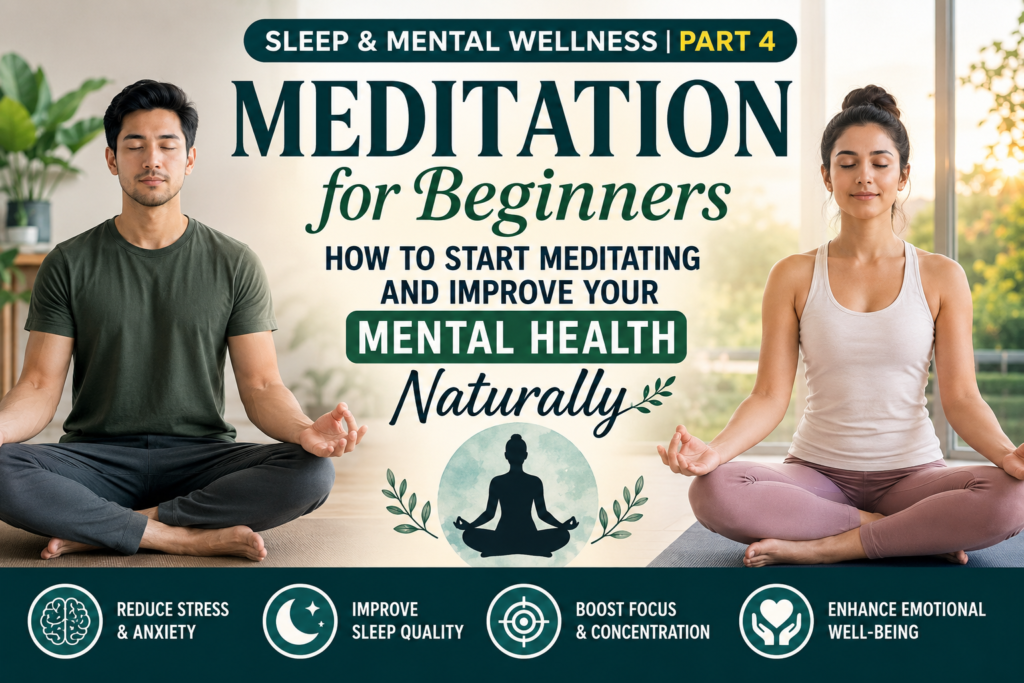
In this episode of the Sleep & Mental Wellness series, we will learn:
- What is Meditation?
- When to do Meditation?
- How does Meditation work?
- How should Beginners start Meditation?
- Potential benefits of Meditation
- How Meditation helps reduce Stress & Anxiety
- How Meditation can assist in good sleep
- 15 easy Meditation Tips
- What are the common mistakes?
- When should one seek the help of a doctor or mental health specialist?
What is Meditation?
Meditation is a mental practice. It doesn’t mean forcing your thoughts to stop completely; rather, it is about consciously observing the thoughts that cross your mind and repeatedly bringing your focus back to the present moment.
Remember: When you first sit down to meditate, all kinds of thoughts will pop up—this is completely normal. Do not try to force them to stop. The more you try to block them, the more you will get trapped in that cycle of thoughts. Instead, let the thoughts come naturally, and gently bring your focus back to your breathing or the present moment.
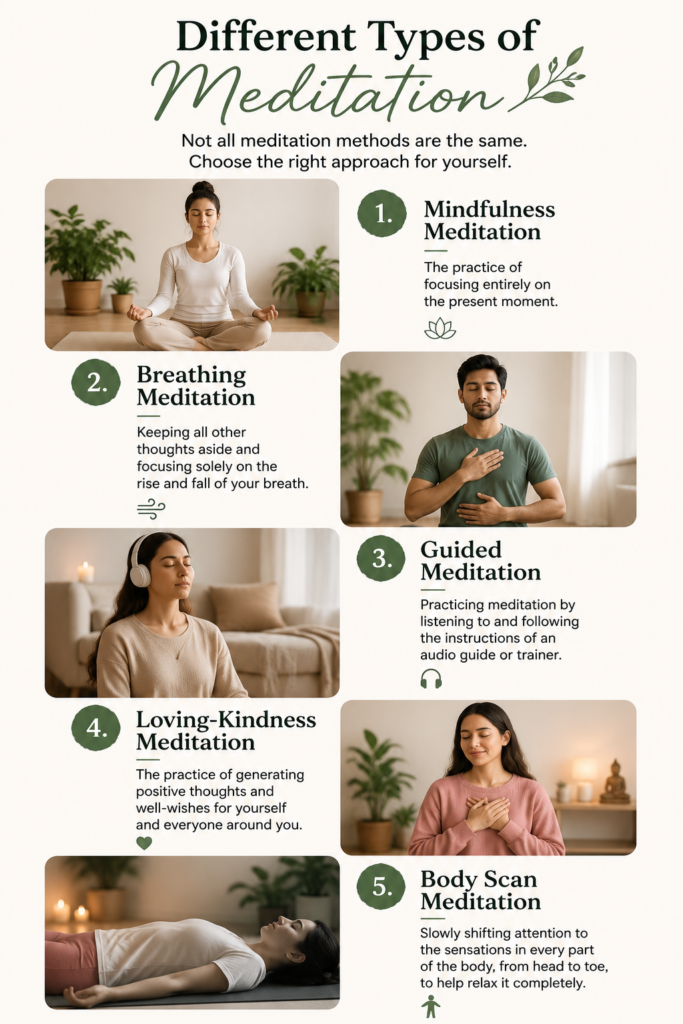
Different Types of Meditation
Not all meditation methods are the same. Choosing the right approach for yourself is the most important step here.
- Mindfulness Meditation: The practice of focusing entirely on the present moment.
- Breathing Meditation: Keeping all other thoughts aside and focusing solely on the rise and fall of your breath.
- Guided Meditation: Practicing meditation by listening to and following the instructions of an audio guide or trainer.
- Loving-Kindness Meditation: The practice of generating positive thoughts and well-wishes for yourself and everyone around you.
- Body Scan Meditation: Slowly shifting attention to the sensations in every part of the body, from head to toe, to help relax it completely.
When to do Meditation?
The best time to meditate is right after waking up in the morning or just before going to bed at night. However, you can choose whichever time fits best into your daily routine.
There is no need to meditate for a long time right at the start. Begin with just 5 minutes. Once it becomes a regular habit, you can gradually increase the duration to 10, 15, or 20 minutes. When it comes to meditation, practicing consistently is far more important than how long you do it.
How Beginners Should Start Meditation?
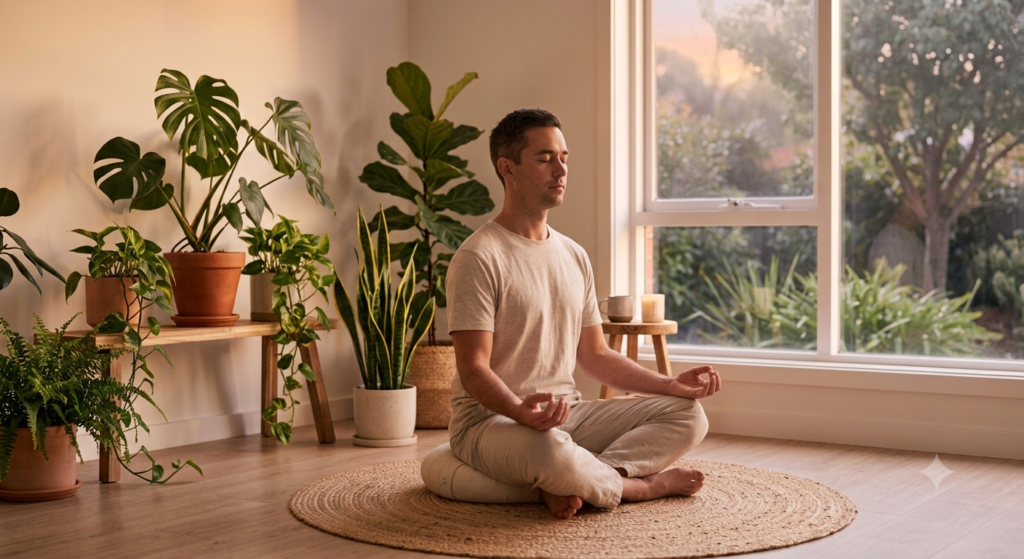
Many people prefer to meditate in a quiet, peaceful environment. You can choose to sit upright on the floor in a comfortable posture and close your eyes, or you can even do it while lying down comfortably in bed. The most important thing is to pick a posture where you feel at ease and can maintain your focus without straining.
Close your eyes, then slowly take deep breaths in and out. Keep your entire focus on your breathing. If different thoughts wander into your mind, do not try to stop them by force. Just observe them naturally and gently bring your focus back to your breath. The core purpose of meditation is to gradually calm the mind and remain consciously aware of the present moment.
If needed, you can use Meditation Music, Nature Sounds, or Guided Meditation available on YouTube, Spotify, and other apps. These can be highly effective in helping you maintain focus and build a consistent meditation routine in the beginning.
Scientifically Supported Potential Benefits of Meditation
After practicing meditation regularly for a few weeks, you will gradually begin to notice positive changes within yourself. Everyone’s experience may vary, but most people experience the following benefits:
- A Calmer Mind: Inner restlessness reduces, giving way to a deep sense of mental peace.
- Increased Confidence: Trust in yourself strengthens, fostering a positive outlook on life.
- Helps Reduce Anxiety: It can be highly effective in managing excessive worry and mental pressure.
- Assists in Anger Management: Emotional control improves, reducing the tendency to get easily agitated or angry.
- Sharper Focus: It becomes much easier to maintain your attention on a single task for an extended period.
- Better Concentration in Studies or Work: You can handle studies, office assignments, or daily responsibilities with greater efficiency.
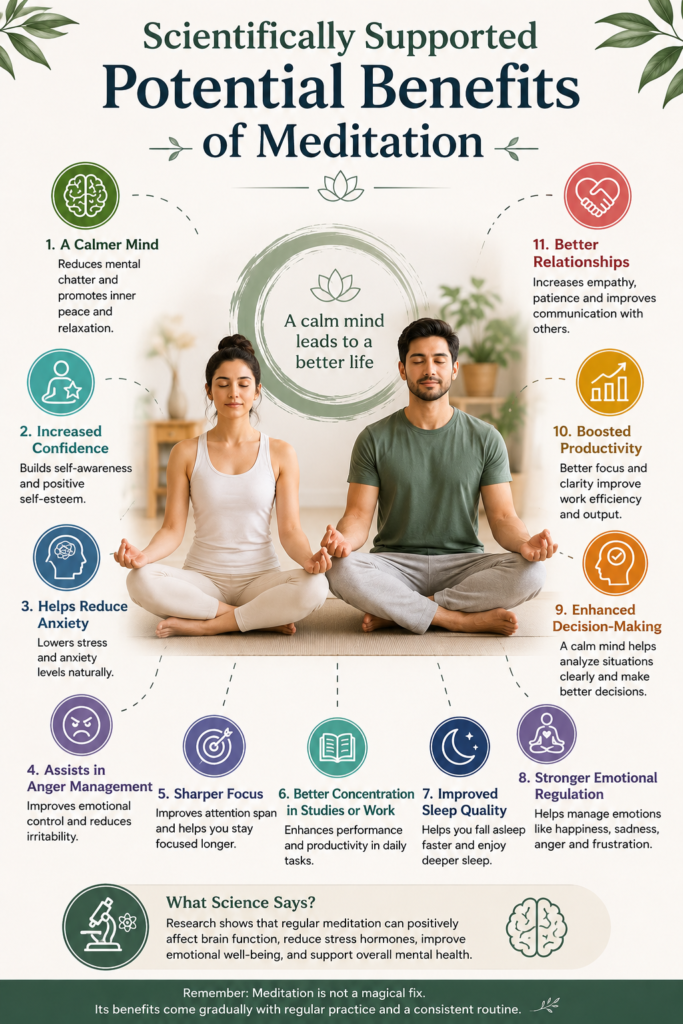
- Improved Sleep Quality: It helps you fall asleep faster and promotes a deeper, more restful sleep at night.
- Stronger Emotional Regulation: Meditating daily makes it easier to navigate intense emotions like happiness, sadness, anger, or frustration.
- Enhanced Decision-Making Skills: When the mind is calm, analyzing situations clearly and making the right decisions becomes much easier.
- Boosted Productivity: Increased focus and concentration naturally improve both your speed and the quality of your work.
- Better Relationships: Improved patience, empathy, and communication skills lead to more positive interactions with family and friends.
Remember: Meditation is not a magical fix that will change everything overnight. Its benefits unfold gradually through regular practice. However, if you are dealing with severe mental health issues, you should always seek guidance from a qualified doctor or mental health professional.
How Meditation Helps with Good Sleep?
Sleep issues and mental stress often fuel each other in a vicious cycle:
- When stress increases, sleep naturally suffers.
- Conversely, a lack of adequate sleep spikes your stress levels the next day.
Many sleep experts recommend meditating 15–20 minutes before bedtime to help the brain slow down, calm down, and prepare for a deep, restful night’s sleep.
How Meditation Helps Reduce Stress & Anxiety
When we practice meditation regularly, significant changes happen in our brain and our body’s hormonal system. Here is a detailed look at how meditation works to relieve stress and anxiety:
1. It Relaxes the Body
Whenever we are under mental pressure, our body increases the secretion of a stress hormone called cortisol. Meditation helps shift the body into a ‘Relaxation Mode,’ which actively lowers cortisol levels and gradually reduces overall stress.
2. It Pulls the Mind Back to the Present
When we sit idle without engaging in a task, a network in our brain called the DMN (Default Mode Network) becomes highly active. This network brings up thousands of disconnected thoughts, past regrets, and anxieties about the future. Meditation trains us to focus on our breath or the present moment, which effectively dials down unnecessary worry.
3. It Calms Heart Rate and Breathing
During times of stress or anxiety, the body reacts as if it is in immediate danger. Consequently, your heart rate climbs, breathing quickens, and muscles tighten. Taking slow, deep breaths during meditation helps normalize the heart rate and sends a wave of calm throughout the body.
4. It Defuses Overthinking
Replaying the same troubling thoughts over and over in your mind only amplifies stress and anxiety. Meditation teaches you to observe this chaotic stream of thoughts like a detached spectator, causing overthinking to gradually fade away.
5. It Shrinks the ‘Amygdala’—The Brain’s Fear and Anxiety Center
The amygdala is the part of the brain responsible for making us panic, feel afraid, or react angrily to minor disruptions. Regular meditation gradually shrinks the size of the amygdala. As a result, your tendency to panic or feel overwhelmed by negative external situations decreases significantly.
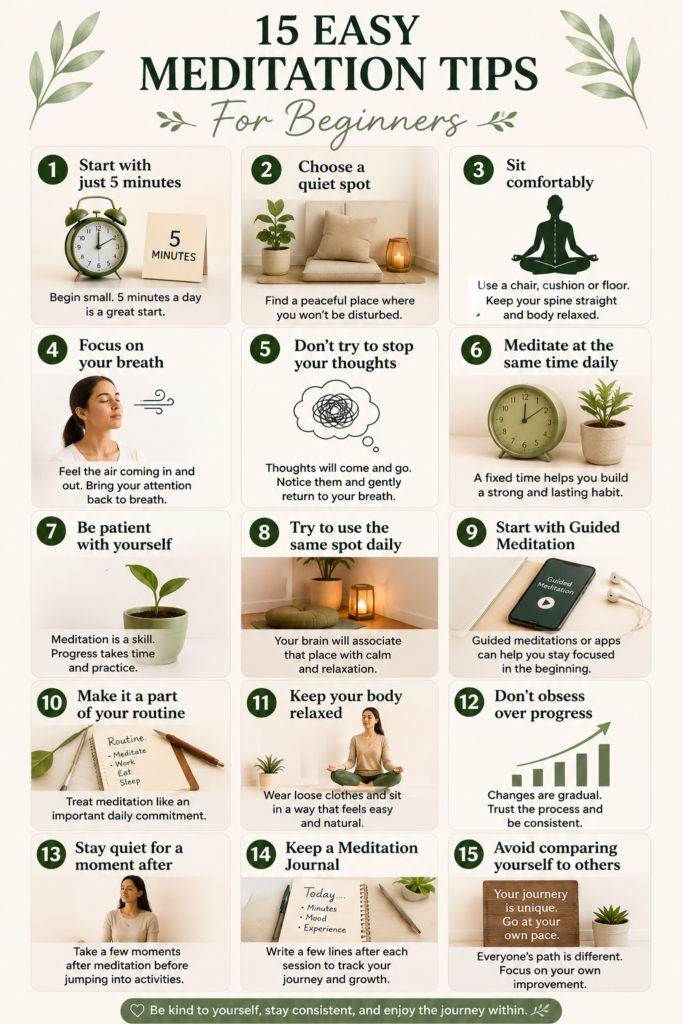
15 Easy Meditation Tips
- Start with just 5 minutes: Do not try to meditate for 30–60 minutes on your very first day simply because you saw someone else do it or got overly enthusiastic. Start with just 5 minutes daily, and gradually increase the time as the habit forms.
- Choose a quiet spot: Pick a peaceful corner in your home where noise is minimal and you won’t be interrupted during your practice.
- Sit comfortably: You can use a chair, the floor, or a cushion. Just make sure your spine stays naturally straight and your body feels completely at ease.
- Focus on your breath: Deeply feel the sensation of air moving in and out through your nose. If your mind drifts away, do not criticize yourself; simply bring your attention back to your breath gently.
- Do not try to stop your thoughts: A common misconception is that meditation requires a completely blank mind. Thoughts will naturally come and go. Your only job is to acknowledge them and keep returning your focus to your breathing.
- Meditate at the same time daily: Sticking to a fixed time makes it much easier to build a routine. Right after waking up or just before sleeping are excellent windows to choose from.
- Be patient with yourself: Meditation is a skill that takes time to master. Having your mind wander repeatedly during the first few days is entirely normal. Stay consistent rather than getting frustrated.
- Try to use the same spot every day: Meditating in the exact same place regularly trains your brain to automatically associate that space with peace and relaxation.
- Start with Guided Meditation if desired: If you find it difficult to concentrate on your own, try using audio tracks or apps with guided instructions to help ease you into the practice.
- Make meditation a non-negotiable part of your routine: Rather than meditating only when you feel inspired, treat it like brushing your teeth or eating—a fixed part of your daily schedule. Lock in a specific slot morning or night.
- Keep your body relaxed: Wearing tight or restrictive clothing can distract you and break your focus. Opt for loose, comfortable clothes and sit in a way that avoids putting unnecessary pressure on your body.
- Do not obsess over progress: Many expect miraculous transformations after just a few sessions. In reality, the benefits of meditation are subtle and manifest gradually over time.
- Stay quiet for a moment after finishing: Do not rush to pick up your phone or dive straight into chores the second you finish meditating. Sit quietly with your eyes open for a couple of minutes and observe how you feel.
- Keep a Meditation Journal if needed: Jot down a few brief notes in a diary after your practice. Documenting how many minutes you meditated, how it felt, or your mood afterward can keep you motivated.
- Avoid comparing yourself to others: Everyone’s internal journey with meditation is completely unique. Some notice shifts quickly, while others take a bit longer. Trust your own path and keep practicing.
Common Mistakes for Beginners While Meditating
Embarking on this journey means you might face a few practical hurdles or mental blocks. Being aware of these ahead of time will make your path much smoother:
- Attempting to sit for an excessively long duration right from day one.
- Feeling frustrated or giving up entirely because your mind wanders.
- Expecting immediate, overnight results from the practice.
- Forcing your mind to block out all thoughts aggressively.
- Being inconsistent and practicing occasionally rather than making it a daily habit.
- Noticing sudden back discomfort or an itch on your face a few minutes into sitting straight (this is often just a trick played by a restless mind trying to break your focus).
- Feeling your eyes grow heavy and falling asleep, especially when meditating in the late afternoon or right before bed.
When Should One Seek the Help of a Doctor or Mental Health Specialist?
While meditation is a fantastic tool for nurturing mental well-being, it is not a replacement for professional medical treatment. You should reach out to a qualified doctor or mental health professional (such as a psychiatrist or psychologist) without delay if you experience:
- Prolonged, intense anxiety or severe depression that doesn’t lift.
- Chronic insomnia or sleep disruptions that persist for a long time.
- Mental distress that severely impairs your daily responsibilities, work, or personal relationships.
- Any distressing or harmful thoughts directed toward yourself or others.
Conclusion
Meditation is neither magic nor a mystical secret. It is a straightforward, scientifically grounded, and healthy habit that, when practiced consistently, enhances mental peace, sharpens focus, and transforms the quality of your sleep. At its core, meditation is about getting to know your own mind and building a deep, lasting friendship with yourself.
So, approach it with an easy, open mind tonight and close your eyes for just 5 minutes. Give your mind that much-needed breathing room, inhale deeply, immerse yourself in the present moment, and take a gentle step forward toward your mental wellness every day. A calm mind is, after all, the true cornerstone of a healthy, happy, and balanced life.
FAQ
1. What is Meditation?
Answer: Meditation is a mental practice; it can help increase mental peace, focus, and self-awareness.
2. Is Meditation suitable for everyone?
Answer: Generally, Meditation is a safe practice for most healthy people. However, if someone has serious mental health problems, they should seek the advice of a qualified mental health specialist before starting Meditation.
3. How long should beginners practice Meditation?
Answer: For beginners, starting with 5–10 minutes of Meditation daily is sufficient. Later, as the habit forms, the time can be gradually increased to 15–20 minutes or more.
4. When is the best time to do Meditation?
Answer: Doing Meditation after waking up in the morning or before going to sleep at night can be convenient for many. However, the most important thing is to practice regularly at the same time every day.
5. Does Meditation help reduce Stress?
Answer: Yes. Regular Meditation can help reduce mental stress, keep the mind calm, and cope with the pressures of daily life for many people.
6. Can Meditation reduce Anxiety?
Answer: Meditation can be helpful in managing anxiety for many people. However, it is not a substitute for the treatment of an Anxiety Disorder. A doctor’s advice must be sought if necessary.
7. Does Meditation help improve sleep?
Answer: Yes. For many, regular Meditation calms the mind, reduces overthinking, and can assist in getting better quality sleep.
8. What should you do if your mind drifts away repeatedly during Meditation?
Answer: This is completely normal. If the mind drifts away, without blaming yourself, slowly bring your focus back to your breathing or the subject of Meditation.
9. Does Meditation require any special equipment?
Answer: No. Meditation does not require any special machinery or expensive equipment. A quiet environment and a few minutes of time are enough.
10. Is Guided Meditation good for beginners?
Answer: Yes. For many beginners, starting with Guided Meditation is easy because it provides step-by-step instructions.
11. How long does it take to see the results of Meditation?
Answer: This can vary from person to person. Some feel a change within a few weeks, while for others it may take longer. Regular practice is the most important thing.
12. When should one seek the help of a doctor?
Answer: If daily life is disrupted for a long time due to anxiety, depression, sleep problems, or mental stress, one should seek the advice of a qualified doctor or mental health specialist alongside Meditation.
Disclaimer
This article is intended for informational and educational purposes only and should not be considered medical advice, diagnosis, or treatment. The information shared is based on general health knowledge and reputable sources. Sleep needs and health conditions vary from person to person. If you experience persistent sleep problems, insomnia, breathing difficulties during sleep, or any other medical concerns, please consult a qualified healthcare professional. Always seek professional medical advice before making significant changes to your sleep habits or lifestyle.
The author and publisher shall not be held responsible for any loss, injury, damage, or adverse consequences resulting from the use, misuse, or interpretation of the information provided in this article. Readers are solely responsible for their own health-related decisions.