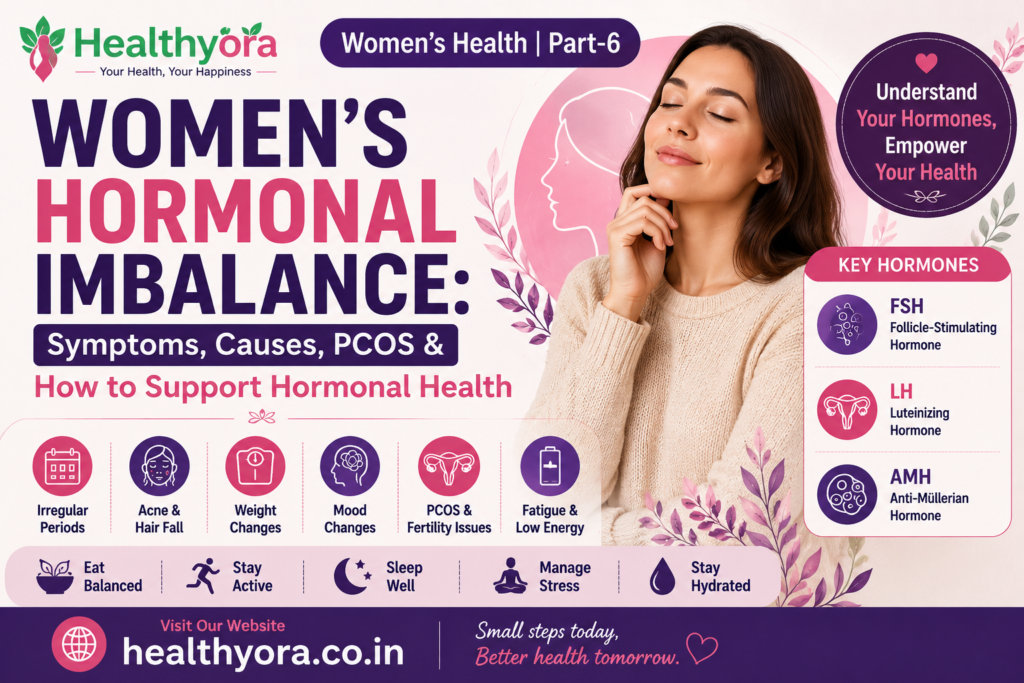
Hormones and Their Impact on Body and Mood
Even on holidays, does extreme fatigue weigh down your body, or does your mood suddenly become irritable without any reason?
Many might dismiss this as simple work pressure or mental exhaustion.
But Hormones play the key role behind these invisible changes in the body.
First, we need to know what a hormone is.
A hormone is a type of biochemical substance.
It is produced from specific endocrine or ductless glands.
It travels from its origin through fluid or with the help of blood to regulate bodily functions.
It is destroyed after completing its action.
This is called a hormone.
Hormones have a deep connection with the normal functions of a woman’s body.
Menstrual cycle, fertility, metabolism, energy, mood, sleep, pregnancy, and menopause—hormones play an important role at various stages of life.
Compared to men, women’s Hormones are more diverse and sensitive.
Every month during the menstrual cycle, hormone levels in women’s bodies fluctuate like waves.
However, modern life with processed foods and high stress disrupts this balance.
In turn, millions of women worldwide face complications like Hormonal Imbalance and PCOS.
These include irregular periods, weight changes, acne, excess hair, hair loss, fatigue, or mood changes.
However, the important thing is—there can be multiple reasons behind each of these symptoms. Therefore, seeing just one symptom, one should not assume “hormonal imbalance” on their own.
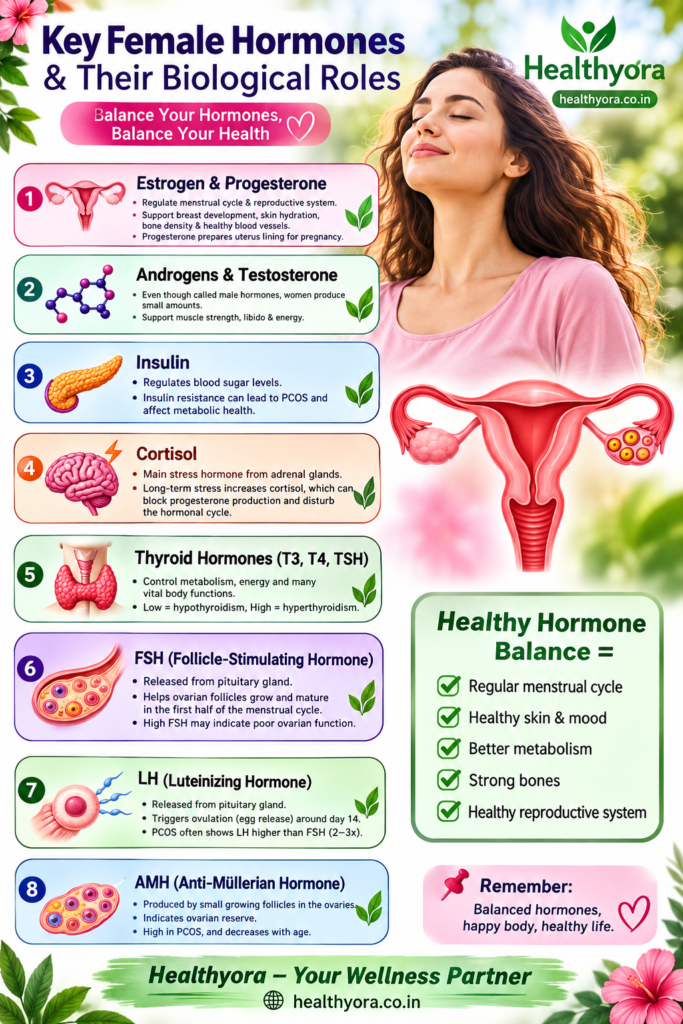
Major Female Hormones and Their Biological Roles
Several major hormones work together in women’s bodies.
1. Estrogen & Progesterone
Estrogen
This is the primary female sex hormone. Estrogen regulates the menstrual cycle, maintains the normal functioning of the reproductive system, and works to support breast structure, maintain skin moisture, protect bone density, and keep blood vessels healthy.
Progesterone
Progesterone plays an important role in the second part of the menstrual cycle and helps prepare the uterus lining for pregnancy. It is mainly secreted after ovulation (Ovulation). Progesterone is called the body’s natural “Calming Hormone.”
2. Androgen’s & Testosterone
Although called a male hormone, testosterone is also produced in small amounts in women’s bodies. It is needed for muscle firmness, libido (sexual desire), and energy.
3. Insulin
This metabolic hormone secreted from the pancreas regulates blood sugar levels. When the body does not respond normally to insulin, insulin resistance can occur. Insulin resistance can be specifically associated with conditions like PCOS and can impact metabolic health.
4. Cortisol
The primary stress hormone secreted from the adrenal gland. Under chronic mental stress, cortisol increases, which inhibits progesterone production and breaks down the hormonal cycle.
5. Thyroid Hormones (T3, T4, TSH)
The small thyroid gland located in the front of the neck helps regulate body metabolism, energy, and many critical physical processes. If less thyroid hormone is produced, hypothyroidism can occur, and if produced in excess, hyperthyroidism.
6. Follicle-Stimulating Hormone (FSH – Follicle-Stimulating Hormone)
Secreted from the pituitary gland in the brain, this hormone signals the follicles inside the ovaries (which contain eggs) to grow and mature during the first half of the menstrual cycle. An excessive rise of FSH in the blood indicates that the ovaries are not functioning properly (which usually occurs during menopause or premature ovarian failure).
7. Luteinizing Hormone (LH – Luteinizing Hormone)
Another crucial hormone secreted from the pituitary gland. Around the middle of the menstrual cycle (approximately the 14th day), a sudden surge of LH hormone enters the blood (known as the LH Surge). This sharp increase triggers the rupture of the follicle to release the mature egg, causing ovulation (Ovulation). In women with PCOS, LH levels are often 2 to 3 times higher than FSH, which hinders normal ovulation.
8. Anti-Valerian Hormone (AMH – anti-Valerian Hormone)
This is secreted directly from the small growing follicles of the ovaries. It primarily indicates a woman’s Ovarian Reserve. Because PCOS patients have numerous immature follicles in their ovaries, AMH levels in their blood are much higher. Conversely, as age increases or egg count depletes, AMH levels decline rapidly.
Symptoms of Hormonal Imbalance (Symptoms)
Are your body’s hormones in proper balance? The body sends signals of hormonal issues through the following symptoms:
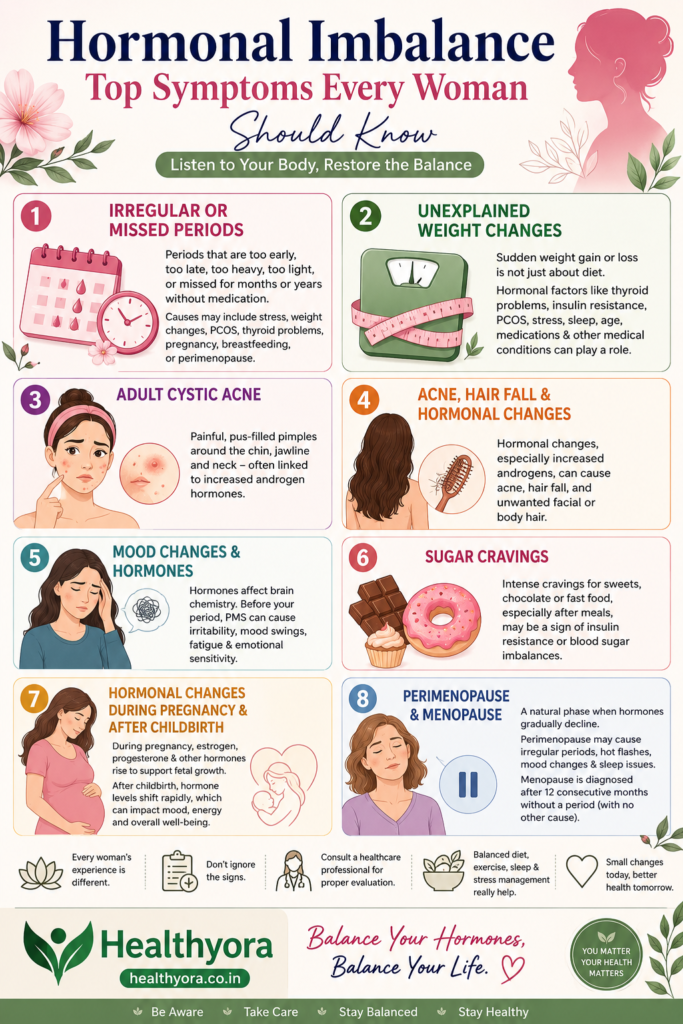
1. Irregular or Absent Menstrual Cycle
Periods not occurring on time, occurring multiple times in a month, excessive bleeding, or periods not happening for years without specific medication. Every woman’s menstrual cycle is not the same. Period patterns can change due to various factors like stress, significant weight changes, intense exercise, pregnancy, breastfeeding, PCOS, thyroid problems, and perimenopause.
Track Your Menstrual Cycle & Symptoms
Keeping a simple record of your period dates and symptoms can help you understand your menstrual patterns and notice changes over time.
 Check this Period Tracker Journal on Amazon https://link.amazon/B07CsbmTc
2. Unexplained Weight Changes
Hormones are not solely responsible for weight gain or loss. Diet, physical activity, sleep, stress, medications, age, and various medical conditions—all can affect weight. Thyroid problems, insulin resistance, or PCOS can be associated with weight changes in some cases.
3. Adult Cystic Acne (Cystic Acne)
Developing pus-filled and persistent pimples around the chin, jawline, and neck, which usually occurs due to an increase in androgen hormones.
4. Acne, Hair Fall & Hormonal Changes
Acne and hair-related changes can often be related to hormonal changes. Especially when androgen levels rise, acne or unwanted facial/body hair can appear.
5. Mood Changes & Hormones
There is a complex relationship between hormones and brain function. Due to PMS (Premenstrual Syndrome) before the menstrual cycle, irritability, mood changes, fatigue, or emotional sensitivity can occur.
6. Sugar Cravings (Sugar Cravings)
Having an intense desire to eat sweets, chocolate, or fast food right after meals (a sign of insulin resistance).
7. Hormonal Changes During Pregnancy & After Childbirth
During pregnancy, significant changes occur in estrogen, progesterone, and other hormones in a woman’s body. These changes are associated with pregnancy support and fetal development. Hormone levels also change rapidly after childbirth.
8. Perimenopause & Menopause
At the final stage of a woman’s reproductive life, hormones change gradually. Perimenopause is the transition period before menopause. During this time, the menstrual cycle can become irregular, and various symptoms can appear due to estrogen fluctuations. Menopause is usually determined retrospectively when there has been no menstrual period for 12 consecutive months and there is no other cause.
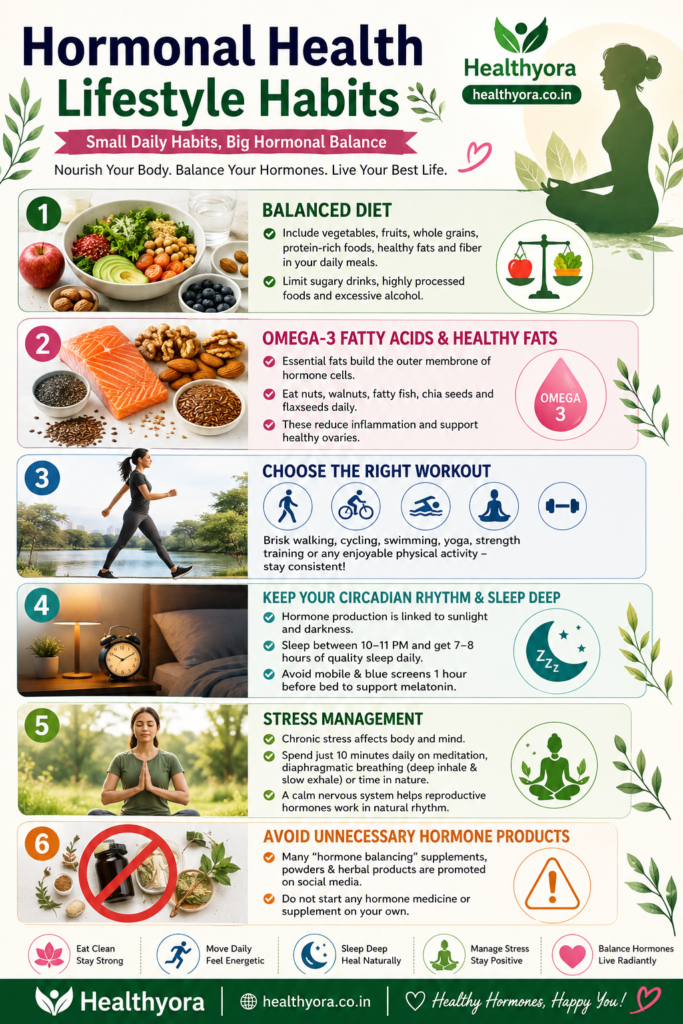
Lifestyle Habits to Maintain Good Hormonal Health
The most powerful tool for hormone repair is your daily food plate. The scientific dietary guideline is outlined below:
1. Balanced Diet
Keep vegetables, fruits, whole grains, protein-rich foods, healthy fats, and fiber in your daily diet. Try to reduce excess sugary drinks, highly processed foods, and excessive alcohol.
2. Omega-3 Fatty Acids & Healthy Fats
There is no alternative to fat for building the outer membrane of hormone cells. Consume almonds, walnuts, fatty fish, chia seeds, and flaxseeds daily. These reduce internal inflammation in the body and keep the ovaries healthy.
3. Choosing the Right Workout
Regularly do brisk walking, cycling, swimming, yoga, strength training, or any other enjoyable physical activity.
4. Maintaining Circadian Rhythm & Deep Sleep
Hormone production is directly linked with sunlight and nighttime darkness. Go to sleep between 10 PM and 11 PM and ensure 7–8 hours of sleep daily. Keep mobile phones and blue screens off 1 hour before bed so that melatonin hormone can work properly.
5. Stress Management
Chronic stress can affect the body and mind. Spend just 10 minutes daily on meditation, diaphragmatic breathing (deep inhalation and slow exhalation), or spending time with nature. When the nervous system is calm, reproductive hormones naturally begin to function in their normal rhythm.
6. Avoid Unnecessary Hormone Products
Nowadays on social media, many supplements, powders, and herbal products are promoted under the name of “hormone balancing.” Do not start any hormone medicine or supplement on your own.
PCOS and PCOD: Detailed Truths and Misconceptions
Currently, at least 1 in 5 women is affected by PCOS (poly cystic Ovary Syndrome).
- PCOD (poly cystic Ovarian Disease): This is essentially a relatively milder ovarian issue where immature eggs turn into small cysts.
- PCOS (poly cystic Ovary Syndrome): This is a deeper metabolic condition where the body’s hormones, insulin, and metabolism are simultaneously affected.
4 Main Types of PCOS
- Insulin-Resistant PCOS: This is the most common form (in about 70% of cases). Testosterone increases due to high insulin, leading to weight gain.
- Post-Pill PCOS: When birth control pills are suddenly stopped after long-term use, the body temporarily faces this issue.
- Inflammatory PCOS: Hormonal variations occur due to allergies, junk food, and gut problems.
- Adrenal PCOS: Due to excessive stress, a stress hormone called DHEA-S increases excessively from the adrenal gland.
When to See a Specialist Doctor?
If any of the following changes are persistent, severe, or unexplained, it is important to consult an experienced Gynecologist or Endocrinologist without taking medication on your own whim:
- Repeated irregular periods
- Not having periods for a long time
- Very heavy or unusual bleeding
- Sudden unexplained weight change
- Persistent acne
- Excessive facial/body hair
- Sudden or severe hair loss
- Persistent fatigue
- Thyroid-related symptoms
- Severe mood changes
- Fertility-related difficulties
- Vaginal bleeding after menopause
Conclusion
Hormones are part of an extremely important biological system in a woman’s body. Estrogen, progesterone, thyroid hormones, insulin, and other hormones are linked to various body processes. Hormonal imbalance or PCOS is not a curse; it is essentially a message from the body—hormones do not fix overnight. The body requires at least 3 to 6 months of consistent care to regain its natural hormonal rhythm.
Pay attention to your diet, sleep, physical movement, and mental peace starting today. Love your body, respect your hormones, and enjoy a vibrant, disease-free, and energized life!
Frequently Asked Questions
1. What are the common signs of hormonal imbalance?
Ans. Irregular periods, acne, unusual hair growth, unexplained weight changes, fatigue, and mood changes can be related to hormonal problems in some cases. However, these are not specific.
2. Is PCOS only a reproductive problem?
Ans. No. Along with reproductive health, PCOS can also be related to metabolic health.
3. Are supplements needed to balance hormones?
Ans. The need for supplements or hormone medication depends on the condition. It should not be started on one’s own.
4. Can one get pregnant with PCOS?
Answer: Certainly. PCOS is not permanent infertility. Once normal ovulation resumes through proper nutrition and ovulation tracking, most women give birth to healthy babies naturally without complex medical procedures.
5. If periods are irregular, is it a hormonal problem?
Ans. Not always. Stress, pregnancy, weight changes, intense exercise, PCOS, thyroid problems, and other reasons may be present.
6. Is it possible to completely cure PCOS?
Answer: Through proper diet, regular exercise, weight management, and stress management, it is entirely possible to 100% eliminate the symptoms of PCOS and restore completely normal periods and the capability to conceive.
7. How to identify insulin resistance?
Answer: Feeling extremely sleepy after meals, repeatedly craving sweets even after eating, and abdominal fat not reducing are the primary symptoms of insulin resistance.
Disclaimer
The information provided in this article is for educational and informational purposes only and should not be considered medical advice, diagnosis, or treatment. Always consult a qualified doctor or healthcare professional regarding any medical concerns, symptoms, or before making changes to your diet, exercise, or treatment plan. Never ignore professional medical advice or delay seeking treatment based on information from this website. Healthyora and the author are not responsible for any decisions or actions taken based on the content of this article.