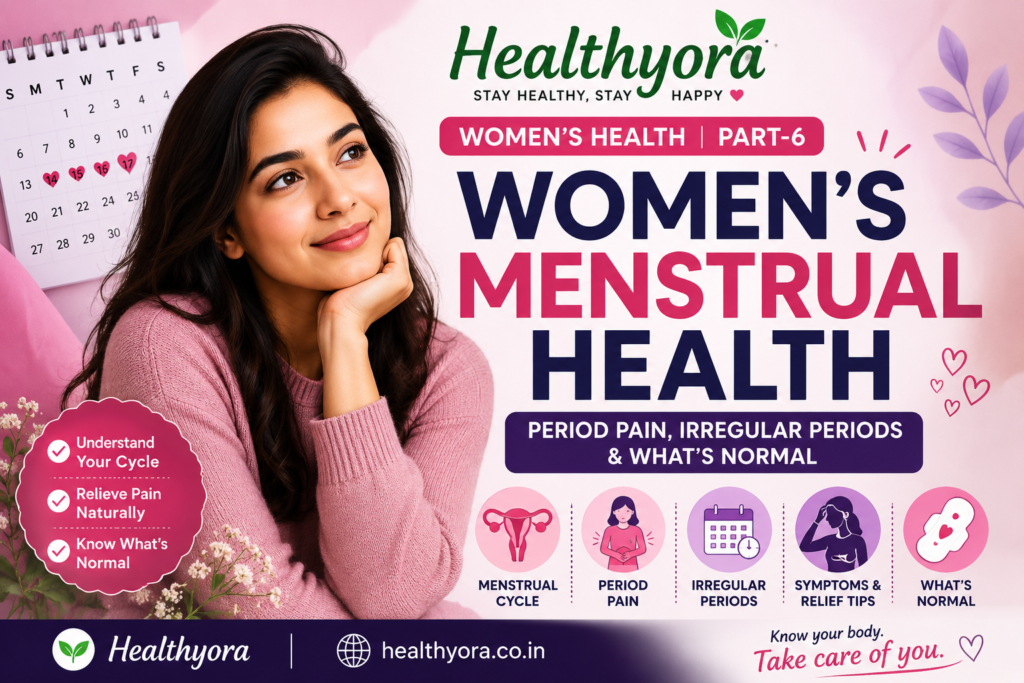
Menstrual health is an important part of a woman’s overall health. Not every woman’s menstrual cycle is the same. Someone’s cycle may be relatively shorter, someone’s may be a bit longer, and period flow and symptoms can also vary from person to person. Therefore, knowing your body’s normal pattern is extremely important.
A period is not a matter of shame; it is nature’s perfect physiological rhythm. Every month the body reorganizes itself anew. But when this rhythm is disrupted—severe, unbearable pain appears, and extreme variations occur in the amount of bleeding. In this article, we will learn how the menstrual cycle works, which period symptoms are common, what the potential causes of period pain and irregular periods are, and when to seek medical advice.
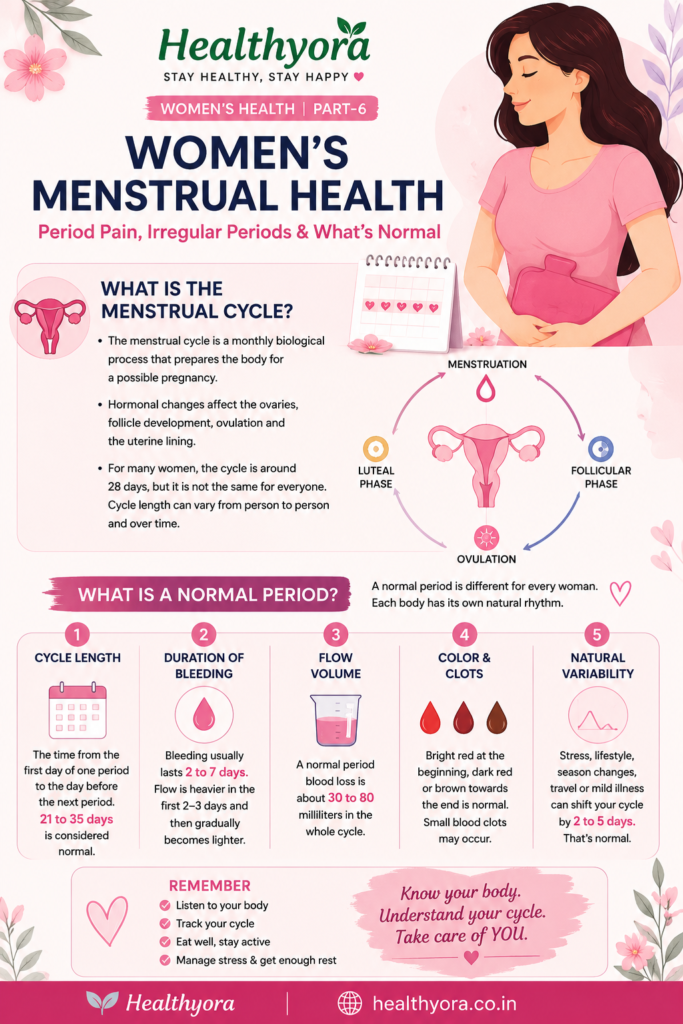
What Is the Menstrual Cycle?
The menstrual cycle is a monthly biological process through which the body prepares for a potential pregnancy. Due to hormonal changes during the cycle, follicle development in the ovaries, ovulation, and changes in the uterine lining occur. Although many people’s menstrual cycle is close to about 28 days, it is not the same for everyone. Cycle length can vary depending on the individual and time.
What Is a Normal Period?
A “normal period” is not the same for everyone. Every woman’s body works at its own pace. Therefore, one woman’s cycle may not match another woman’s cycle exactly.
1. Cycle Length
The time from the first day of one period to the day just before the first day of the next period is called the cycle length. According to medical standards, any cycle between 21 days and 35 days is considered normal.
2. Duration of Bleeding
Generally, it is normal for bleeding to last from 2 days to 7 days. During the first two or three days of periods, blood flow is relatively heavier, and in the following days, it gradually lightens and stops.
3. Flow Volume
In a normal cycle, an average of 30 to 80 milliliters of blood is discharged throughout the entire period.
4. Color & Clots
At the beginning of periods or when the flow is heavy, the color of blood can be bright red. When blood flow is slower or towards the end, coming into contact with oxygen, it is completely normal for the color to turn dark red, brownish, or slightly blackish (Brown/Dark Red). Occasionally, small blood clots may pass.
5. Variability
Due to work pressure, seasonal change, travel, or a mild cold and fever, in some months there can be a 2 to 5 days difference in the cycle date.
Irregular Periods
If a woman’s menstrual cycle arrives earlier than 21 days, is delayed beyond 35 days, or if periods are missed more than 4 to 5 times a year, it is called irregular periods. Multiple physical, hormonal, and psychological factors work behind this:
1. Polycystic Ovary Syndrome (PCOS)
The most common cause of irregular periods is PCOS. In this, due to the presence of excess androgens (male hormones) and insulin in the body, a healthy egg cannot mature from the ovary each month, and ovulation does not occur. If the egg does not release, progesterone hormone is not produced, resulting in periods not happening on time.
2. Thyroid Gland Imbalance
The thyroid gland in the throat regulates our entire metabolism and reproductive hormones. If thyroid hormone decreases, metabolism slows down, leading to delayed periods and potentially heavy bleeding. Conversely, if thyroid hormone increases excessively, periods can be very light or stop completely.
3. Chronic Stress & Hypothalamic Amenorrhea
Excessive mental stress multiplies cortisol hormone in the blood many times over. Then the brain’s hypothalamus temporarily deactivates the reproductive axis. The body perceives that there is no suitable environment for pregnancy at this moment, causing periods to stop completely.
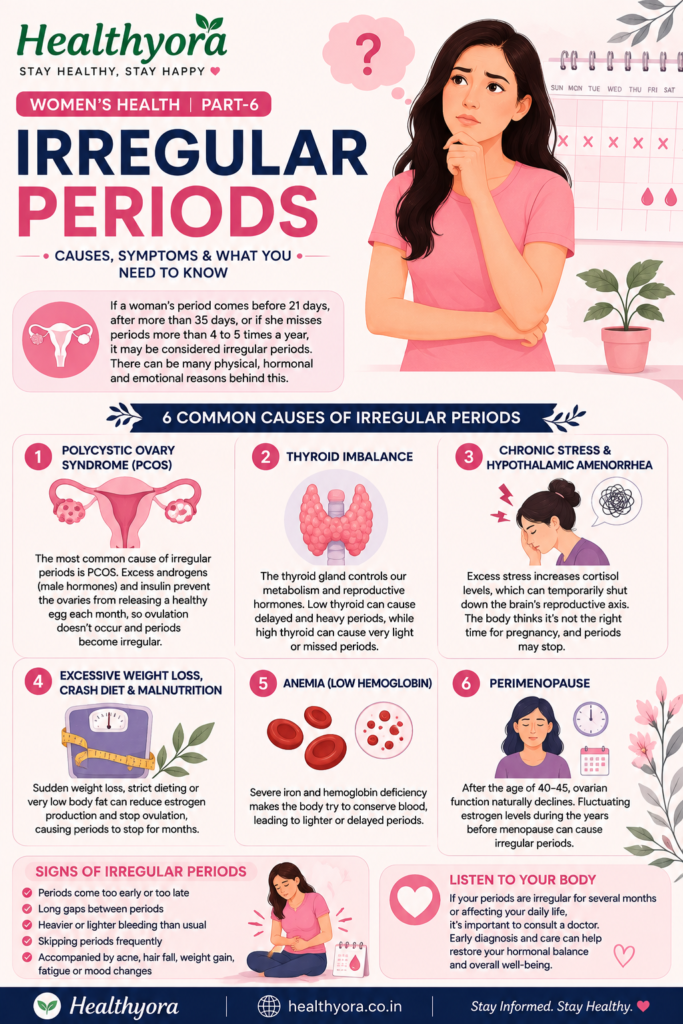
4. Excessive Weight Loss, Crash Dieting & Malnutrition
Suddenly going on an overly strict diet or losing too much weight drops the body fat percentage excessively low. When fat decreases, estrogen production halts, and periods remain stalled for months.
5. Anemia (Low Hemoglobin)
If there is an acute deficiency of iron and hemoglobin in the body, the body reduces menstrual blood flow or delays periods in order to conserve its precious blood.
6. Perimenopause
After the age of 40 to 45, women’s ovarian function naturally begins to decline. Because estrogen levels fluctuate irregularly during this time, periods becoming very irregular in the few years prior to menopause is a common biological transition.
Period Pain (Dysmenorrhea): Which Is Normal, Which Is a Warning Sign?
Pain or cramps in the lower abdomen during periods is called Dysmenorrhea. Although this is part of many women’s normal menstrual experience, the intensity of pain can vary from person to person. It is basically divided into two types:
1. Primary Dysmenorrhea (Normal Physical Pain)
Due to the role of a chemical called prostaglandin when the uterus contracts, period cramps or pain can occur. A few hours before or right as the period begins, mild to moderate aching or cramping pain occurs in the lower abdomen, lower back, or back of the thighs. Generally, within the first 24 to 48 hours, this pain subsides on its own.
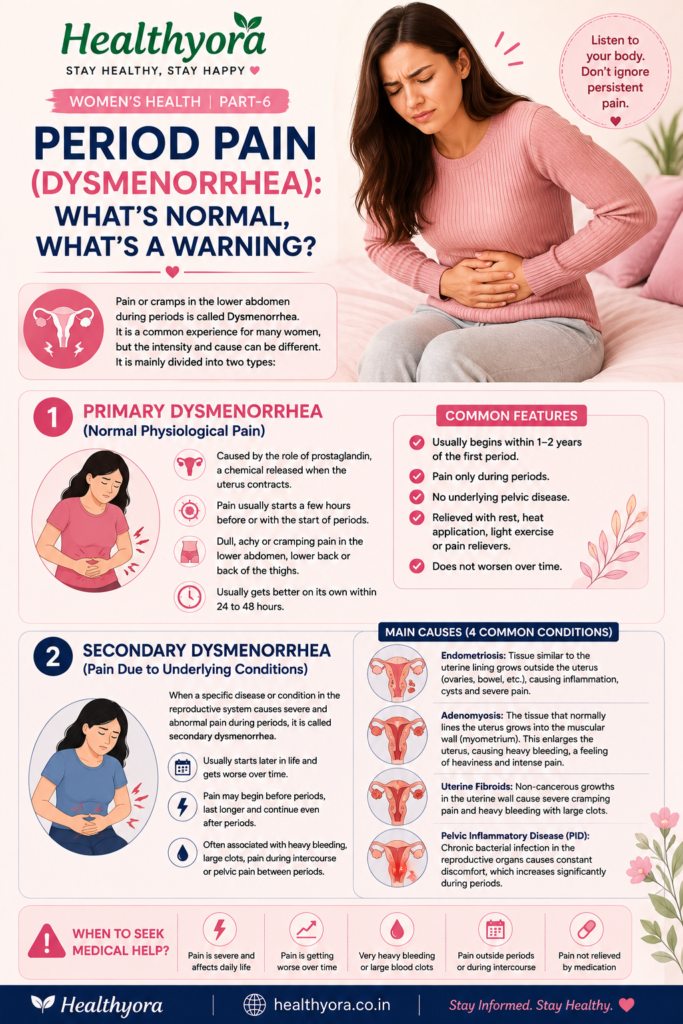
2. Secondary Dysmenorrhea (Disease-Related Dangerous Pain)
When severe and abnormal pain during periods is caused by a specific underlying disease of the reproductive system, it is called secondary dysmenorrhea. Generally, this type of pain can begin with increasing age and become progressively more severe or prolonged over time. Its 4 main causes:
- Endometriosis: The inner lining of the uterus spreads outside (to the ovaries or intestines), causing severe inflammation, cysts, and excruciating pain.
- Adenomyosis: When cells of the inner lining of the uterus grow into the outer muscular wall of the uterus (Myometrium). As a result, the size of the uterus enlarges, a heavy dragging sensation is felt in the lower abdomen, and excessive bleeding occurs alongside unbearable pain.
- Fibroids: Non-cancerous tumors or benign growths develop in the uterine wall, causing severe cramping pain and passing large blood clots.
- Pelvic Inflammatory Disease (PID): Due to chronic bacterial infection in reproductive organs, constant uncomfortable pain persists in the lower abdomen, which multiplies many times during periods.
Gentle Heat for Period Pain
Applying gentle heat to the lower abdomen may help relax muscles and provide temporary relief from menstrual cramps.
👉 Check this Heating Pad on Amazon:https://link.amazon/B08VP3DZd
Heavy Periods — When Is It Too Much?
Some women may naturally have more bleeding compared to others. If during periods one repeatedly has to change sanitary products very frequently, large blood clots appear, bleeding lasts for many days, or weakness and difficulties in daily activities occur due to bleeding, one should speak with a healthcare professional. Heavy menstrual bleeding can carry a long-term risk of developing iron deficiency or anemia.
Especially if heavy periods are accompanied by fatigue, dizziness, weakness, or shortness of breath, a medical evaluation is critical.
PMS — Premenstrual Syndrome
PMS or Premenstrual Syndrome is a group of physical and emotional symptoms that can appear before a period begins.
Common symptoms:
- Mood changes
- Irritability
- Bloating
- Breast tenderness
- Headache
- Fatigue
- Food cravings
- Mild anxiety
PMS symptoms usually subside after the period begins.
Scientific Home Remedies to Reduce Period Pain and Discomfort
Mild to moderate period cramps can be managed at home using natural remedies:
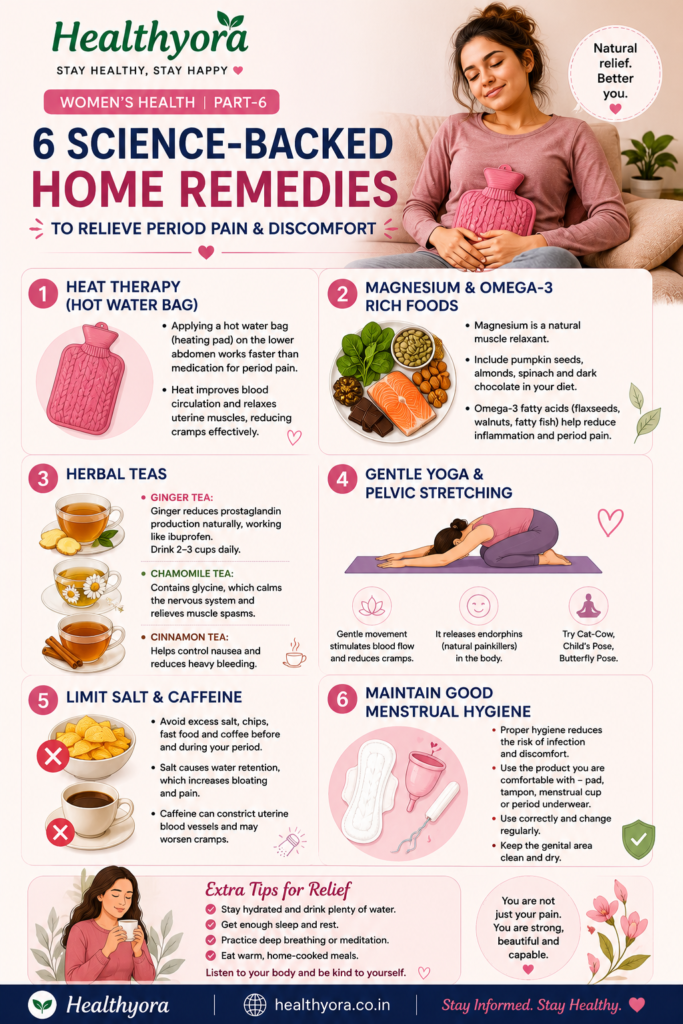
- Heat Therapy (Hot Water Bag)
Placing a hot water bag (Heating Pad) over the abdomen works even faster than medicine for period pain. - Foods Rich in Magnesium and Omega-3
Magnesium is a natural “muscle relaxer.” Include pumpkin seeds, almonds, spinach, and dark chocolate in your diet starting a week before your period begins. Alongside, omega-3 fatty acids (flaxseeds, walnuts, fatty fish) greatly help reduce uterine inflammation. - Herbal Teas
- Ginger Tea: Ginger plays an effective role similar to ibuprofen in naturally reducing prostaglandin production. Having 2–3 cups of ginger tea a day relieves lower abdominal cramping.
- Chamomile Tea: It contains an amino acid called glycine, which calms the nerves and relieves muscle spasms.
- Cinnamon Tea: Cinnamon is extremely beneficial in managing nausea and heavy blood flow.
- Gentle Yoga and Pelvic Stretching
Instead of staying sedentary during periods, engaging in light movement releases endorphins, the body’s natural pain-relieving hormones. - Limiting Salt and Caffeine
Avoid overly salty chips, fast food, and coffee in the days leading up to your period. Salt retains water in the body (Water Retention), which increases abdominal bloating and the sensation of pain. Coffee constricts uterine arteries, which can worsen pain. - Keep Yourself Hygienic
Proper hygiene during periods can help reduce infection and discomfort. Whatever product you use—pad, tampon, menstrual cup, or period underwear—it is important to use it properly and change it regularly.
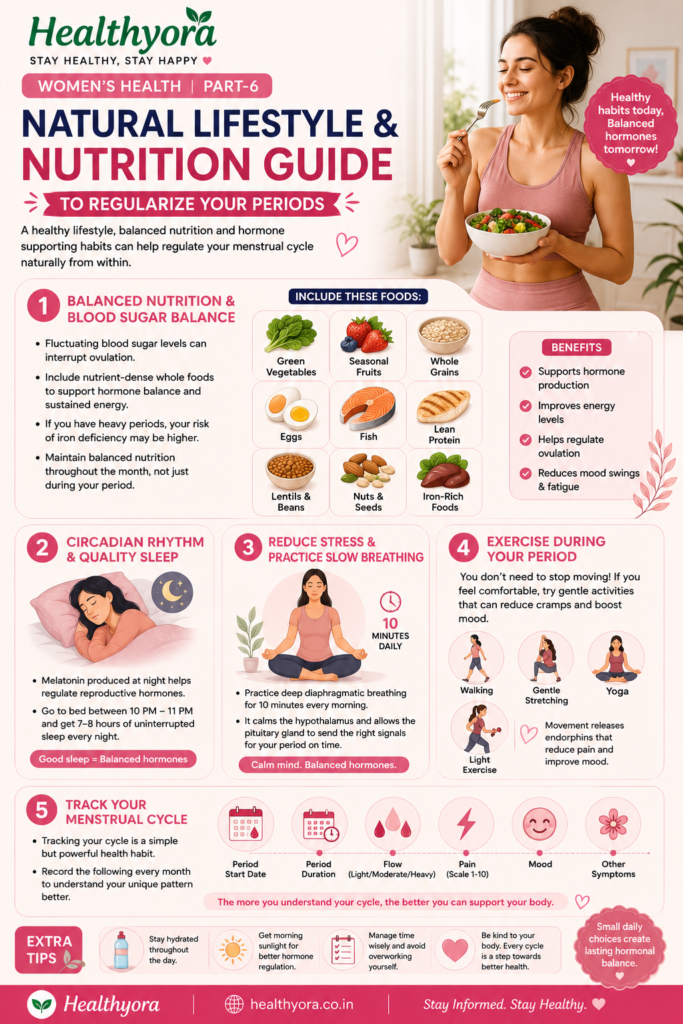
Natural Lifestyle and Nutrition Guide to Regulate Periods
To keep the menstrual cycle regular in the long run, essential nutrients and a balanced diet can help strengthen the hormonal system from within and supply energy to the body.
- Balanced Nutrition & Blood Sugar Balance
Fluctuations in blood sugar levels can halt ovulation. You can include in your food:- Green vegetables
- Seasonal fruits
- Whole grains
- Eggs
- Fish
- Lean protein
- Lentils and beans
- Nuts and seeds
- Iron-rich foods
- Circadian Rhythm & Uninterrupted Sleep
If the melatonin hormone is not properly produced at night, the rhythm of reproductive hormones gets disrupted. Go to sleep between 10 PM and 11 PM every day and ensure 7–8 hours of sleep. - Stress Reduction & Slow Breathing
Practice deep breathing (Deep Diaphragmatic Breathing) for just 10 minutes every morning. This keeps the brain’s hypothalamus calm and allows signals for periods to arrive from the pituitary gland at the right time. - Exercise During Your Period
There is no need to completely stop exercising during periods—if the body feels comfortable. Light activities such as walking, gentle stretching, yoga, and light exercise can provide relief for cramps and mood for some people. - Track Your Menstrual Cycle
Tracking your period is a simple yet useful health habit. You can write down every month: Period start date → Period duration → Flow → Pain → Mood → Other symptoms. This makes it easier to understand your menstrual pattern.
When Should You See a Doctor?
If any of the following changes occur, you should seek advice from a healthcare professional:
- Period repeatedly becoming very irregular
- Absence of periods for a long time
- Very heavy bleeding
- Long-lasting or unbearable period pain
- Unexplained bleeding between periods
- Repeated bleeding after sex
- Severe weakness or dizziness
- Period accompanied by fever or unusual discharge
- Sudden major change in menstrual pattern
- Daily activities being disrupted due to symptoms
Especially if previously regular periods suddenly change, understanding the cause is important.
To confirm the real cause of irregular periods, having the following tests done under medical advice is extremely important:
- Ultrasonography (USG of Lower Abdomen / TVS): Clearly detects whether there are any fibroids in the uterus or cysts/ovary abnormalities in the ovaries.
- Hormone Panel (on the 2nd or 3rd day of the period): LH, FSH, TSH, Serum Prolactin, and Total Testosterone.
- Complete Blood Count (CBC): To determine whether anemia (hemoglobin deficiency) has occurred due to excessive blood loss.
- Pelvic Examination & Pap Smear: To screen for infections or the presence of abnormal cells in the cervix.
Conclusion
Menstrual health is an important part of women’s overall health.
A period is not a symbol of weakness; a healthy menstrual cycle means a vibrant, confident, and disease-free life. Know your body, record the dates and changes of each menstrual cycle in a diary or a period tracking app. Consume nutritious food, get adequate rest, and if you notice any abnormal symptoms, seek help from a specialist doctor without any hesitation or shame.
The most important thing is, instead of considering your period a matter of shame, view it as an important signal of health.
Know your cycle. Listen to your body. Take care of your health.
Frequently Asked Questions
1. Is it abnormal if it’s not a 28-day cycle?
Ans. No. Not every woman’s menstrual cycle is the same length. Your own regular pattern and changes in it are more important.
2. Are cramps during periods normal?
Ans. Moderate cramps can be common. But if the pain is severe or disabling, an underlying cause may need to be investigated.
3. Is taking painkillers for period pain harmful?
Answer: If the pain is unbearable, taking them according to a doctor’s advice is completely safe. However, taking excess painkillers regularly without a doctor’s prescription should be avoided, as it puts pressure on the stomach (gastric issues) and kidneys.
4. What is the normal color of blood during periods?
Answer: The color of blood can change throughout the duration of a period. When blood flow is rapid, the color remains bright red. If the flow is slightly slower, it turns dark red or maroon. And at the beginning or the very end of periods, accumulated older blood coming into contact with oxygen appears brown or dark red—this is completely normal.
5. Does taking birth control pills cure irregular periods permanently?
Answer: No. Birth control pills keep periods temporarily regular using synthetic hormones (known as withdrawal bleeding). But once you stop taking the pill, the underlying issue returns.
6. Is hormonal imbalance the only cause of irregular periods?
Ans. No. Stress, weight changes, pregnancy, breastfeeding, PCOS, thyroid problems, medications, and other factors can also cause irregular periods.
7. Can you exercise during periods?
Ans. If the body feels comfortable, walking, stretching, or light exercise can be done.
8. How many times a day should a sanitary pad be changed?
Answer: No matter how light the blood flow is, sanitary pads should be changed every 4 to 6 hours to prevent bacterial infections. However, for those with heavier flow, in many cases, they change sanitary pads every 2 hours.
Disclaimer
The information provided in this article is for educational and informational purposes only and should not be considered medical advice, diagnosis, or treatment. Always consult a qualified doctor or healthcare professional regarding any medical concerns, symptoms, or before making changes to your diet, exercise, or treatment plan. Never ignore professional medical advice or delay seeking treatment based on information from this website. Healthyora and the author are not responsible for any decisions or actions taken based on the content of this article.