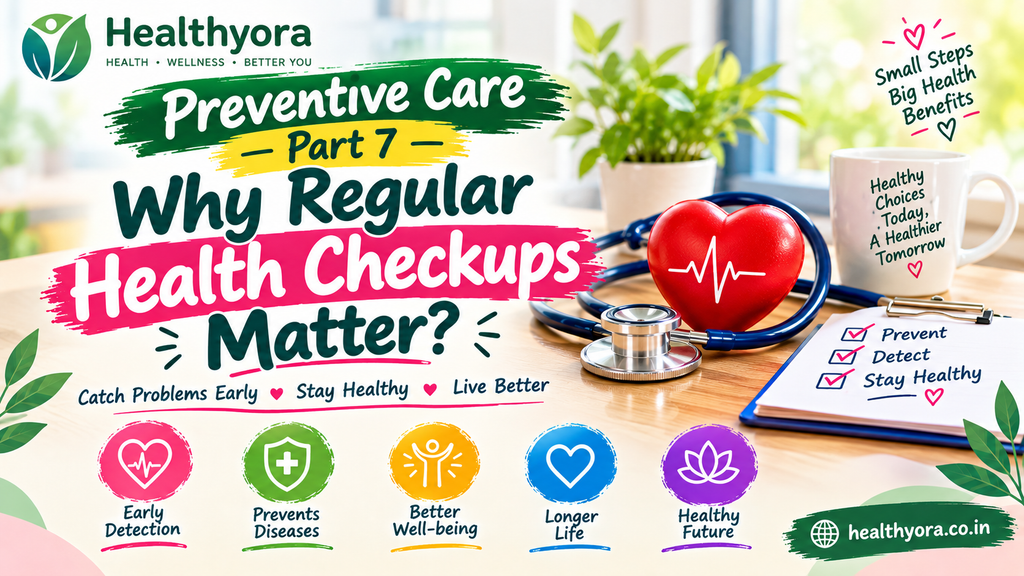
Our mindset is—”As long as there is no severe pain or distress in the body, there is no need to go to the hospital or see a doctor.” Most people think that treatment is only for sick people. But the primary objective of Preventive Care is to identify potential health risks in advance and take necessary steps, rather than starting treatment only after falling ill.
What Is a Health Checkup Really?
A health checkup is a process of gaining an overall understanding of your current health. It is a scientific, routine process to evaluate the normal functioning of various bodily organs, blood and hormone levels, and overall physiological state while in a healthy condition.
Depending on necessity, it may include—
- Blood Pressure check
- Weight & BMI assessment
- Blood sugar or HbA1c
- Cholesterol/Lipid profile
- Certain blood tests
- Cancer screening
- Eye & dental checkup
- Mental health assessment
- Vaccination review
- Lifestyle & family history discussion
Why Is Knowing Before Problems Arise Important?
Many health problems do not produce very clear symptoms at the beginning. As an example, high blood pressure can often exist without any symptoms. Therefore, blood pressure screening is recommended for adults. Similarly, in some people, even when blood sugar problems begin, they cannot realize it themselves. In other words, assuming that “no symptom” means everything is fine is not correct.
Why Is Regular Health Checkup Essential for Every Human Being?
Getting regular health checkups is not a meaningless luxury; it is the most reliable investment for your family and financial security. The top 5 scientific reasons are discussed below:
1. Early Stage Disease Detection & Easy Recovery (Early Detection Saves Lives)
If any complex disease is caught at an early stage, it is possible to keep it under control through simple dietary changes, basic lifestyle modifications, or low-dose medications.
2. Preventing Skyrocketing Medical Costs & Financial Disaster
If a major illness suddenly occurs—such as a heart attack, stroke, or kidney failure—there is a high probability of significant expenses for hospital admission, ICU, and long-term treatment. But getting a basic screening package once a year at a nominal cost can protect the family from such major disasters.
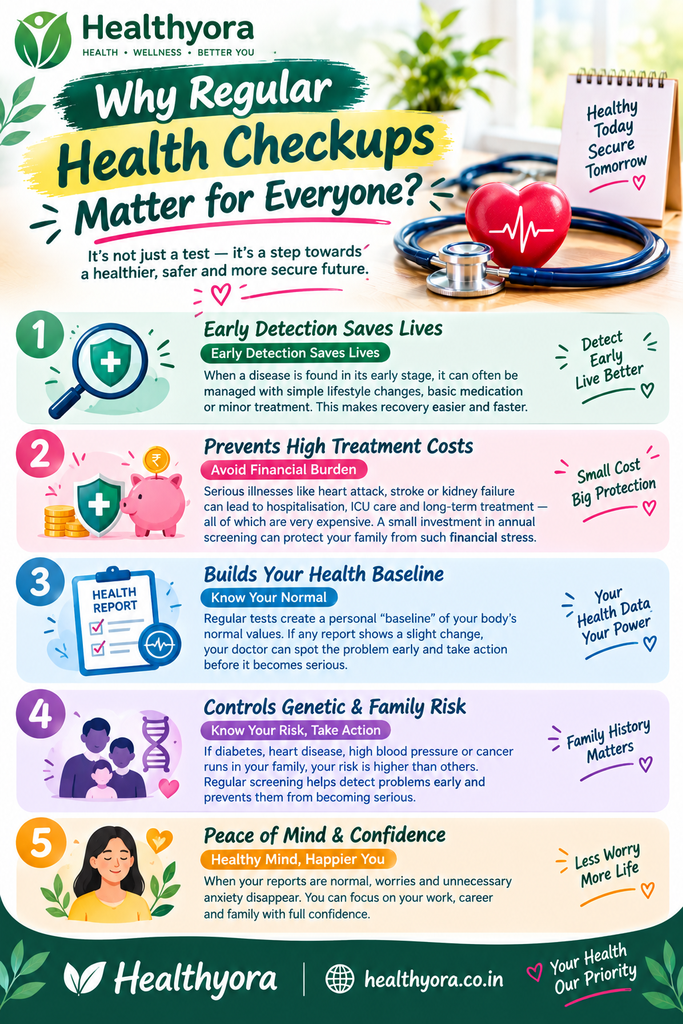
3. Establishing a Personal “Health Baseline”
Regular testing establishes a “normal baseline” or standard for your own body. Consequently, if a slight change appears in any future report, a doctor can understand whether an abnormality is developing in your body.
4. Genetic & Family Risk Management (Family History Management)
If your family already has a history of diabetes, heart disease, high blood pressure, or cancer, your risk of developing those diseases is manifold higher than normal. Through regular screening tests, genetic risks can be countered at the right time.
5. Peace of Mind & Confidence (Peace of Mind)
When test reports come back normal, unfounded fears and anxiety within the mind are removed. You can focus on your work, career, and family with complete confidence.
Health Checkups Change According to Age
1. 20s (Age 20–29)
At this age, attention can be given to—
Focus:
- Healthy diet
- Physical activity
- Healthy weight
- Blood pressure
- Vaccination
- Mental health
- Sexual/reproductive health as needed
- Necessary screening based on family history
Essential Tests:
- Complete Blood Count (CBC)
- Blood pressure check (at least once a year)
- Fasting lipid profile (to confirm baseline)
- Blood glucose & urine routine (Urine R/M)
- STI/STD screening for the sexually active
- Pap Smear from age 21 for women
2. 30s (Age 30–39)
Focus:
- Blood pressure
- Blood sugar
- Lipid profile
- Weight/BMI
- Reproductive health
- Mental health
- Family-history based screening, etc., may be considered.
Essential Tests:
- Fasting sugar and HbA1c (average blood sugar of the last 3 months)
- Liver Function Test (LFT) and Kidney Function Test (KFT/Creatinine)
- Thyroid profile (TSH, FT4)
- Vitamin D3 and Vitamin B12 test
- Ultrasonography of the abdomen (USG of Whole Abdomen)
- Basic ECG (ECG)
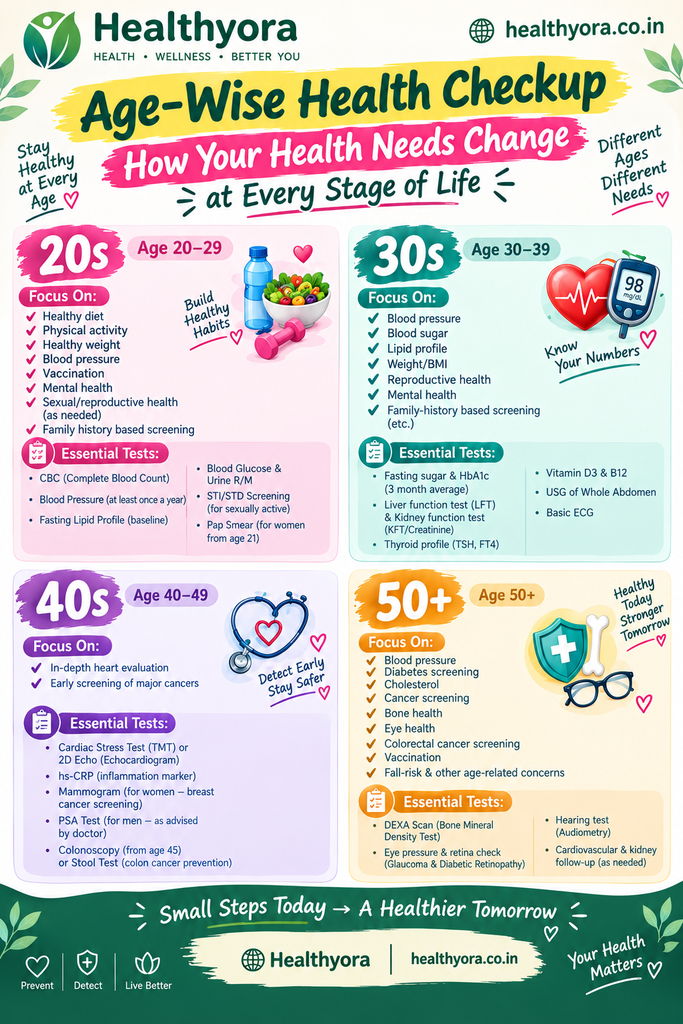
3. 40s (Age 40–49)
Focus: In-depth cardiac evaluation and early screening of major cancers.
Essential Tests:
- Cardiac Stress Test (TMT) or 2D Echocardiogram (Echo)
- hs-CRP marker to measure inflammation in blood vessels
- Mammography (Mammogram – breast cancer screening) for women
- Prostate examination (PSA Test) for men under doctor’s advice
- Colonoscopy or stool test from age 45 to prevent colon cancer
4. Age 50+
Focus: As needed—
- Blood pressure
- Diabetes screening
- Cholesterol
- Cancer screening
- Bone health
- Eye health
- Colorectal cancer screening
- Vaccination
- Fall-risk and other age-related concerns
Essential Tests:
- DEXA Scan (Bone Mineral Density Test)
- Regular eye pressure and retina checkup (Glaucoma & Diabetic Retinopathy)
- Hearing test (Audiometry)
- Continuous cardiovascular and kidney follow-up
Why Is Preventive Checkup Especially Important for Women?
Physical and hormonal changes occur at different times in a woman’s life. Such as—
- Menstruation
- Pregnancy
- Postpartum period
- Perimenopause
- Menopause
Therefore, alongside reproductive and hormonal health, it is also necessary to pay attention to other general health risks.
Lifestyle Is Also Part of a Health Checkup
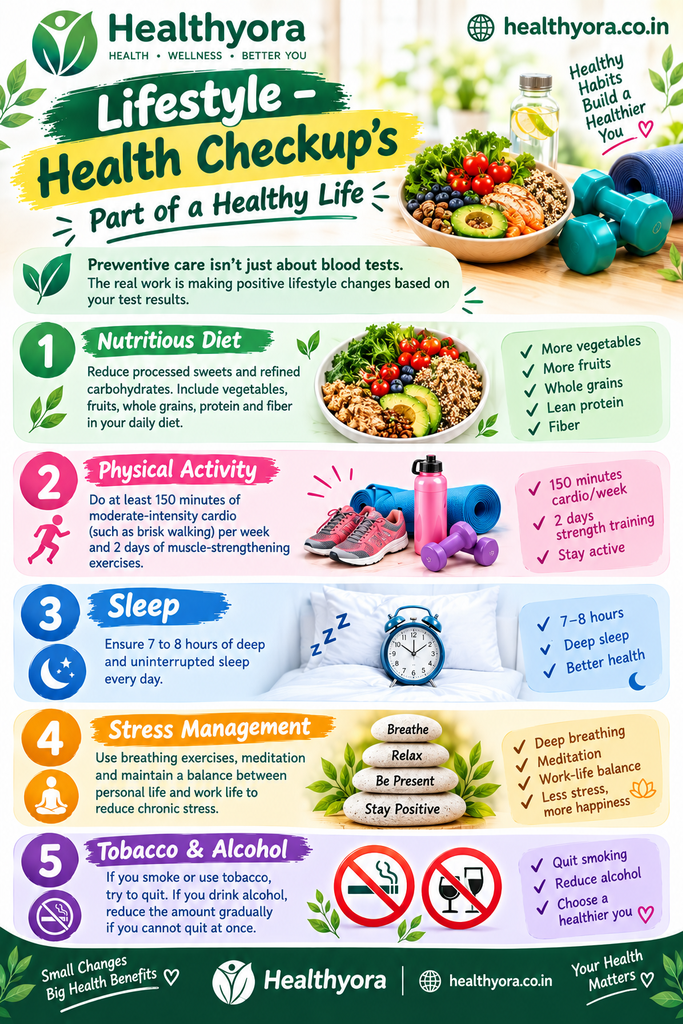
Preventive care does not mean just blood tests. But the real task is to bring positive changes to lifestyle according to the report’s directions.
- Balanced Nutrition: Reducing processed sweets, refined carbohydrates, and keeping vegetables, fruits, whole grains, protein, fiber, and leafy greens in your daily food.
- Physical Activity: Doing at least 150 minutes of moderate-intensity cardio (brisk walking) per week and muscle-strengthening exercises 2 days a week.
- Sleep: Ensuring 7 to 8 hours of deep, uninterrupted sleep every day.
- Stress Management: Deep breathing exercises, meditation, and balancing personal life with the workplace to eliminate chronic mental stress.
- Tobacco and Alcohol: Checking whether there is smoking or tobacco use, and if there is alcohol intake, gradually reducing its amount if quitting completely is not possible.
What Preparation Should You Take Before a Health Checkup?
Writing down some information before the checkup makes discussions with the doctor easier.
- For fasting blood sugar and lipid profile, you must remain on an empty stomach for 8 to 12 hours after finishing dinner the night before the test.
- Avoid heavy gym or intense workouts and alcohol at least 24 to 48 hours before the test.
- If you take regular medication, speak to the lab or doctor regarding whether to take it on the morning of the test.
- Keep previous medical reports, allergy information, family medical history, past surgery or major illness information, vaccination history, and recent symptoms close at hand.
Blood Sugar Monitoring at HomeRegular blood glucose monitoring can help people with diabetes keep track of their blood sugar levels and discuss changes with their healthcare professional when needed.👉 Check this Glucometer on Amazon
What to Do After the Checkup?
The task is not finished merely by receiving the report. After receiving the report, discuss with the doctor to understand—
- What is the meaning of the result?
- Are more tests needed?
- Is lifestyle change required?
- When should the test be repeated?
Sometimes an abnormal result can also be due to temporary causes. Therefore, without panicking upon seeing the report, interpretation along with clinical context is important.
Conclusion
The purpose of a regular health checkup is not to create fear; rather, it is to become aware of your own health and take the right steps at the right time. However, preventive care is not the same for everyone. Age, sex, family history, lifestyle, previous illness, symptoms, and individual risk can vary screening needs. Your health is not yours alone; it is intricately intertwined with the happiness of your family, society, and loved ones. Instead of standing in lines at hospital doors after falling ill, take responsibility for your health while you are healthy. Stay healthy, stay conscious, and move forward on the path to a long and joyful life.
FAQ
1. Does everyone need a full body checkup once a year?
Ans. No. The same full-body test package is not necessary for everyone. Required screenings vary according to age, risk factors, and medical history.
2. Is a test really needed if there is no disease or pain in the body?
Answer: Yes, extremely essential. Because complex conditions like high blood pressure, prediabetes, fatty liver, early-stage cancer, and kidney issues do not produce any pain in their early stages.
3. How much does a complete master health checkup cost?
Answer: Various accredited pathology labs and hospitals offer age- and gender-based packages. These packages are far more economical than getting tests done separately.
4. If all test reports come back normal, after how long should tests be done again?
Answer: If all your reports come back completely normal and there are no chronic risk factors, having the next health checkup after one year as a general rule according to age is sufficient.
5. Can a health checkup completely prevent disease?
Ans. No. A checkup can help identify disease risks, facilitate early detection, and take preventive steps; it does not guarantee prevention of all diseases.
Smart Kitchen Storage
Keeping fruits, vegetables, and everyday food items organized can make meal preparation easier and help maintain a cleaner kitchen.
👉 Check this Kitchen Storage Rack on https://link.amazon/B0ces3Lso
Disclaimer
The information provided in this article is for educational and informational purposes only and should not be considered medical advice, diagnosis, or treatment. Always consult a qualified doctor or healthcare professional regarding any medical concerns, symptoms, or before making changes to your diet, exercise, or treatment plan. Never ignore professional medical advice or delay seeking treatment based on information from this website. Healthyora and the author are not responsible for any decisions or actions taken based on the content of this article.