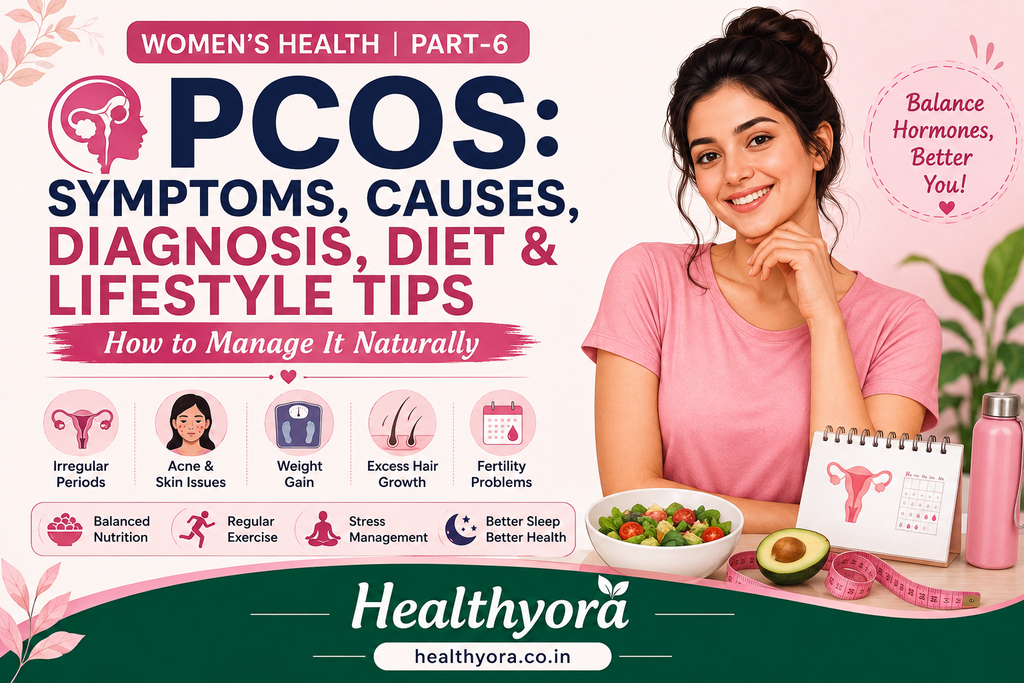
In our society, when women experience any health issues, they are often dismissed as very common or temporary. The fastest-spreading long-term health condition among women of reproductive age worldwide is PCOS (Polycystic Ovary Syndrome). International surveys and statistics from various health organizations indicate that at least one in five women is affected by this condition in some way. PCOS is not merely a gynecological issue; it is a complex endocrine (hormonal) and metabolic disorder. For many women, periods sometimes occur earlier than usual, sometimes much later. For some, periods do not occur for several months. If accompanied by acne, excessive facial hair, weight gain or difficulty losing weight, and delayed pregnancy, PCOS (Polycystic Ovary Syndrome) could be a potential underlying cause.
What Is PCOS?
PCOS or Polycystic Ovary Syndrome is a hormonal disorder where the levels or activity of androgen hormones may be higher than normal, and ovulation may not occur regularly. As a result, irregular periods, acne, excessive facial/body hair, and difficulty conceiving can occur.
Common Symptoms of PCOS
Symptoms of PCOS are not the same for every woman. Some may have only one or two symptoms, while others may experience multiple issues.
1. Irregular or Completely Absent Menstrual Cycles (Oligomenorrhea/Amenorrhea)
Cycles lasting longer than 35 days, having fewer than 6 to 8 periods a year, or having no periods for months without medication.
2. Lower Abdominal Fat & Rapid Weight Gain
Weight gain can occur, particularly around the belly. However, the idea that PCOS only affects overweight women is a misconception. Women of normal weight can also develop PCOS.
3. Acne & Oily Skin
Due to hormonal changes, facial acne or excessively oily skin may appear.
4. Thinning of Scalp Hair
In some women, thinning of scalp hair or female-pattern hair loss may be observed.
5. Hirsutism or Unwanted Male-Pattern Hair Growth (Hirsutism)
Under the influence of excess testosterone, dark and coarse hair grows on the chin, upper lip, jawline, chest, and abdomen.
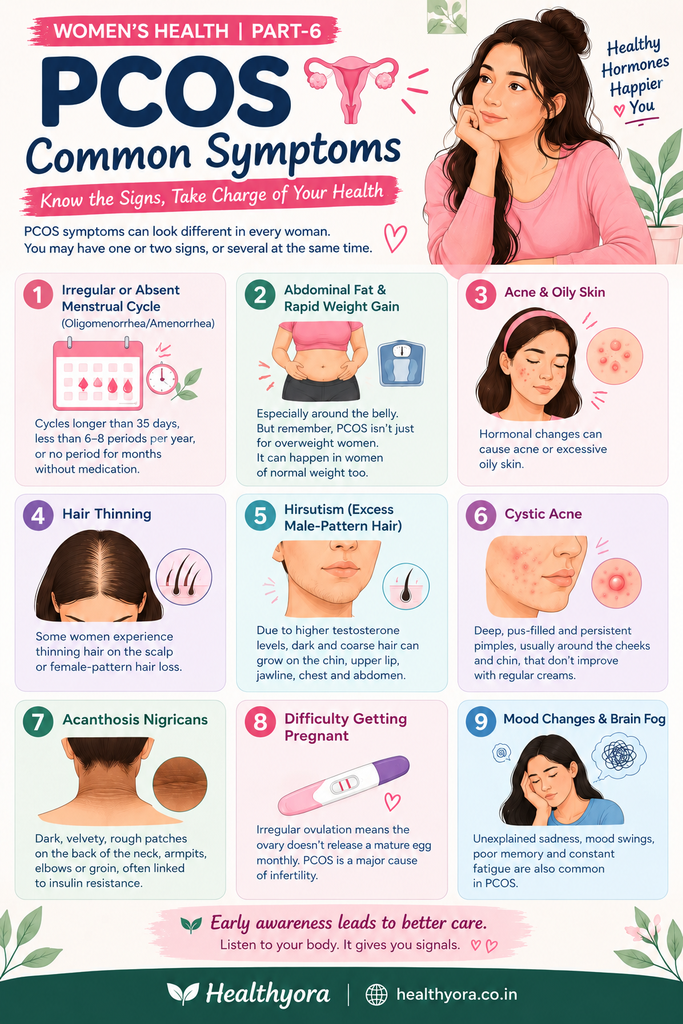
6. Adult Cystic Acne (Cystic Acne)
Deep, pus-filled, and persistent pimples typically around the cheeks and chin that do not resolve with standard creams.
7. Acanthosis Nigricans (Acanthosis Nigricans)
Rough, dark patches of skin appearing on the back of the neck, armpits, elbows, or groin, which occur due to insulin resistance.
8. Difficulty Getting Pregnant
Difficulty in conceiving naturally because a mature egg is not released from the ovary each month. PCOS is an important cause of infertility.
9. Mental Instability & Brain Fog
Unexplained depression, severe mood swings, reduced memory, and constantly feeling physically fatigued.
Why Does PCOS Occur?
The exact cause of PCOS is not yet fully known. However, factors like genetics, hormonal imbalance, and insulin resistance are believed to be linked to it.
1. Family History
Having a family history of PCOS or type 2 diabetes may increase the risk of PCOS.
2. Insulin-Resistant PCOS (Insulin-Resistant PCOS)
This is the most common form—nearly 70 percent of affected women fall into this category. Consuming processed carbohydrates, following a sedentary lifestyle, and consuming excessive sugar raise insulin levels in the blood, leading to excess testosterone production. This results in stubborn fat around the abdomen, intense sugar cravings, and rapid weight gain.
3. Inflammatory PCOS (Inflammatory PCOS)
This type arises due to chronic low-grade inflammation inside the body. Environmental pollution, processed foods, and damage to the gut microbiome cause inflammation in the body. This inflammation hinders the ovary’s normal hormone production. Its primary symptoms include chronic fatigue, headaches, joint pain, and eczema or allergies on the skin.
4. Post-Pill PCOS (Post-Pill PCOS)
Many women take Oral Contraceptive Pills (OCPs) or birth control pills for long periods to treat irregular periods or acne. These pills artificially halt the body’s own hormone production. After stopping the pill, androgen levels in the blood temporarily spike, causing this type of PCOS.
5. Adrenal PCOS (Adrenal PCOS)
This occurs primarily due to excessive stress and nervous exhaustion. In this case, instead of testosterone, a hormone called DHEA-S (Dehydroepiandrosterone Sulfate) is secreted in excessive amounts from the adrenal gland due to stress.
Maintaining gentle intimate hygiene during your period can help you feel fresh and comfortable. Choose mild, suitable products and avoid excessive washing or harsh fragrances.👉 Check this Intimate Cleansing Foam on Amazon; https://link.amazon/B03hPHe8I
How Is PCOS Diagnosed?
Internationally, doctors use the Rotterdam Criteria to confirm PCOS. PCOS is confirmed if at least 2 of these 3 criteria are present:
- Irregular Menstrual Cycle
- Menstrual history
- Patient’s symptoms
- Physical examination
- Hormone tests as needed
- Blood tests to rule out other diseases
- Pelvic ultrasound if required
- Presence of Excess Male Hormones (Androgens) in Blood Tests or Physical Symptoms.
- Observation of Multiple Small Cysts or Follicles in the Ovaries on an Ultrasonography (Necklace or String of Pearls Pattern).
Behind irregular periods, thyroid problems, changes in prolactin, excessive exercise, rapid weight loss, or other hormonal conditions may also exist. Therefore, instead of assuming PCOS on your own, you should consult a healthcare professional for an accurate diagnosis.
What Foods Are Good for PCOS?
A single “special diet” is not required for everyone with PCOS. Rather, the goal should be a balanced and sustainable eating pattern.
1. Vegetables
Eat a variety of vegetables regularly. Such as—
- Spinach
- Carrots
- Beans
- Cauliflower
- Tomato
- Other seasonal vegetables
2. Fruits
Whole fruits provide fiber, vitamins, and minerals. Eating whole fruit instead of fruit juice is generally a better option.
3. Whole Grains
Such as—
- Oats
- Brown rice
- Whole-wheat foods
- Other minimally processed grains
These can supply fiber and help keep you full for a long time.
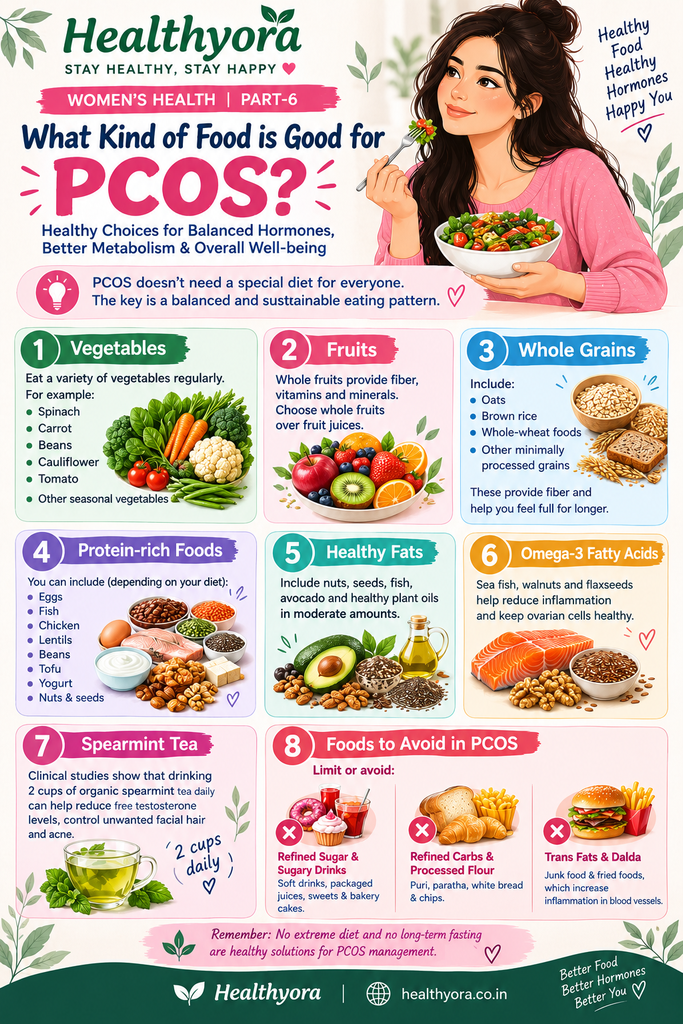
4. Protein-Rich Foods
Depending on dietary preferences, you can include—
- Eggs
- Fish
- Chicken
- Lentils
- Beans
- Tofu
- Yogurt
- Nuts and seeds
5. Healthy Fats
Moderate amounts of nuts, seeds, fish, avocado, and healthy plant oils can be included in the diet.
6. Omega-3 Fatty Acids
Fatty fish, walnuts, and flaxseeds reduce inflammation in the body and keep ovarian cells healthy.
7. Spearmint Tea
Clinical trials have shown that drinking 2 cups of organic spearmint tea daily works wonders in controlling unwanted facial hair and acne by reducing free testosterone levels in the blood.
8. Foods That Should Be Completely Avoided in PCOS
- Refined Sugar & Sweet Beverages: Soft drinks, packaged juices, sweets, and bakery cakes.
- Refined Flour & Processed Carbohydrates: Luchi, parathas, white bread, and chips.
- Trans Fats & Dalda: Street-fried foods and fast food, which increase inflammation in blood vessels.
However, no extreme diet or fasting for prolonged periods is a healthy solution for PCOS management.
Right Exercise Strategies (Fitness Blueprint)
Many women with PCOS think that sweating for hours at the gym is the only way to lose weight. But incorrect workouts make PCOS even more complicated.
1. The Importance of Strength Training & Lifting Weights (Strength Training)
The best exercises for PCOS are weight training or bodyweight exercises (squats, deadlifts, push-ups). Practice strength training for 45 minutes at least 3 to 4 days a week.
2. Avoiding Excessive Cardio
Excessive cardio significantly increases cortisol hormone in the blood. Excess cortisol halts ovarian function. Instead, opt for 30–40 minutes of moderate-paced brisk walking every morning.
3. 7–8 Hours of Deep Sleep
Nighttime sleep is the main factory for hormone production. Ensure you fall asleep between 10 PM and 11 PM so that melatonin hormone can be secreted properly. Inadequate sleep reduces the effectiveness of insulin in the blood by nearly 40 percent the next day.
4. Cortisol Management & Vagus Nerve Activation
To reduce mental stress, practice 10 minutes of deep breathing exercises (4-7-8 breathing technique) or meditation daily. This activates the body’s parasympathetic nervous system and keeps the reproductive axis functioning.
Important Misconceptions About PCOS
- ❌ “PCOS means ovarian cysts.” Not always. Having polycystic ovaries is not mandatory for a PCOS diagnosis.
- ❌ “You cannot become a mother if you have PCOS.” This is also incorrect. Ovulation can be irregular due to PCOS, and it may take longer to conceive, but with treatment and appropriate fertility support, many women can achieve pregnancy.
- ❌ “Only overweight women get PCOS.” Incorrect. Women of any body size can develop PCOS.
- ❌ “Eating one special food will cure PCOS.” There is no single-food cure for PCOS. For long-term management, a balanced diet, physical activity, medical care, and a healthy lifestyle are far more important.
When Should You Consult a Doctor?
It is advisable to seek medical advice under the following circumstances:
- If periods are repeatedly irregular
- If periods have not occurred for a long time
- If excessive facial/body hair suddenly increases
- If persistent acne is present
- If unexplained weight change occurs
- If scalp hair thins abnormally
- If there are difficulties in conceiving
- If period issues affect daily life
Especially if periods have been irregular for a long time, finding the underlying cause is important.
Conclusion
PCOS is not a “one-day problem.” It is a long-term hormonal and metabolic condition, but with proper awareness, a healthy lifestyle, and medical care as needed, it is possible to manage it. PCOS is not a permanent illness; it is a signal coming from within your body. Your body is letting you know that it cannot cope with the excessive pressure, improper diet, and inadequate rest of modern life.
Understand your body. Take care of your hormonal health. Small healthy habits can bring about big changes in the long run.
FAQ
1. Is PCOS completely curable?
Answer: By maintaining a proper lifestyle and nutrition, all of its symptoms—such as irregular periods, acne, excess fat, and infertility—can be 100% eliminated to lead a completely healthy and normal life.
2. Can lean girls have PCOS?
Answer: Yes. This is called “Lean PCOS.” Even without external body fat, androgen hormones can be elevated in their bodies due to visceral fat, insulin resistance, or excessive adrenal gland stress.
3. Can periods stop if you have PCOS?
Ans. Yes, in some cases, periods may arrive very late or stop for a while due to irregular ovulation.
4. Does PCOS prevent pregnancy?
Ans. PCOS can make getting pregnant difficult by causing irregular ovulation. But having PCOS does not make pregnancy impossible. If necessary, fertility treatment can be sought.
5. Is taking birth control pills a permanent treatment for PCOS?
Answer: Not at all. Pills induce artificial withdrawal bleeding but suppress ovulation. As soon as you stop the pill, the problems can return.
6. Can PCOS be diagnosed solely through an ultrasound?
Ans. No. Ultrasound can be a part of the diagnosis, but a PCOS diagnosis is not made based solely on an ultrasound.
7. How often should PCOS patients have an ultrasound?
Answer: Once at the time of diagnosis, and later, once a year under medical advice to monitor improvements in ovarian cysts and uterine lining after making lifestyle changes is sufficient.
8. When should one see a doctor for PCOS?
Ans. It is good to seek a doctor’s advice if periods are irregular for a long time, if several periods are missed in a row, if there is excess hair/acne/weight change, or if there is difficulty conceiving.
Disclaimer
The information provided in this article is for educational and informational purposes only and should not be considered medical advice, diagnosis, or treatment. Always consult a qualified doctor or healthcare professional regarding any medical concerns, symptoms, or before making changes to your diet, exercise, or treatment plan. Never ignore professional medical advice or delay seeking treatment based on information from this website. Healthyora and the author are not responsible for any decisions or actions taken based on the content of this article.