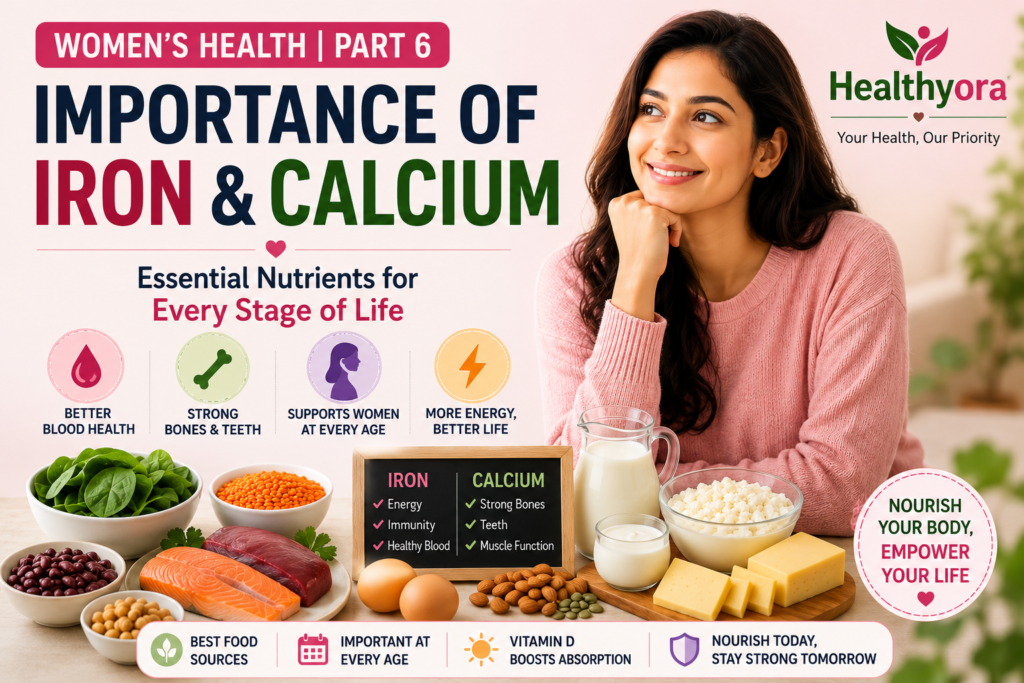
Iron and Calcium are two extremely important nutrients for women’s well-being. Iron helps in making healthy blood cells in the body and in oxygen transport. On the other hand, along with keeping bones and teeth strong, Calcium plays an important role in the normal function of muscles and nerves. From a medical perspective, there are some fundamental differences in the physical structure and biological needs of men and women. Starting from puberty to periods, pregnancy, childbirth, breastfeeding, and later menopause—at every stage of life, a woman’s body has to go through complex physiological and hormonal changes.
This blog presents a complete and scientific guideline on why iron and calcium are an essential part of every woman’s lifestyle, the causes of their deficiency, their impact on the body, the best food sources, and how to maintain the balance of these two nutrients according to age.
Why Iron Is Important for Women
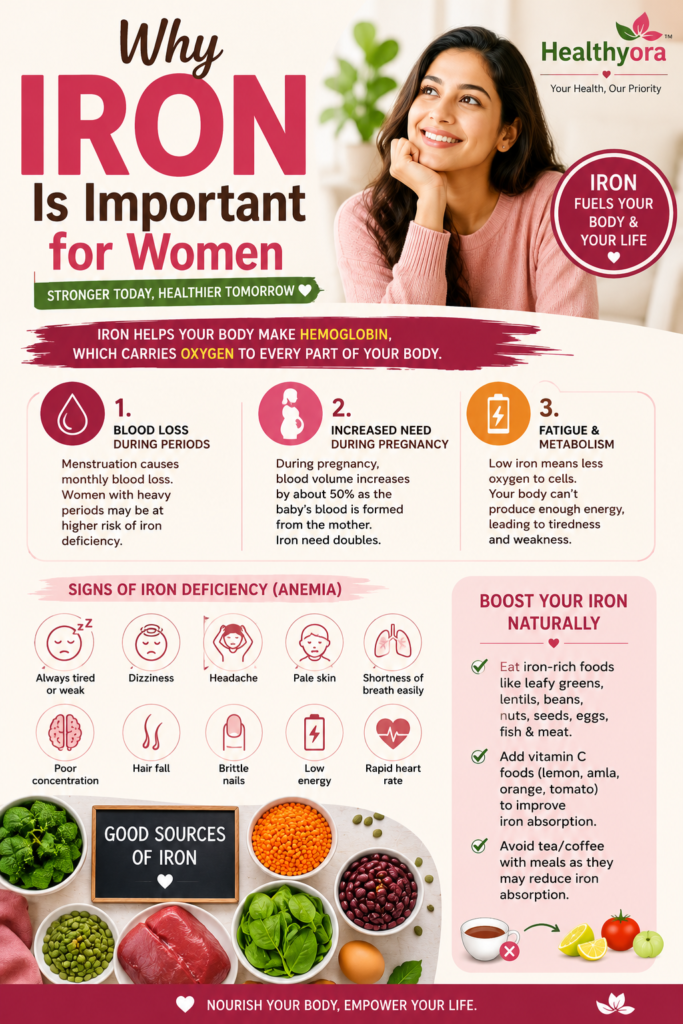
Iron helps in producing hemoglobin in the body. Hemoglobin delivers oxygen to different parts of the body through the blood. Biologically, women’s demand for iron is much higher than men’s.
1. Blood Loss Through Periods
Regular blood loss occurs during menstruation. Every month during periods, blood leaves a woman’s body naturally. Those who have very heavy periods may have a relatively higher risk of declining iron in their body.
2. Increased Demand During Pregnancy
During pregnancy, the volume of blood in the mother’s body increases by about 50%, because fetal blood is formed from the mother’s blood. During this time, the demand for iron doubles.
3. Physical Fatigue and Metabolism
If there is not enough iron in the blood, the cells do not get adequate oxygen. As a result, the body cannot produce energy, leading to extreme tiredness and fatigue.
Symptoms of Iron Deficiency and Anemia
When an iron deficiency occurs in the body, several clear symptoms appear, which many women mistake for general tiredness:
- Always feeling tired or weak
- Dizziness
- Headaches
- Pale skin
- Getting out of breath easily with little effort
- Reduced concentration
- Hair loss and brittle nails
- Decreased energy in the body
- Feeling a rapid heartbeat
Why Calcium Is Important for Women
Like Iron, Calcium is also extremely important for a woman’s body. About 99% of our body’s total calcium is stored in the bones and teeth. The remaining 1% of calcium stays in the blood, muscles, and cellular fluids, playing a vital role in blood clotting, muscle contraction and relaxation (including heartbeat), and transmitting nerve signals. The growth and development of bones happen in the early part of a woman’s life. Therefore, adequate calcium intake is important starting from teenage years and young adulthood.
1. Relationship Between Calcium and Women’s Bones
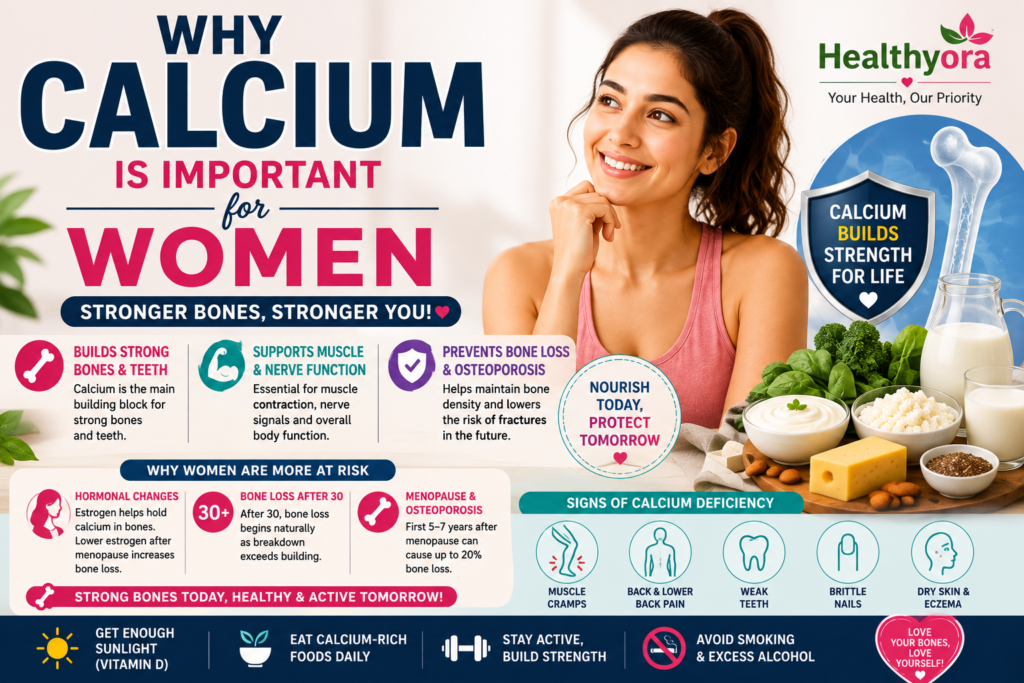
The hormone called Estrogen is very important in maintaining calcium in women’s bodies. Estrogen helps retain calcium in the bones and controls the activity of bone-resorbing cells (Osteoclasts). After menopause, the risk of bone loss may increase due to the decline in estrogen.
2. Bone Mass Loss After Age 30
Human bone density reaches its highest level (Peak Bone Mass) up to 30 years of age. After 30 years, the rate of bone loss naturally begins to exceed the rate of bone remodeling.
3. Menopause and Osteoporosis
When menopause occurs between 45 and 50 years of age, the production of estrogen hormone in women’s bodies decreases drastically. As a result, in the first 5–7 years of menopause, a woman can lose up to nearly 20% of her total bone density. Consequently, the bones become so weak that even a minor fall or pressure can break the hip, wrist, or spine bones.
Major Symptoms of Calcium Deficiency
When calcium levels in the blood drop, the body draws calcium from the bones into the blood. Some common symptoms are:
- Muscle twitches and cramps
- Back and waist pain
- Weak teeth
- Brittle or loose nails
- Dry skin and eczema
Iron-Rich Foods & Iron Deficiency
Iron in food is found in two forms—from animal sources and from plant-based sources.
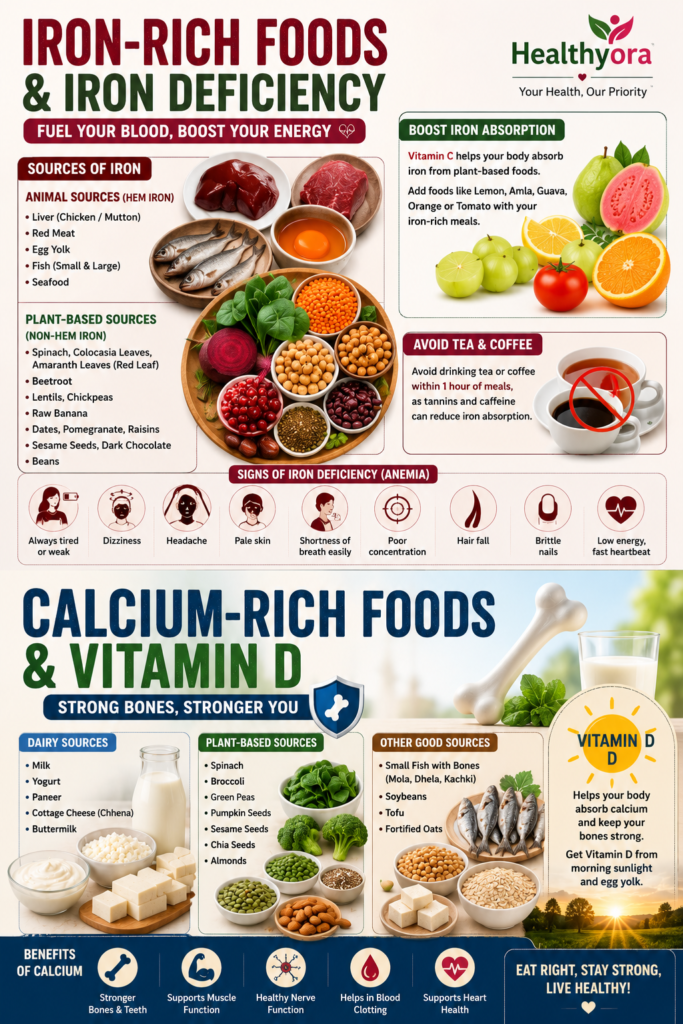
Animal sources: Mutton or chicken liver, red meat, egg yolks, small and large fish, and seafood.
Plant-based sources: Spinach, taro greens, red amaranth, beetroots, red lentils, chickpeas, green bananas, dates, pomegranates, raisins, sesame seeds, dark chocolate, and beans.
However, eating Iron-rich food alone is not enough. Vitamin C can help the body absorb Iron from plant-based food. Therefore, you can include Vitamin C-rich foods like lemon, amla (Indian gooseberry), guava, orange, or tomato along with Iron-rich meals.
On the other hand, drinking tea or coffee within 1 hour of eating should be avoided, as the tannins and caffeine in tea interfere with iron absorption.
Calcium-Rich Foods & Vitamin D
Effort should be made to get Calcium from daily food.
Dairy products: Pure milk, yogurt/curd, cheese, cottage cheese (chhena), and buttermilk.
Plant-based sources: Spinach, broccoli, green peas, pumpkin seeds, sesame seeds, chia seeds, and almonds.
Other sources: Small fish with bones (mola, dhela, kachki), soybeans, tofu, and fortified oats.
However, along with Calcium, Vitamin D is also important. Vitamin D helps with Calcium absorption in the body. Vitamin D is obtained from early morning sunlight and egg yolks.
Easy Daily Meal Plan and Lifestyle Tips to Overcome Iron and Calcium Deficiency
Here is a sample list below on how to ensure these two nutrients in daily meals amidst a busy lifestyle:
- Morning (after waking up): 1 glass of warm water mixed with soaked chia seeds or sesame seeds.
- Breakfast: 1 boiled egg + 1 bowl of oats/whole wheat roti + vegetables. Along with amla or lemon juice.
- Mid-Morning (10:30 AM): 1 fruit (pomegranate, guava, or orange) + 5-6 almonds and dates. (Iron boost)
- Lunch: Brown rice + 1 bowl of red lentils + spinach/taro greens + small fish or meat.
- Evening Snack: 1 cup of homemade yogurt or 1 glass of milk. (Calcium boost)
- Dinner: Light meal, such as roti with vegetables along with salad.
Exercise regularly: Walking, strength training, and weight-bearing exercise can be beneficial for bone health.
Avoid smoking: Smoking can have a negative impact on bone health in the long run.
Avoid excess alcohol: Excessive alcohol consumption can be harmful to overall health and bone health.
Get adequate sleep: Getting adequate and quality sleep every day helps maintain the body’s overall health.
When to See a Doctor and Get Blood Tests?
Certain symptoms should not be ignored for a long time. Such as:
- Long-standing abnormal fatigue
- Frequent dizziness
- Very heavy menstrual bleeding
- Abnormal weakness
- Shortness of breath with little physical effort
- Repeated fractures
- Concerns about bone health after menopause
- Pregnancy
- Previously diagnosed anemia or nutritional deficiency
In such situations, instead of taking supplements on your own whim, a doctor may advise doing tests like CBC, ferritin, iron studies, Vitamin D, or other tests as needed.
Conclusion
There is a common proverb in our society—”Healthy woman, healthy family, healthy society.” Eradicating anemia from one’s body and keeping bones strong is not a luxury; it is every woman’s fundamental right and responsibility.
Iron and Calcium are important at every stage of a woman’s life. Pay attention to your diet starting today. Today’s small, healthy choices can build a stronger and healthier life for tomorrow. Love yourself, stay healthy, and enjoy life to the fullest!
FAQ
1. Will eating only spinach cure Iron deficiency?
Answer: You should not rely on a single food. It is good to build a balanced diet by combining various Iron-rich foods and Vitamin C-rich foods.
2. Why is it advised to eat Vitamin C with Iron-rich food?
Answer: Vitamin C can help the body absorb Iron obtained from plant-based foods.
3. Does drinking tea or coffee really reduce iron in the body?
Answer: Yes. ‘Tannins’ and ‘Polyphenols’ present in tea and coffee naturally bind with iron in food and prevent the body from absorbing it.
4. What harm can happen if iron and calcium are not taken during pregnancy?
Answer: If a mother has an iron deficiency during pregnancy, the risk of preterm birth, low birth weight, and excessive maternal bleeding increases.
5. Why is Calcium more important after Menopause?
Answer: After Menopause, the risk of bone loss may increase due to hormonal changes. Therefore, paying attention to Calcium, Vitamin D, and regular physical activity is important.
6. Can Iron and Calcium supplements be taken together?
Answer: Timing should not be determined without consulting a doctor. In some cases, Calcium can affect Iron absorption, so if both supplements are prescribed, follow the doctor’s instructions.
Disclaimer
The information provided in this article is for educational and informational purposes only and should not be considered medical advice, diagnosis, or treatment. Always consult a qualified doctor or healthcare professional regarding any medical concerns, symptoms, or before making changes to your diet, exercise, or treatment plan. Never ignore professional medical advice or delay seeking treatment based on information from this website. Healthyora and the author are not responsible for any decisions or actions taken based on the content of this article.