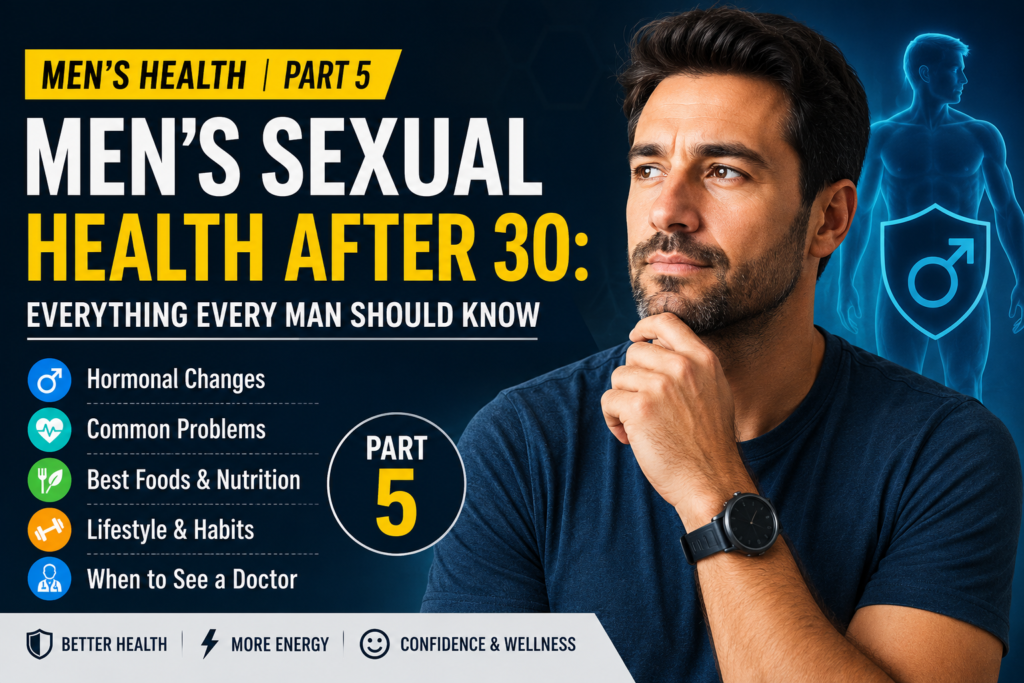
Talking about men’s sexual health in our society is seen as a social taboo. Due to embarrassment, humiliation, and social misconceptions, most men do not want to discuss this highly sensitive aspect of their lives with anyone. Just as our hair turns gray, eyesight weakens slightly, or physical strength isn’t what it used to be as we age, some natural changes also gradually occur in men’s sexual health.
Sexual health does not only refer to the ability to have sexual intercourse. It also involves sexual desire (Libido), Hormonal Balance, Erectile Function, Sperm Health, Fertility, mental confidence, and overall physical well-being. Especially after crossing 30 years of age, certain special changes naturally begin to occur in a man’s body regarding hormones, metabolism, and blood circulation. Someone might notice that sexual desire is decreasing compared to before, someone might experience difficulty with erection (Erectile Dysfunction), while someone else might feel mentally and physically exhausted over minor things. Essentially, long-term mental stress, an irregular lifestyle, lack of adequate sleep, unhealthy eating habits, smoking, excessive alcohol, and lack of physical exertion can have a negative impact on sexual health.
In this detailed blog, we will discuss what scientific changes occur in men’s sexual health after crossing the age of 30, the root causes of the main problems, and how it is possible to keep oneself naturally fit in the long run.
Why Does Sexual Health Change After 30?
After crossing 30 years of age, certain normal physiological changes gradually begin in a man’s body. These changes do not happen overnight; rather, they occur slowly over years.
1. Natural Decline in Testosterone Hormone
Testosterone is the primary sexual and anabolic hormone in men. After the age of 30, it naturally begins to decrease at a rate of about 1% to 1.5% per year. A decrease in testosterone directly affects libido or sexual desire, leading to reduced muscle mass and a tendency to gain fat.
2. Blood Circulation & Nitric Oxide Deficiency
The key to sexual capability or erection is arterial flexibility and proper blood circulation in the penis. Conditions like high blood pressure, diabetes, high cholesterol, or heart disease can reduce blood vessel function. As age increases, blood vessels begin to stiffen slightly, and the body’s production of Nitric Oxide decreases. Nitric Oxide is the element that dilates blood vessels to increase blood flow.
3. Chronic Stress
Long-term mental stress increases Cortisol Hormone in the body, which can affect the natural production of Testosterone. As a result, decreased Libido, fatigue, and mental restlessness can occur.
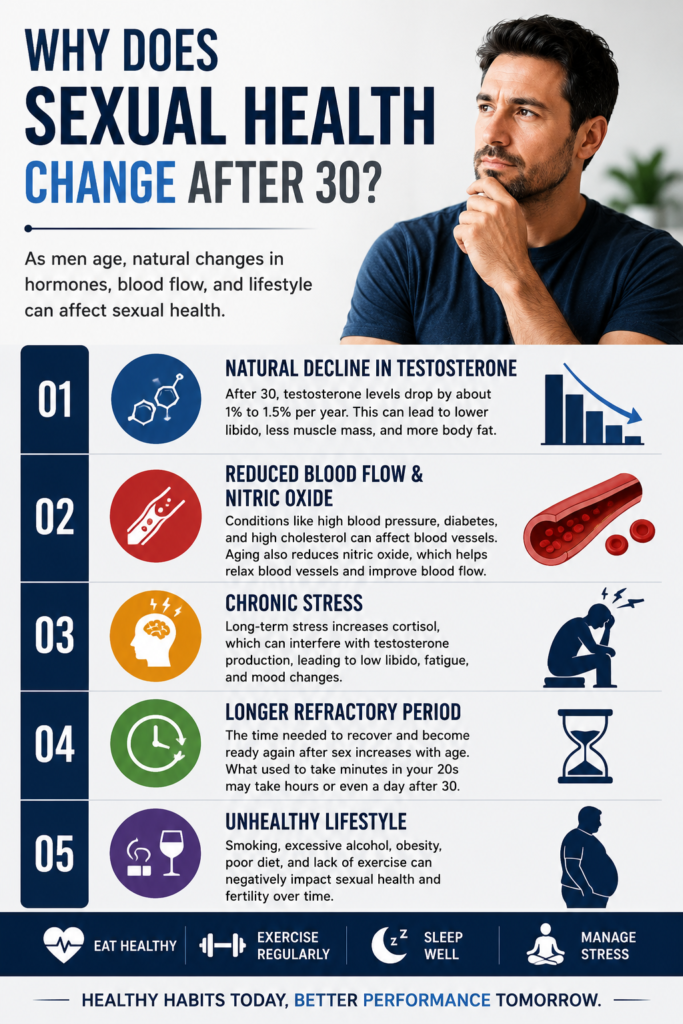
4. Increased Refractory Period
The time the body needs to get ready again after sexual intercourse is called the Refractory Period in medical science. At 20 years of age, this time might be just a few minutes, but after crossing 30 or 40, this time can increase to several hours or up to a day.
5. Unhealthy Lifestyle
Smoking, excessive alcohol, obesity, irregular eating habits, and lack of physical exercise can have long-term negative impacts on sexual health and reproductive capacity.
Common Sexual Health Problems in Men
Not all men experience the same problems after 30. Some may notice minor changes. Below is a discussion of some of the most common Sexual Health Problems among men.
1. Low Libido (Decreased Sexual Desire)
Low Libido refers to a decrease in sexual interest or desire compared to before. After all-day mental stress, office work pressure, and physical fatigue, interest in sexual intercourse at night often declines. Decreased testosterone in the blood and increased cortisol or stress hormones are among the primary causes.
2. Erectile Dysfunction (ED)
Erectile Dysfunction or ED is a condition where obtaining or maintaining a sufficient erection becomes difficult. Many times, it is not just a personal issue; cardiologists view ED as an early warning sign of heart disease or cardiovascular blockage (Early Window of Heart Health), because the delicate arteries of the penis get damaged earlier than the heart’s arteries.
3. Reduced Fertility & Low Sperm Count
Often due to smoking, excessive alcohol consumption, obesity, nutritional deficiencies, and in some men due to age, lifestyle, and certain health issues, Sperm Count, Sperm Quality, or Sperm Motility can decrease. This can lead to difficulty in fathering a child.
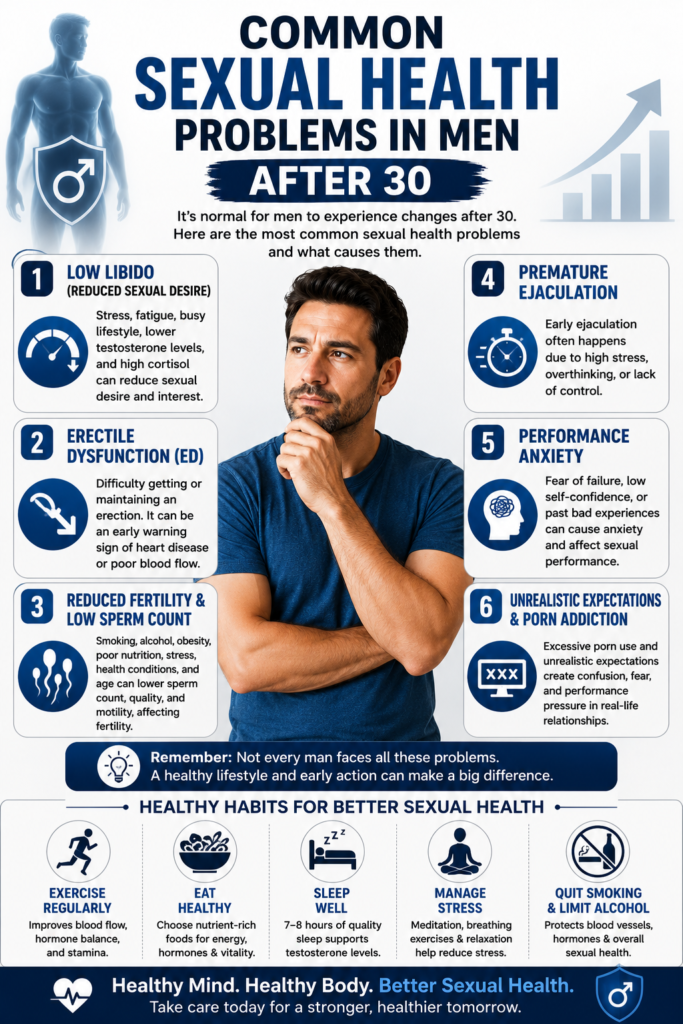
4. Premature Ejaculation & Performance Anxiety
“Will I be able to satisfy my partner?”—from this excessive mental pressure or fear, nervous excitement in the brain increases. Consequently, loss of control occurs, leading to premature ejaculation.
5. Performance Anxiety
Many times, even without a physical problem, excessive worry, lack of confidence, or past bad experiences create fear or anxiety about sexual performance. This is called Performance Anxiety, which can significantly impact Sexual Health.
6. Performance Pressure & Unrealistic Expectations
Excessive addiction to pornography or unrealistic expectations create confusion, panic, and performance anxiety in real-life intimacy.
Warning Signs You Should Never Ignore
Many problems related to men’s sexual health may seem very ordinary initially. However, if certain symptoms persist for a long time or recur frequently, they might be indications of an underlying health problem inside the body. Therefore, the following warning signs should never be ignored.
- Sexual Desire (Libido): If sexual interest decreases significantly compared to before over a prolonged period and affects personal or marital life.
- Repeated Difficulty Obtaining or Maintaining an Erection: Occasional occurrences can be normal. However, if difficulty in getting or keeping an erection happens repeatedly, it could be a sign of Erectile Dysfunction (ED).
- Decreased Morning Erection: A normal morning erection is a natural physiological process for many men. If this decreases over a long period or stops completely, a doctor should be consulted.
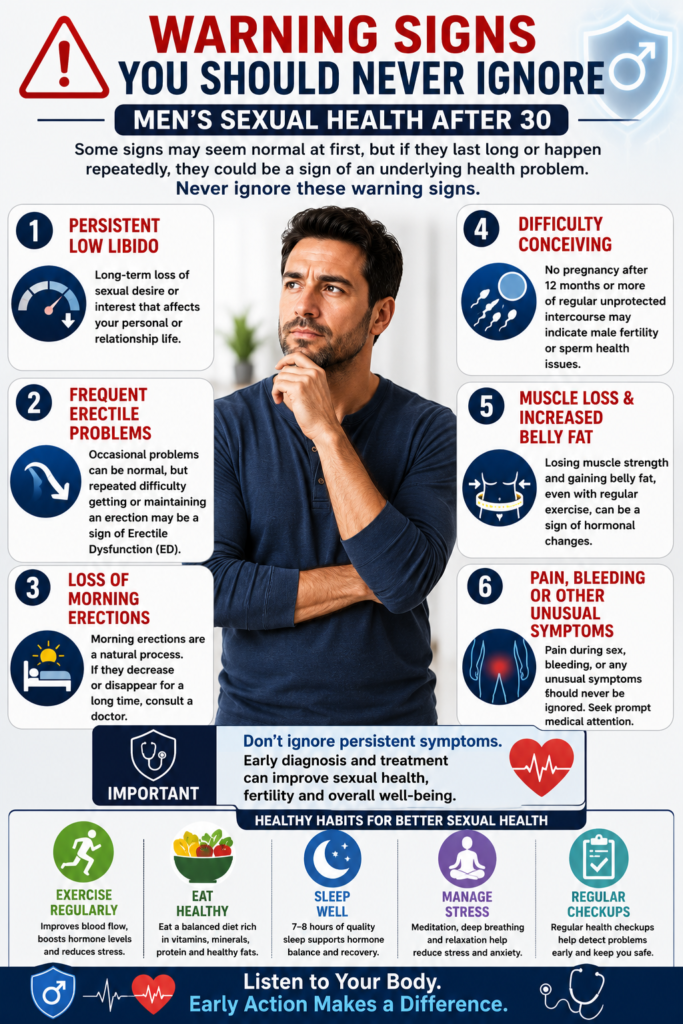
4.Prolonged Difficulty Conceiving a Child: If pregnancy does not occur after trying regularly for a year or more, Male Fertility and Sperm Health testing may be necessary.
5.Loss of Muscle Mass & Increased Belly Fat: If muscle strength decreases despite regular exercise, and especially if fat increases around the belly, it could be a sign of Hormonal changes.
6.Pain, Bleeding, or Other Unusual Symptoms During Intercourse: If any such problem occurs, one should not self-treat and should promptly consult a qualified doctor.
Remember: Having one or more of these symptoms does not necessarily mean you have a serious illness. However, if they persist for a few weeks or a few months, you should consult a Doctor without delay.
Best Foods for Sexual Health & Lifestyle Habits That Improve Sexual Health
Along with a balanced diet, regular exercise, and a healthy lifestyle, there are certain nutritious foods that supply Zinc, Vitamin D, Omega-3 Fatty Acids, Protein, Magnesium, Selenium, and Antioxidants. These nutrients play a vital role in maintaining Hormone Balance, improving blood circulation, and maintaining good Sperm Health.
1. Oysters
Oysters are one of the best natural sources of Zinc. Zinc is crucial for the natural production of Testosterone, Sperm Quality, and men’s reproductive health.
Benefits:
- Helps in Testosterone production
- Improves Sperm Health
- Helps maintain Libido
2. Fatty Fish (Salmon, Tuna, Sardine, Hilsa)
Fatty marine fish are excellent sources of Omega-3 Fatty Acids and Vitamin D.
Benefits:
- Improves Blood Circulation
- Keeps heart health good
- Helps maintain Hormone Balance
3. Egg Yolk & Pumpkin Seeds
The best sources of zinc, selenium, and good saturated fats, which are used in hormone synthesis.
Benefits:
- Supports normal function of Testosterone
- Helps maintain Prostate Health
- Supports Fertility
4. Walnuts & Almonds
Walnuts and almonds contain Omega-3, Vitamin E, Magnesium, and powerful Antioxidants.
Benefits:
- Helpful in improving Sperm Quality
- Helps reduce Oxidative Stress
- Keeps heart health good
5. Dark Chocolate & Almonds
Rich in flavonoids and L-Arginine, which increase dopamine in the brain and relax arteries.
Benefits:
- Helpful in improving Sperm Quality
- Helps reduce Oxidative Stress
6. Pomegranate & Garlic
Pomegranates contain abundant Antioxidants, which help protect cells from Oxidative Damage, and Allicin in garlic can help improve blood circulation.
Benefits:
- Helpful in improving Blood Circulation
- Keeps heart health good
- May be beneficial for sexual health
7. Spinach & Leafy Green Vegetables
Spinach and other green vegetables contain Magnesium, Folate, Iron, and Nitrates.
Benefits:
- Helps improve Blood Flow
- Plays a role in various Enzyme Reactions in the body
- Improves overall health
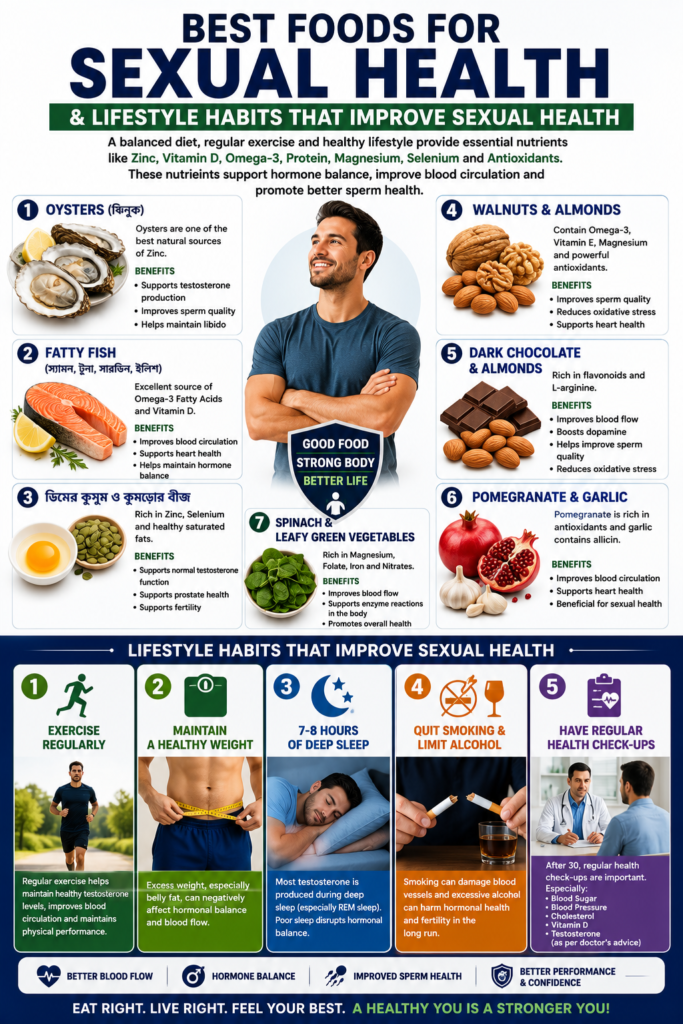
Lifestyle Habits:
Eating good food alone does not keep Sexual Health good. Your daily lifestyle habits are equally important.
- Exercise Regularly: Regular exercise helps maintain natural Testosterone function, blood circulation, and physical capacity.
- Maintain a Healthy Weight: Excess weight, especially Belly Fat, can negatively impact Hormonal Balance and Blood Flow.
- 7-8 Hours of Deep Sleep: Most testosterone in a man’s body is produced during deep sleep at night (especially during REM Sleep). Insomnia or staying up night after night completely ruins hormonal balance.
- Quit Smoking & Limit Alcohol: Smoking can damage blood vessels, and excessive alcohol can have a negative long-term impact on Hormonal Health & Fertility.
- Have Regular Health Check-ups: Regular health check-ups after the age of 30 are important. Especially— Blood Sugar, Blood Pressure, Cholesterol, Vitamin D, Testosterone (if needed, on a doctor’s advice).
When Should You Definitely Consult a Doctor?
Hiding sexual problems is not a solution. In the following situations, setting hesitation aside, you should consult an experienced Urologist, Endocrinologist, or Sexologist:
- If you experience severe difficulty in getting or maintaining an erection for more than 3 consecutive months.
- If sexual desire drops completely to zero along with extreme mental depression.
- If you feel severe physical pain during sexual intercourse or burning/bleeding with urination.
- If you notice any new lump, pain, or swelling in the testicles.
- If pregnancy does not occur after one year or more of regular unprotected intercourse, health evaluations for both partners may be required. In the case of men, Sperm Analysis and other tests may be needed.
There is nothing to be ashamed of regarding sexual health. It is an important part of men’s overall health. Seeking timely medical advice can easily manage many problems and reduce the risk of future complications.
Conclusion
Men’s Sexual Health is not only related to sex life; it is an important part of physical health, mental well-being, confidence, marital relationships, and reproductive health. Not shame or hesitation regarding Sexual Health—awareness should be the first step.
Remember, a healthy sex life does not depend on a miracle drug; it is built through daily small healthy habits. Love yourself, stay healthy, and enjoy a happy and balanced life!
Frequently Asked Questions (FAQ)
1. Is the change in Sexual Health after 30 normal?
Ans. Yes. As age increases, some normal Hormonal and physical changes occur in the body, which can affect Sexual Health.
2. What is the way to know if testosterone has decreased?
Answer: In addition to observing physical symptoms, the actual hormonal state can be confirmed by checking Total Testosterone and Free Testosterone levels through a blood test taken in the morning on an empty stomach.
3. Can smoking and alcohol harm Sexual Health?
Ans. Yes. Smoking can affect the normal function of blood vessels, and excessive alcohol can negatively impact Hormone Balance, Fertility, and Sexual Function.
4. Is Erectile Dysfunction (ED) always due to age?
Ans. No. Although age can be a factor, diabetes, high blood pressure, heart disease, obesity, smoking, mental stress, lack of adequate sleep, and certain medications can also be related to ED.
5. Is there a connection between masturbation and reduced sexual capability after crossing 30?
Answer: There is no direct harmful scientific link between masturbation and reduced physical sexual capability. However, a habit of masturbating while watching excessive pornography can cause performance anxiety during real-life intimacy.
6. When should a Fertility Test be done?
Ans. If pregnancy does not occur after one year or more of regular unprotected intercourse, a doctor should be consulted to conduct a necessary Fertility Evaluation.
7. Does regular exercise help improve Sexual Health?
Ans. Yes. Regular Exercise helps improve blood circulation, maintain a healthy weight, reduce mental stress, and maintain overall physical health, which is also beneficial for Sexual Health.
Disclaimer
The information provided in this article is for educational and informational purposes only and should not be considered medical advice, diagnosis, or treatment. Always consult a qualified doctor or healthcare professional regarding any medical concerns, symptoms, or before making changes to your diet, exercise, or treatment plan. Never ignore professional medical advice or delay seeking treatment based on information from this website. Healthyora and the author are not responsible for any decisions or actions taken based on the content of this article.