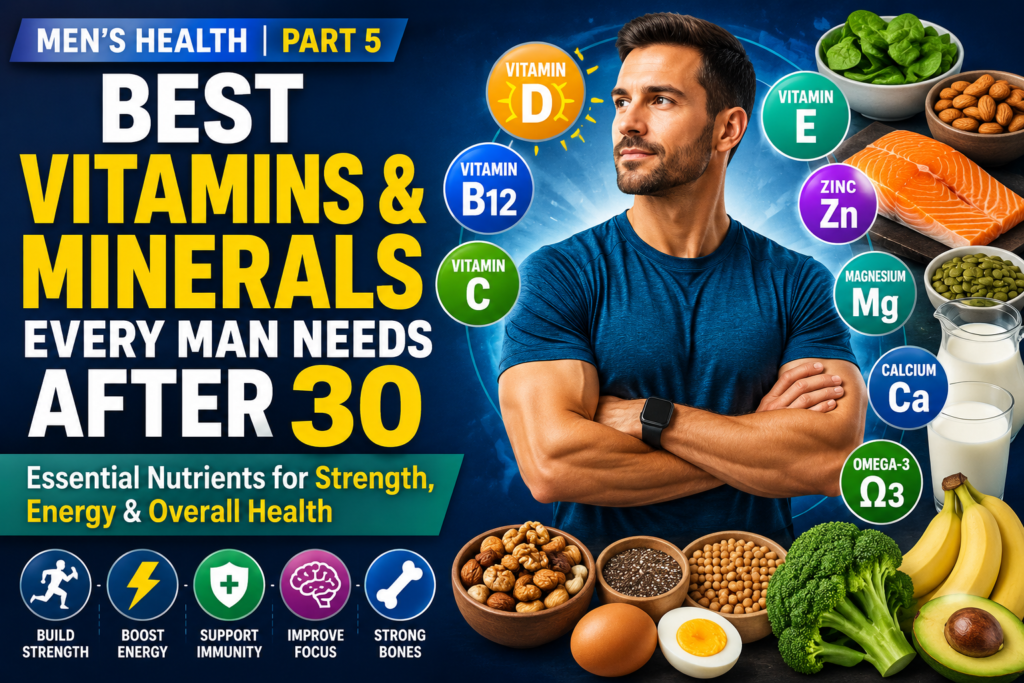
Crossing the age of 30 in a man’s life is not just adding a new number to the age book; along with this, our body’s metabolism slows down a bit, muscle mass gradually begins to decrease, bone density may decline, and the body’s energy and stamina may also feel reduced compared to before.
In today’s busy modern life, most men cannot eat nutritious food on time due to the pressure of career, responsibilities, and family. Due to processed foods, excessive fast food, processed sugar, and lack of physical labor in the daily diet, deficiencies of essential vitamins and minerals unknowingly develop inside our bodies. Therefore, for a healthy body, both Macronutrients (Protein, Fat, Carbohydrate) and Micronutrients (Vitamins & Minerals)—both types of nutrition—are equally important.
In this detailed blog, we will discuss why vitamin deficiencies occur in men’s bodies after turning 30, the scientific explanations of the most essential vitamins and minerals, their natural sources, and how, by following a proper nutrition routine, you can remain strong and active throughout your life.
Why Vitamins & Minerals are Important After 30?
As age increases, some natural changes occur in the body, such as—
- The body’s ability to absorb nutrients may decrease slightly.
- Bone density gradually begins to decrease.
- Muscle rebuilding takes more time.
- The immune system may weaken.
- Long-term fatigue and mental stress may increase.
- The risk of high blood pressure, diabetes, and heart disease may increase.
For this reason, the importance of Vitamins and Minerals increases even more after 30.
These help to—
- Keep bones and teeth strong.
- Improve muscle strength and recovery.
- Keep the heart healthy.
- Boost immune power.
- Maintain the working capacity of the brain and nervous system.
- Reduce fatigue and weakness.
Common Symptoms of Vitamin or Mineral Deficiency
If there is a deficiency of essential Vitamins or Minerals in the body for a long time, the following symptoms may appear—
- Feeling tired all the time
- Muscle weakness
- Bone or joint pain
- Getting sick frequently
- Delayed wound healing
- Hair loss
- Dry skin
- Tingling sensation in hands and feet
- Decreased focus and memory power
- Sleep problems
- Decreased work efficiency
These symptoms can also occur due to many other diseases. Therefore, consult a doctor if necessary.
Essential Vitamins Every Man Needs After 30
Below is a detailed discussion on the four most important vitamins for men over 30.
1. Vitamin D
Vitamin D is often called the “Sunshine Vitamin.” It acts like a steroid hormone in the human body. The role of Vitamin D3 is essential in men’s testosterone hormone production, maintaining bone density, helping the body absorb Calcium and Phosphorus, and strengthening the immune system.
Deficiency Symptoms
Vitamin D deficiency may lead to—
- Feeling tired all the time
- Muscle weakness
- Bone pain
- Getting sick frequently
- Bad mood
- Increased risk of bone fractures
Natural Food Sources
- Salmon
- Sardines
- Mackerel
- Egg Yolk
- Fortified Milk
- Fortified Cereals
- UV-Exposed Mushrooms
Tip: Staying in mild morning or afternoon sunlight for 15–20 minutes daily allows the body to naturally produce Vitamin D.
2. Vitamin B12 and B-Complex
Vitamin B-complex (especially B6, B9 or folate, and B12) works to convert our food into energy and produce new red blood cells (RBC). Due to decreased stomach acid, absorbing Vitamin B12 becomes difficult after 30. Additionally, B12 is needed to maintain brain focus and prevent memory loss or dementia.
Deficiency Symptoms: Tingling or numbness in hands and feet, extreme memory loss, mouth ulcers or sores, constant headaches, and anemia.
Natural Food Sources
- Fish
- Chicken
- Lean Meat
- Eggs
- Milk
- Yogurt
- Cheese
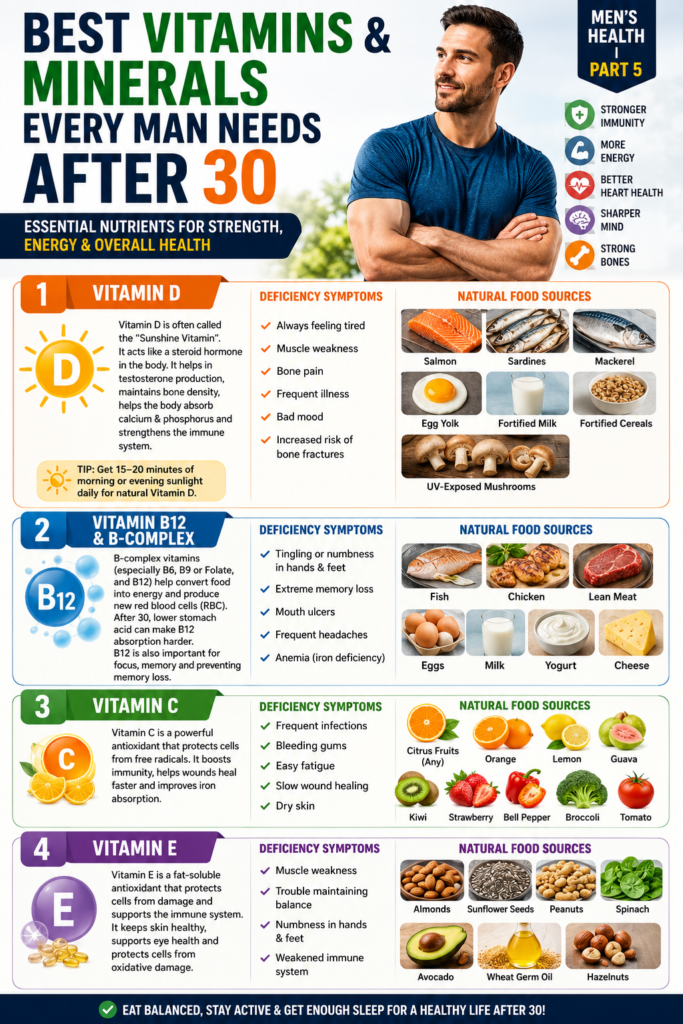
3. Vitamin C
Vitamin C is a primary antioxidant that protects body cells from free radicals. Along with boosting immune power, it plays an important role in healing wounds quickly. It mainly increases immunity, helps heal wounds fast, and helps increase Iron absorption.
Deficiency Symptoms
- Frequent infections
- Bleeding gums
- Getting tired easily
- Delayed wound healing
- Dry skin
Natural Food Sources
Any citrus fruits. Also:
- Orange
- Lemon
- Guava
- Kiwi
- Strawberry
- Bell Pepper
- Broccoli
- Tomato
4. Vitamin E
Vitamin E is a Fat-Soluble Antioxidant that helps in Healthy Aging. It protects body cells from damage and helps maintain immunity. It keeps skin health good, helps maintain eye health, and protects cells from Oxidative Damage.
Deficiency Symptoms
- Muscle weakness
- Problems maintaining balance
- Numbness in hands and feet
- Decreased immunity
Natural Food Sources
- Almonds
- Sunflower Seeds
- Peanuts
- Spinach
- Avocado
- Wheat Germ Oil
- Hazelnuts
Essential Minerals Every Man Needs After 30
Alongside Vitamins, Minerals are equally important for our bodies. These help maintain the normal functions of bones, muscles, nerves, heart, immune system, and hormones. Below is a detailed discussion on the most important minerals for men over 30.
1. Magnesium
Magnesium participates in more than 300 Enzyme Reactions in the body. It plays a key role in calming our nerves, keeping muscle contraction and relaxation proper, and controlling blood pressure.
Deficiency Symptoms: Sudden muscle cramps in legs or muscles at night (Muscle Cramps), insomnia or inability to sleep, heart palpitations, high blood pressure, and anxiety.
Natural Sources: Pumpkin seeds, almonds, spinach, dark chocolate, banana, beans, and oats.
2. Zinc
Zinc is one of the most important minerals for men’s health. Zinc is the most important mineral for immune power, wound healing, men’s reproductive health, sperm quality, and maintaining the immune system. Zinc is highly essential for prostate gland health.
Deficiency Symptoms: Decreased testosterone, delayed wound healing, loss of sense of taste and smell, and frequent infections.
Natural Sources: Mushrooms, sesame and flaxseeds, lentils, cashews, egg yolk, and seafood/red meat or sea fish.
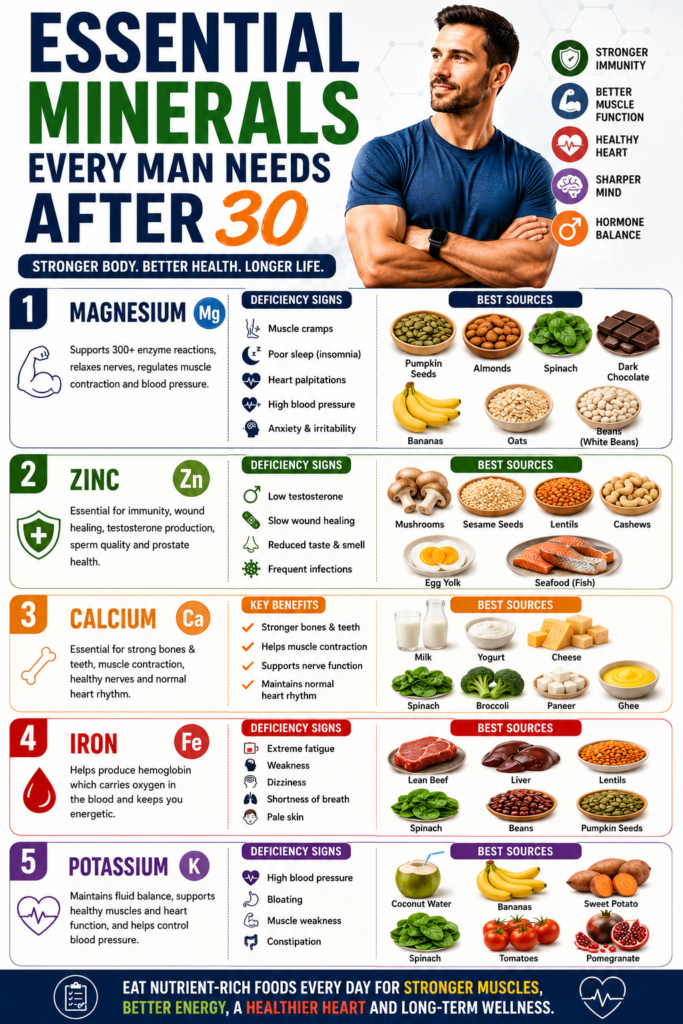
3. Calcium
Many think Calcium is only important for women, but it is equally essential for men’s bones, teeth, and muscles.
Benefits
- Keeps bones and teeth strong.
- Helps in Muscle Contraction.
- Maintains nerve function.
- Helps maintain the normal rhythm of the heart.
Natural Sources: Milk and dairy products, spinach, broccoli, cheese, and ghee.
4. Iron
Iron is extremely important for producing Hemoglobin, which carries oxygen in the blood. Although men generally need less Iron than women, deficiencies can occur in certain cases.
Deficiency Symptoms
- Excessive fatigue
- Weakness
- Dizziness
- Shortness of breath
- Pale skin
Natural Food Sources
- Lean Beef
- Liver
- Lentils
- Spinach
- Beans
- Pumpkin Seeds
5. Potassium
Potassium is important for maintaining body fluid balance (Fluid Balance), muscle, and normal heart function. Due to consuming excessive packaged foods, sodium increases in men’s bodies, leading to high blood pressure. Potassium flushes out this excess sodium through urine.
Deficiency Symptoms: Uncontrolled blood pressure, body swelling (Bloating), abnormal muscle weakness, and constipation.
Natural Sources: Coconut water, banana, sweet potato, spinach, tomato, and pomegranate.
Omega-3 Fatty Acids: Why Every Man Needs This Essential Healthy Fat After 30
Although it is not directly a vitamin or mineral, it is an essential fatty acid that our body cannot produce on its own. Many believe that Fat means harmful to the body. But in reality, not all types of Fat are bad. Rather, some Healthy Fats are extremely important for our body. Omega-3 Fatty Acids are one of them. It prevents a layer of fat from depositing inside heart arteries and reduces joint inflammation.
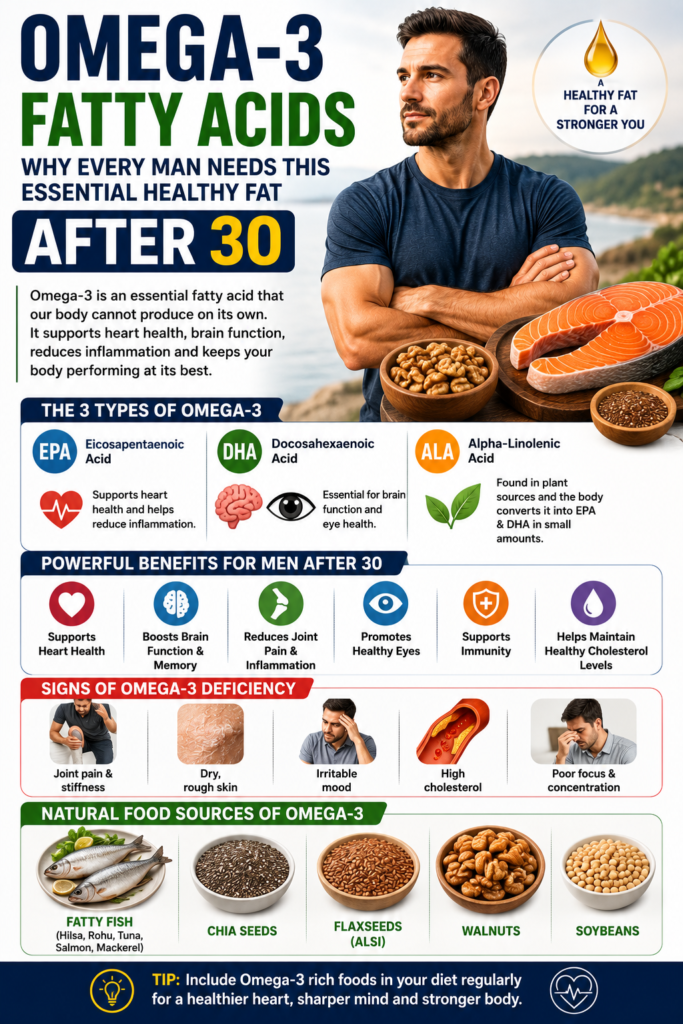
The three main types of Omega-3 are—
- EPA (Eicosapentaenoic Acid) – Important for heart health and reducing inflammation.
- DHA (Docosahexaenoic Acid) – Essential for brain and eye health.
- ALA (Alpha-Linolenic Acid) – Found in plant foods, and the body can convert small amounts into EPA and DHA.
Deficiency Symptoms: Joint pain and stiffness, rough skin, irritable mood, high blood cholesterol, and lack of focus.
Natural Sources: Marine fish (Hilsa, Rohu, Tuna), chia seeds, flaxseeds, walnuts, and soybeans.
5 Smart Lifestyle Hacks to Increase Nutrient Absorption
No matter how nutritious your food is, if the body cannot absorb nutrients properly, all effort goes to waste. Build these 5 habits to increase nutrient absorption:
- Control Tea and Coffee Intake Time: Do not drink tea or coffee right after eating. Tannins and caffeine present in tea and coffee hinder the absorption of calcium, zinc, and iron from food.
- Improve Gut Health: If there are no good bacteria in the stomach, vitamin production and absorption are impaired. Include homemade yogurt or probiotic foods in your daily diet.
- Eat Vegetables with Healthy Fats: Vitamins A, D, E, and K require fat for absorption. Therefore, use a little olive oil or mustard oil when eating salad or vegetables.
- Quit Smoking and Alcohol: Alcohol destroys our liver and gut nutrient absorption capacity and flushes Vitamin B-complex out of the body.
- Drink Adequate Water: Without water, no nutrient can reach the cells. Ensure drinking at least 3 to 3.5 liters of water daily.
Conclusion
To maintain a healthy and active life after 30, it is not enough to just eat more food; a balanced and diverse diet must be followed. Include fruits, vegetables, eggs, fish, milk, lentils, nuts, and seeds in your daily diet—from these, you will get nutrients like Vitamin D, Vitamin B12, Vitamin C, Vitamin E, Magnesium, Zinc, Calcium, Potassium, Selenium, and Omega-3.
Remember, supplements are never a substitute for a healthy diet. Without a healthy mind and a strong body, no success in the world can be fully enjoyed. Be conscious from today, choose the right food, and step towards a vibrant and healthy life!
Frequently Asked Questions (FAQ)
1. Is taking a Multivitamin necessary after age 30?
Taking a Multivitamin is not mandatory for every man. If you consume a balanced diet daily, additional supplements are generally not required. However, if a blood test reveals a deficiency or a doctor advises it, supplements can be taken.
2. Can Zinc and Magnesium be taken together?
Yes, Zinc and Magnesium are extremely effective together. It speeds up men’s muscle recovery, reduces stress, and helps in testosterone production. However, it should be consumed in proper doses without taking excessive amounts.
3. Is an Omega-3 Supplement needed for everyone?
No. Those who eat fatty fish at least 2 times a week often get adequate Omega-3 from food. For those who eat fish very rarely or are vegetarians, an Omega-3 supplement can be considered under a doctor’s advice.
4. Which vitamin deficiency is most common in vegetarian or vegan men?
For those who eat a strictly vegetarian diet, the risk of deficiencies in Vitamin B12, Iron, Zinc, and Omega-3 fatty acids is the highest.
5. Can taking excess vitamins or supplements damage the kidneys or liver?
Yes, absolutely. Especially fat-soluble vitamins (A, D, E, K) and excessive zinc or iron taken over a long period can put extra pressure on the kidneys. Therefore, taking supplements without a doctor’s advice is dangerous.
6. Is it safe to take Vitamin or Mineral Supplements on your own?
Not always. Many believe that taking more vitamins will make the body healthier. But taking excess Vitamin D, Iron, or other supplements over a long period can harm the body. Therefore, consult a doctor before taking them.
Disclaimer
The information provided in this article is for educational and informational purposes only and should not be considered medical advice, diagnosis, or treatment. Always consult a qualified doctor or healthcare professional regarding any medical concerns, symptoms, or before making changes to your diet, exercise, or treatment plan. Never ignore professional medical advice or delay seeking treatment based on information from this website. Healthyora and the author are not responsible for any decisions or actions taken based on the content of this article.