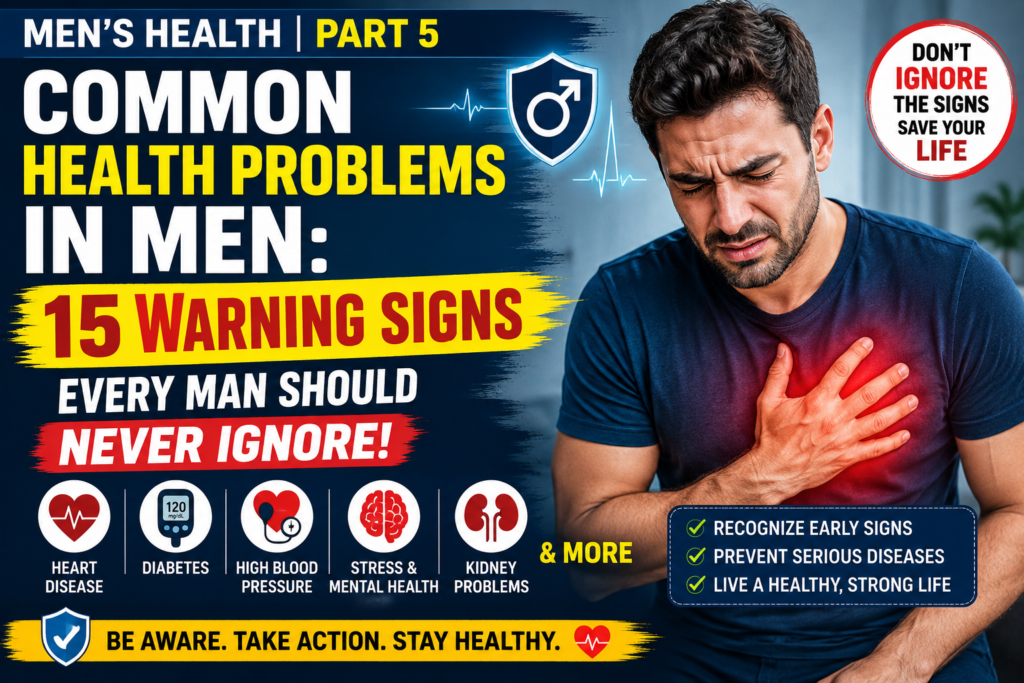
In our society, men have grown up hearing one thing since childhood—”man must be tough, man don’t cry easily, or man shouldn’t pay attention to any minor physical pain.” At present, most of us men are so busy with family, work, business, or the future that we don’t get time to look after our own bodies. From morning to night, while performing responsibilities, many think, “a little fatigue in the body is normal,” “there is no need to see a doctor for this much pain,” or “it will be fine after a few days of rest.” Because of this masculine ego, most men do not want to give any importance to their body’s minor discomforts or symptoms at all.
But reality says otherwise.
Globally, the risk of heart disease, high blood pressure, diabetes, obesity, mental stress, liver problems, kidney disease, and various types of cancer is gradually increasing among men. Statistics show that compared to women, men are about 50% behind when it comes to visiting a doctor or undergoing regular health checkups (Regular Health Checkups).
When your body falls into a problem, it starts sending some warning signs on its own. Ignoring these signs is not bravery, but extreme foolishness.
In this first episode of the Men’s Health series, we will learn—
- Why men’s health deserves special attention
- Why many men neglect health problems
- 15 common health problems and warning signs in men
- How to reduce the risk of these problems
- When you must consult a doctor
Why Men’s Health is Important
In many families, men are the main breadwinners or perform crucial responsibilities. As a result, without giving importance to their illness, they try to keep working.
Besides, an erroneous conception works among many men that, “I am fine,” “there is no need to see a doctor,” or “the pain will cure on its own, or going to a doctor will cost a lot of money.” Due to this mindset, many diseases are detected late.
Regular health checkups, a healthy lifestyle, and paying attention to bodily changes are among the best ways to stay healthy in the long run.

Why Do Men Neglect Health Problems?
For various reasons, many men do not prioritize their health. There are several social and psychological reasons behind this:
- Fear of showing weakness: Many men believe that going to a doctor or admitting their illness means exposing their own weakness.
- Taking symptoms lightly: “Oh, it’s nothing, it’ll get better on its own”—this mentality is most commonly seen among men.
- Work busyness: Busy with career, family, and earning, most men completely forget to take care of their own bodies.
- Fear and avoidance tendency: What if a big disease is detected?—from this subconscious fear, many step back from getting tests done.
These habits can cause big problems in the long run.
15 Common Health Problems and Warning Signs in Men
1. High Blood Pressure
High blood pressure is often called the “Silent Killer” because it can damage the body for a long time without any symptoms.
Potential Warning Signs:
- Repeated headaches
- Dizziness
- Blurred vision
- Shortness of breath
- Nosebleed (in some cases)
Many have no symptoms at all. Therefore, checking blood pressure regularly is extremely important.
2. Diabetes
Currently, diabetes is a long-term disease growing rapidly among men. Losing weight suddenly without any apparent reason, even without dieting or exercise, is a symptom of diabetes.
Potential Warning Signs:
- Excessive thirst
- Frequent urination
- Excessive hunger
- Weight loss
- Easily getting fatigued
- Delayed healing of wounds
- Blurred vision
If diabetes is not controlled, the risk of heart disease, kidney disease, and eye problems can increase.
3. Heart Disease
Heart disease is one of the leading causes of death among men worldwide. Any kind of chest pain or discomfort is the biggest primary symptom of heart disease. Many men ignore chest pain, attributing it to acidity or gas problems, and try to suppress it by taking antacids. But remember, the pain of a cardiac arrest or heart attack does not always have to be severe.
Potential Warning Signs:
- Chest pressure or pain
- Difficulty breathing
- Unusual fatigue
- Pain in the shoulder, neck, jaw, or arms
- Rapid or irregular heartbeat
If the chest pain gradually spreads to the left arm, neck, jaw, or back, it can be a direct sign of a heart attack.
4. Obesity
Currently, the problem of obesity is rising rapidly not only among older men but also among young men. Carrying excess weight for a long time increases the risk of diabetes, high blood pressure, heart disease, fatty liver, and joint problems.
Potential Warning Signs:
- Waist size increasing rapidly
- Easily getting breathless while walking
- Always feeling tired
- Excessive snoring
- Decreased energy in daily activities
A healthy diet, regular exercise, and adequate sleep play an important role in controlling weight.
5. High Cholesterol
High cholesterol usually damages the body without any symptoms. It gradually builds up fat in blood vessels, increasing the risk of heart disease and stroke.
Potential Warning Signs:
In most cases, there are no symptoms. Therefore, getting a regular blood test done is the best way to detect it.
What Increases the Risk:
- Excessive oily and fatty food
- Smoking
- Lack of physical activity
- Excess weight
6. Chronic Stress
Due to office work, financial pressure, family responsibilities, and anxiety about the future, many men stay under mental stress for a long time.
Potential Warning Signs:
- Always feeling irritated
- Getting angry easily
- Sleep problems
- Reduced concentration
- Always feeling fatigued
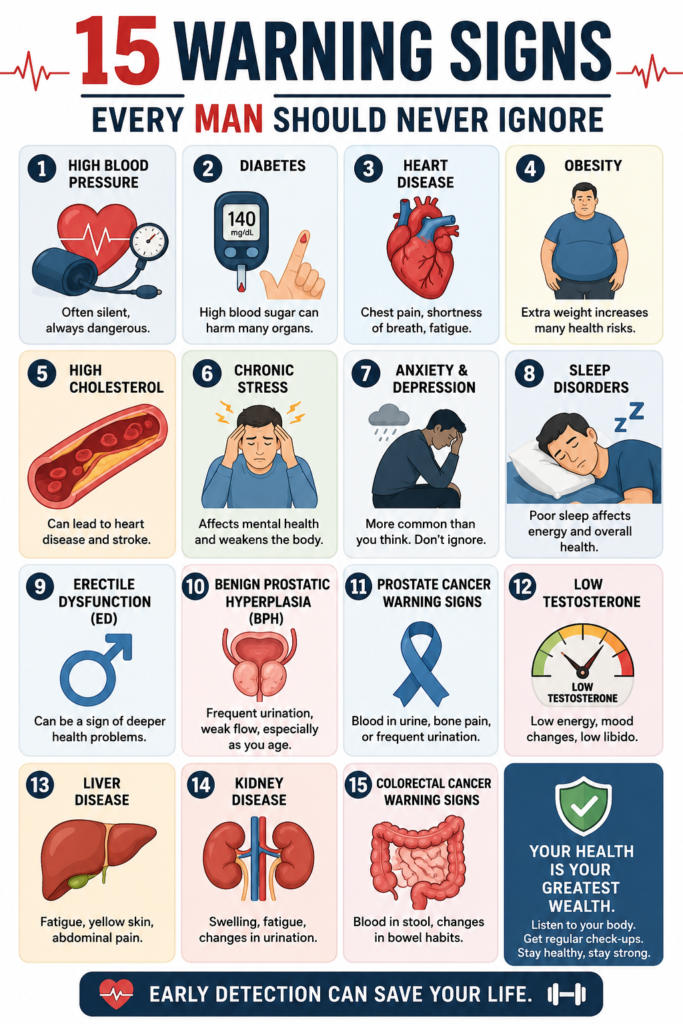
7. Anxiety & Depression
Many men do not express their mental health problems. As a result, the issue can gradually become more complex.
Potential Warning Signs:
- No longer having interest in activities like before
- Excessive anxiety
- Wanting to stay alone
- Always feeling hopeless
- Difficulty making decisions
Symptoms of depression or exhaustion in men do not manifest like they do in women. When women are depressed, they usually cry or express sadness, but when men are depressed, they withdraw themselves from everyone. As a result, they become addicted to gambling or alcohol, and the tendency of suicide among men is much higher than among women, so these mental changes should never be suppressed.
8. Sleep Disorders
If sleep is not good, both the body and brain can be damaged.
Potential Warning Signs:
- Not falling asleep at night
- Waking up repeatedly in the middle of the night
- Feeling tired in the morning
- Daytime sleepiness
- Excessive snoring
If there are regular sleep problems, a doctor’s advice should be taken.
9. Erectile Dysfunction
With advancing age, some men may experience this problem. However, it can also happen due to diabetes, heart disease, mental stress, or smoking. Many men see the problem of erectile dysfunction or sexual incompetence merely as a personal or sexual issue and do not share it with anyone out of shame.
Potential Warning Signs:
- Decreased sexual ability
- Difficulty maintaining an erection
- Decreased sexual interest
It is important to talk to a doctor if this problem occurs, without feeling ashamed.
10. Prostate Gland Problems (Benign Prostatic Hyperplasia – BPH)
If after going to sleep at night you have to get up repeatedly (more than 3 to 4 times) for urination and the urine flow is not clear, it can be a sign of two big problems. First, it is a primary symptom of Type-2 diabetes. Second, for men aged 50 or older, it is an enlarged prostate gland.
Potential Warning Signs:
- Frequent urination
- Having to get up repeatedly at night for urination
- Delay in starting urination
- Weak urine flow
- Feeling of incomplete emptying even after urination
If these symptoms appear, an urologist should be consulted quickly.
11. Warning Signs of Prostate Cancer
In the initial stage, there may often be no symptoms at all. However, seeing even a little blood in urine or stool is a Red Alert. Many people mistake passing blood with stool for common piles or hemorrhoids.
Potential Warning Signs:
- Blood in urine
- Blood in semen
- Painful urination
- Long-term pain in the waist or pelvic region
Regular health checkups can be beneficial for men over 50 years of age.
12. Low Testosterone
Testosterone is the primary male sex hormone. With advancing age, its level may decrease slightly. However, if it drops abnormally, various physical and mental problems can appear.
Potential Warning Signs:
- Always feeling tired
- Decreased sexual interest
- Decreased muscle strength
- Excess fat accumulation in the body
- Feeling low or decreased self-confidence
If these symptoms persist for a long time, testing should be done according to a doctor’s advice.
13. Liver Disease
Unhealthy dietary habits, excessive alcohol consumption, obesity, and some long-term diseases can increase the risk of liver problems.
Potential Warning Signs:
- Always feeling weak
- Decreased appetite
- Nausea
- Skin or eyes turning yellow
- Pain on the right side of the abdomen
Liver problems should not be ignored; a doctor should be consulted quickly.
14. Kidney Disease
The kidney plays an important role in eliminating waste products from the body. Long-term diabetes or high blood pressure can increase the risk of kidney disease.
Potential Warning Signs:
- Swelling of feet, ankles, or face
- Changes in urine output
- Foam or blood in urine
- Excessive fatigue
- High blood pressure not being under control
Regular kidney tests can catch the problem at an early stage in many cases.
15. Warning Signs of Colorectal Cancer
This is a serious disease of the large intestine or rectum. If detected at an early stage, the chances of successful treatment increase significantly.
Potential Warning Signs:
- Long-term constipation or diarrhea
- Blood in stool
- Long-term abdominal pain
- Weight loss without reason
- Always feeling weak
If these types of symptoms appear, contact a doctor without delay.
Special Warnings:
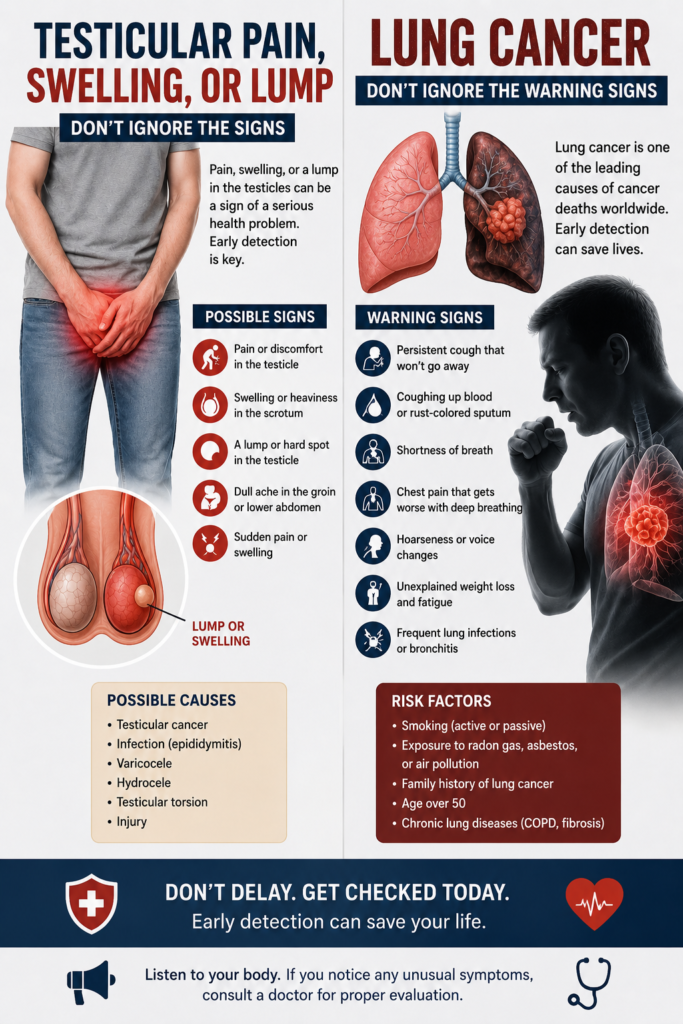
1. Testicular Pain, Swelling, or Lump
Never ignore pain, swelling, or any hard lump felt in the testicles.
Potential Warning Signs:
- Feeling a new lump or hard part in the testicles
- One testicle feeling unusually large or heavy
- Pain or discomfort in the testicles or groin
- Sudden swelling or heavy feeling
- Long-term pain in the lower abdomen or groin
Remember: Do not delay due to shame or fear if these kinds of symptoms appear. Seek the advice of a urologist or a qualified doctor as quickly as possible.
2. Lung Cancer
If your cough continues for more than 3 to 4 weeks and phlegm or blood comes out with the cough, or if your voice suddenly becomes hoarse or breaks, beware. Especially for those who smoke, it can be a major symptom of lung cancer or throat cancer. Smokers should not consider any cough as a common cold or allergy.
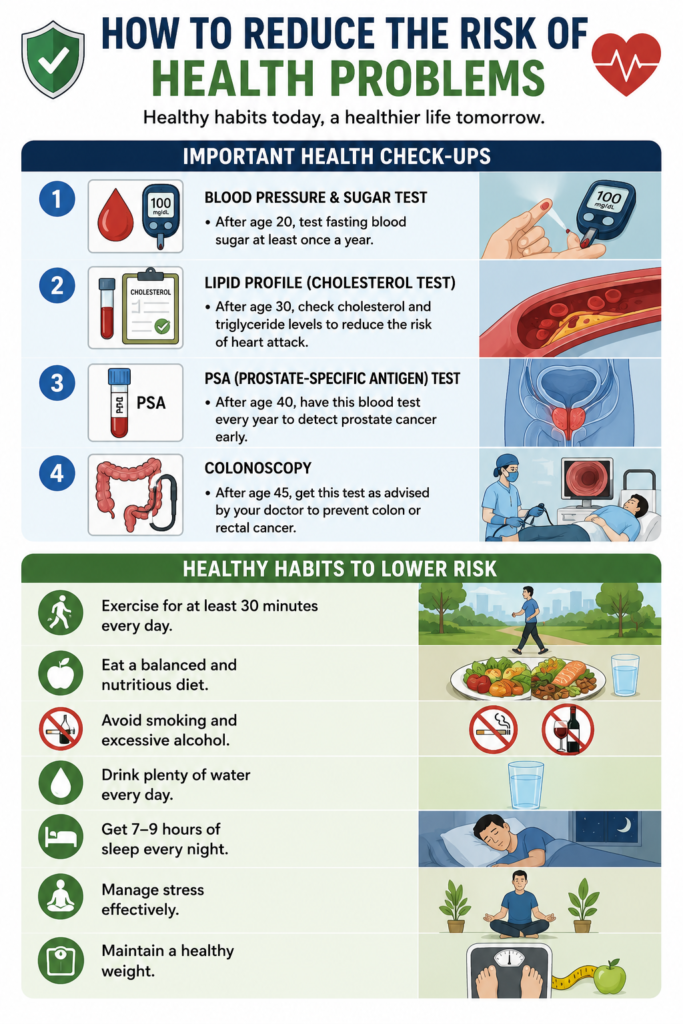
How to Reduce the Risk of These Health Problems?
Although many health problems cannot be completely prevented, the risk can be reduced significantly through a healthy lifestyle.
Some Important Habits:
- Blood Pressure and Sugar Test: After the age of 20, a fasting blood sugar test should be done at least once a year.
- Lipid Profile (Cholesterol Test): After the age of 30, the level of blood cholesterol and triglycerides should be checked, which reduces the risk of a heart attack.
- PSA (Prostate-Specific Antigen) Test: After the age of 40, this blood test should be done every year to detect prostate cancer.
- Colonoscopy: After the age of 45, this test should be done upon a doctor’s advice to prevent colon or rectal cancer.
Additionally, adopting certain habits makes it possible to prevent diseases before they occur:
- Walk or exercise for at least 30 minutes every day.
- Eat balanced and nutritious food.
- Avoid smoking and excessive alcohol.
- Drink adequate water.
- Try to sleep 7–9 hours daily.
- Keep mental stress under control.
- Maintain a healthy weight.
When Must You Go to a Doctor?
If any of the following symptoms appear, consult a qualified doctor without delay—
- Chest pain or shortness of breath
- Fast weight loss without reason
- Frequent urination
- Blood in urine or stool
- Long-term sleep problems
- Suffering from gas and acidity for a long time
- Excessive fatigue that does not decrease even after rest
- Long-term depression or anxiety
- Any unusual change in the body that lasts for a few weeks
Remember, if a disease is detected at an early stage, treatment can be easy and effective in many cases.
Conclusion
Many health problems in men start silently and no symptoms may appear at first. Therefore, small changes in the body should never be neglected.
Taking care of one’s own health, going to the doctor at the right time, and giving importance when the body sends a signal is the identity of a responsible person. Because you are not just an individual; you are someone’s son, someone’s husband, someone’s father, or the sole earning pillar of a family.
Remember, a healthy body and a healthy mind are the foundations of a long, active, and happy life.
FAQ
1. What are the most common health problems in men?
Ans: High blood pressure, diabetes, heart disease, obesity, high cholesterol, mental stress, anxiety, sleep problems, prostate problems, and kidney disease are among the most common health problems in men.
2. Why should men undergo regular health checkups?
Ans: Many serious diseases, such as high blood pressure, diabetes, or high cholesterol, may not show any symptoms in the initial stage. Regular health checkups can make it possible to identify these problems beforehand.
3. What can be the early symptoms of heart disease?
Ans: Feeling chest pain or pressure, shortness of breath, unusual fatigue, dizziness, or pain in the shoulder, neck, and arms can be potential warning signs of heart disease.
4. From what age is regular Health Checkup important for men?
Ans: Generally, it is advised to undergo regular health checkups after the age of 40.
5. Can long-term Stress and always feeling tired be a symptom of any disease?
Ans: It can be. If there is unusual fatigue and Stress for a long time, it can increase the risk of diabetes, anemia, sleep problems, thyroid problems, heart disease, and mental exhaustion.
6. How does a healthy lifestyle help reduce the risk of diseases?
Ans: Regular exercise, a balanced diet, adequate sleep, avoiding smoking and excessive alcohol, and keeping mental stress under control can help reduce the risk of many long-term diseases.
7. Is men’s mental health as important as physical health?
Ans: Absolutely. If mental health is good, work efficiency, family relationships, decision-making ability, and overall quality of life can improve. If there is long-term mental stress or depression, it is important to take expert help.
8. When must you go to a doctor?
Ans: If symptoms like chest pain, shortness of breath, blood in urine or stool, weight loss without reason, long-term fatigue, or anxiety are seen, then a qualified doctor’s advice should be taken without delay.
Disclaimer
The information provided in this article is for educational and informational purposes only and should not be considered medical advice, diagnosis, or treatment. Always consult a qualified doctor or healthcare professional regarding any medical concerns, symptoms, or before making changes to your diet, exercise, or treatment plan. Never ignore professional medical advice or delay seeking treatment based on information from this website. Healthyora and the author are not responsible for any decisions or actions taken based on the content of this article.