“I have no pain or trouble in my body, I am walking around just fine—so what is the need to unnecessarily go to the doctor and get tests done?”—This mindset is deeply rooted among most women in our country. Many women do not think of seeing a doctor unless a major problem appears in the body. Deadly diseases like high blood pressure, type-2 diabetes, thyroid problems, anemia, osteoporosis (bone loss), and cervical or breast cancer are called “Silent Killers.”
A regular health checkup or Preventive Health Checkup is not an extra luxury or a waste of money; rather, it is the safest investment to achieve a healthy long life. However, one thing needs to be remembered—the same tests are not needed for every woman at the same age or at the same interval. The screening plan may vary according to age, family history, previous illness, pregnancy, lifestyle, and other risk factors.
Why Is Regular Health Checkup Important for Women?
Some health problems may not give any clear symptoms at the beginning. As a result, even if feeling healthy, checking certain important health parameters can be beneficial. A woman has to go through several major hormonal and physical transformations in her life:
1. Hormonal Transformations & Menstrual Cycle (Menarche to Menopause)
From adolescent menarche to reproductive age, pregnancy, childbirth, and later perimenopause and menopause—sharp fluctuations in estrogen, progesterone, and other hormones occur in women’s bodies across every decade of life. Due to these changes, the development of thyroid issues, metabolic problems, and mood imbalances is very common.
2. Anemia & Depletion of Nutrients
Due to monthly blood loss from periods and nutrient deficiencies after childbirth, iron and calcium deficiencies are seen nearly three times more often in women compared to men.
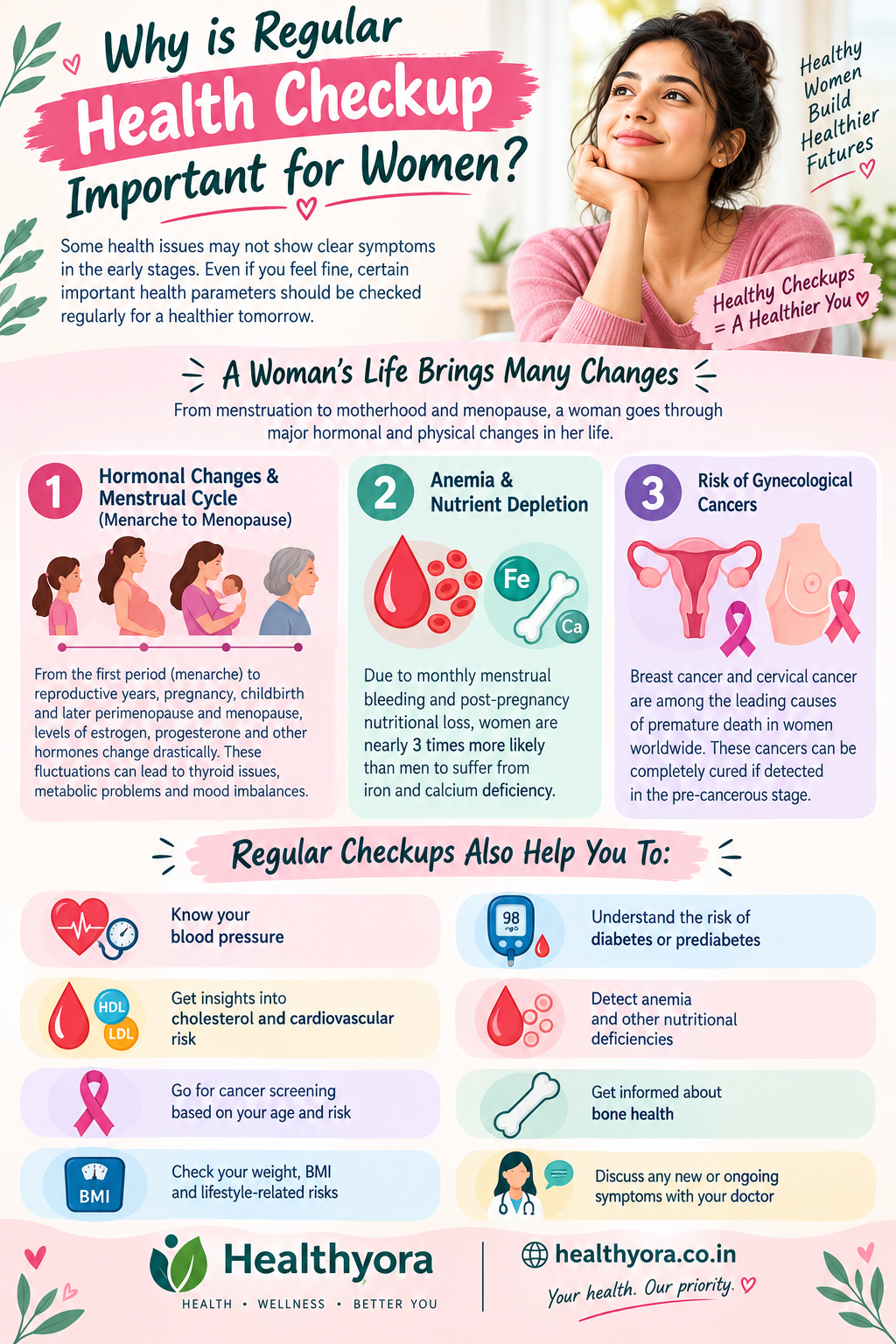
3. Risk of Gynecological Cancers
Breast cancer and cervical cancer are among the leading causes of premature death in women worldwide. It is possible to detect these cancers in pre-cancerous stages and cure them 100%.
In addition, through regular checkups—
- Information about blood pressure can be known
- The risk of diabetes or prediabetes can be understood
- Insights into cholesterol and cardiovascular risk can be gained
- The possibility of issues like anemia can be detected
- Cancer screening can be done according to age and risk
- Awareness about bone health can be raised
- Weight, BMI, and lifestyle-related risks can be evaluated
- New or long-standing symptoms can be discussed with a doctor.
Age-Based Health Checkup Roadmap: What to Do in Your 20s, 30s, 40s, and 50+?
At every stage of life, the body’s needs and disease risks change. Therefore, the same type of tests is not applicable to everyone:
1. In Your 20s
Focus: Building an overall nutritional foundation and preventing anemia and infections.
Essential Tests: Complete Blood Count (CBC), Blood Pressure, Blood Group & Thalassemia screening (extremely important before marriage), and regular Pap smears starting from age 21 if married.
2. In Your 30s
Focus: Metabolism, reproductive organ health, and diabetes prevention.
Essential Tests: Fasting blood sugar & HbA1c, Thyroid profile (TSH), Lipid profile, Vitamin D3 & B12, and whole pelvic ultrasonography (USG of Pelvis).
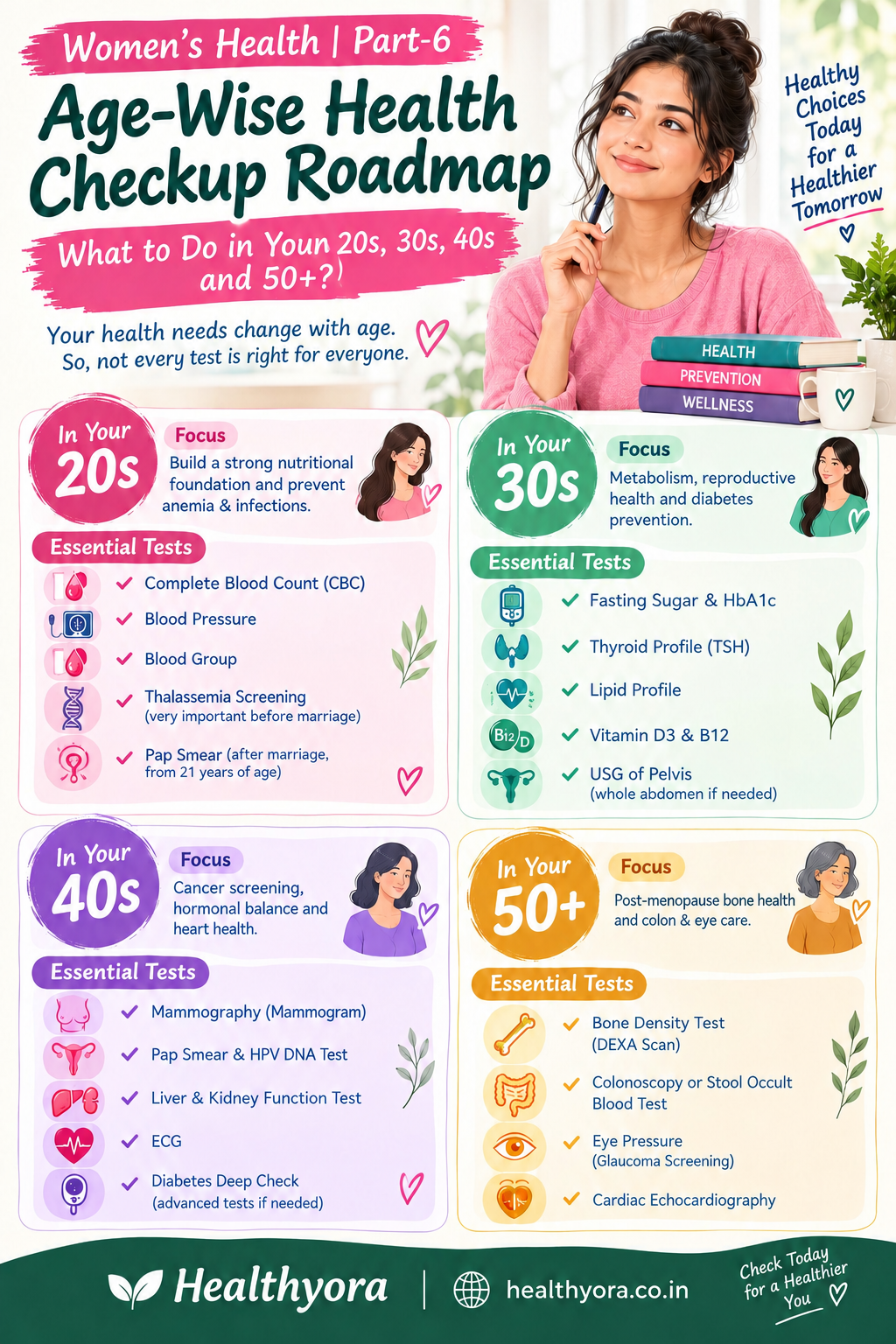
3. In Your 40s
Focus: Cancer screening, hormonal balance, and heart protection.
Essential Tests: Mammography (Mammogram), Pap smear & HPV DNA test, Liver & Kidney Function Tests, ECG, and in-depth tests for diabetes.
4. In Your 50s and Beyond
Focus: Preserving post-menopausal bone strength, and colon & eye care.
Essential Tests: Bone density test (DEXA Scan), Colonoscopy or Stool Occult Blood Test, Eye pressure (Glaucoma Screening), and Cardiac Echocardiography.
Healthy Cooking with an Air Fryer
Air fryers can help you prepare crispy foods with less oil than traditional deep-frying methods. It can be a convenient option for making everyday meals with less added oil.
👉 Check this Digital Air Fryer on Amazon;https://link.amazon/B07PFW1nC
15 Crucial Health Tests for Women and Their Detailed Analysis
Considering your age and physical condition, regularly having the following 15 health tests can play a life-saving role:
1. Complete Blood Count (CBC) & Serum Ferritin
Iron-deficiency anemia can be an important issue among women, especially for those with heavier menstrual bleeding.
Potential symptoms may include:
- Always feeling tired
- Weakness
- Dizziness
- Shortness of breath
- Trouble concentrating
- Pale skin
Why it’s essential: Through a CBC test, the level of hemoglobin in the blood, white blood cell count (whether there is an infection), and platelets can be known. Alongside this, doing a Serum Ferritin test helps understand the actual amount of iron stored in the body.
2. Pap Smear & HPV DNA Test
Cervical cancer is a silent killer for women.
Why it’s essential: Through this test, changes in cervical cells can be detected at an early stage (5–10 years before developing into cancer).
When to do it: Married women aged 21 to 29 should have a Pap smear alone every 3 years. For those aged 30 to 65, having a Pap smear and an HPV test together (Co-testing) every 5 years is the safest approach.
3. Breast Health & Mammogram
Breast cancer is the leading cancer cause of death among women worldwide.
Why it’s essential: Mammography is a special low-dose X-ray of the breast. It can detect very small lumps or tumors inside the breast.
When to do it: Perform a Breast Self-Examination at home every month, one week after your period ends. After crossing 40 years of age, a mammogram should be done every 1 to 2 years based on a doctor’s advice. However, if there is a family history, previous fracture, low body weight, smoking, certain medications, or other risk factors, screening may be required earlier.
4. Thyroid Profile Test (TSH, Free T3, Free T4)
The risk of having thyroid problems is about 5 to 8 times higher in women than in men. Thyroid hormones are associated with the body’s metabolism, energy, and various physiological processes.
Why it’s essential: When thyroid hormones decrease (Hypothyroidism), sudden weight gain, irregular periods, hair loss, dry skin, and extreme fatigue appear. On the other hand, when hormones increase (Hyperthyroidism), sudden weight loss and heart palpitations begin.
5. Fasting Blood Sugar & HbA1c (Diabetes Screening)
Currently, prediabetes and type-2 diabetes are rising rapidly among women.
Why it’s essential: It is important to test not just fasting blood sugar, but also HbA1c to know the average blood sugar level over the past 3 months. Fasting sugar below 100 mg/dL and HbA1c below 5.7% are normal. An HbA1c between 5.7% and 6.4% is classified as ‘prediabetes.’
6. Lipid Profile Test (Lipid Profile – Cholesterol Check)
After menopause or in the presence of PCOS, a woman’s risk of heart attack becomes equal to that of men.
What is checked: Total cholesterol, LDL (bad cholesterol), HDL (good cholesterol), and Triglycerides.
Why it’s essential: The buildup of triglycerides and bad cholesterol in the blood multiplies the risk of heart attack and stroke. This test should be done once a year.
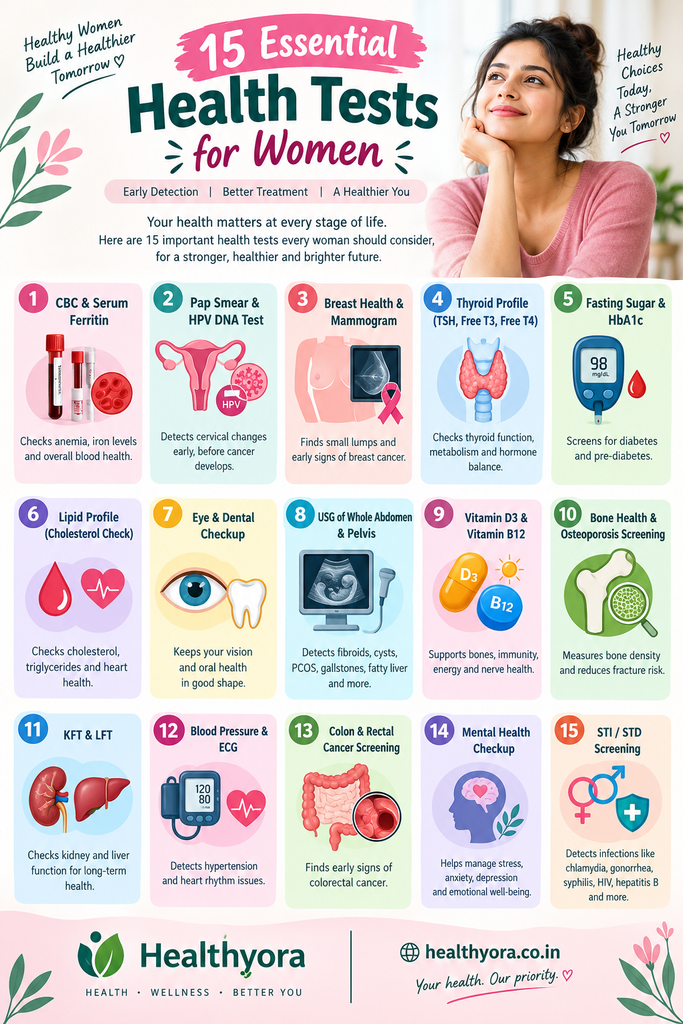
7. Eye & Dental Checkup
Eye and dental health are also parts of regular healthcare.
Why it’s essential: An eye examination may be required if there are eye problems, vision changes, discomfort due to long-term screen use, or conditions like diabetes.
Similarly, a dentist should be consulted if there are cavities, gum disease, bleeding gums, or persistent mouth problems.
8. Pelvic & Whole Abdomen Ultrasonography (USG of Whole Abdomen & Pelvis)
This is an accurate scan of the internal organs of the abdomen.
Why it’s essential: Many women have uterine fibroids, ovarian cysts or PCOS, gallstones, or fat in the liver (Fatty Liver). These cannot be detected through routine blood tests; they are very easily caught on a USG scan.
9. Vitamin D3 & Vitamin B12 Test
Due to staying indoors for extended hours, an extreme deficiency of Vitamin D3 is observed in most women.
Why it’s essential: Without Vitamin D3, the body cannot absorb calcium from food. As a result, chronic fatigue, back and waist pain, and joint stiffness appear in the body. Vitamin B12 keeps the nervous system healthy; its deficiency causes tingling or numbness in the hands and feet.
10. Bone Health & Osteoporosis Screening
With increasing age, bone density decreases, which can increase the risk of osteoporosis. After crossing 40 or 50, bone mineral density in women decreases rapidly, which is called Osteoporosis.
Why it’s essential: Through this test, bone strength or T-Score is measured. When bones become porous, even a minor slip and fall can cause fractures in hip or wrist bones. This scan is essential for every woman who has crossed 50 or reached menopause.
11. Kidney & Liver Function Tests (KFT & LFT)
What is checked: Serum creatinine, Urea, Uric acid, and liver enzymes (SGOT, SGPT, Bilirubin).
Why it’s essential: If high blood pressure or blood sugar remains uncontrolled for a long time, kidneys gradually begin to fail. A regular creatinine test ensures kidney health.
12. Blood Pressure & ECG
High blood pressure is known as a silent killer.
Why it’s essential: Many women do not know that their blood pressure is high. Blood pressure should be checked at least once a month. Additionally, it is safe to have an ECG done once a year to evaluate irregular heartbeat and the electrical signals of the heart muscles.
13. Colon & Rectal Cancer Screening
Not just reproductive health—colorectal cancer screening is also important as part of a woman’s overall health. After crossing age 45, the risk of colon cancer increases for both men and women.
Why it’s essential: If there is any sudden major change in bowel habits (prolonged diarrhea or constipation) or blood in the stool, a stool test or colonoscopy should be done under medical advice.
14. Mental Health Checkup Is Also Important
Women’s health does not mean just physical health. Long-term stress, anxiety, depression, burnout, sleep problems, or emotional difficulties can impact daily life and overall well-being. A healthcare professional should be consulted for this.
15. STI / STD Screening (Sexually Transmitted Infection Screening)
Sexual health is a normal part of a woman’s overall wellness.
Who it is essential for: Any sexually active woman, especially those who have multiple partners, are planning a pregnancy, or have symptoms of pain during intercourse.
Why it’s essential: Infections such as chlamydia, gonorrhea, syphilis, trichomoniasis, HIV, and hepatitis B may not produce any severe symptoms in their early stages. Blood and urine samples, as well as vaginal, urethral, and cervical swabs, are required for these tests.
Common Mistakes Women Frequently Make
In terms of health awareness, women inadvertently make some dangerous mistakes:
- Mistake 1: Waiting for pain: Many women think there is no need to visit a doctor unless there is severe pain in an organ. Yet in the early stages of cancer, diabetes, or high blood pressure, there is no pain at all.
- Mistake 2: Fear of a disease being detected: “What if something bad is caught in the tests!”—out of this subconscious fear, many women step back from getting tested.
- Mistake 3: Buying medicines from a pharmacy on their own: Buying multivitamins or iron tablets from a store without any blood tests whenever feeling slightly weak can be harmful. Excess levels of iron in the body can damage the liver.
When Should You Not Wait for a Routine Checkup?
If you have any new or persistent symptoms like the following, you should consult a doctor without waiting for a routine annual checkup:
- Abnormal or very heavy vaginal bleeding
- Bleeding between periods or after sexual intercourse
- A new lump in the breast
- Abnormal nipple discharge
- Unexplained weight loss
- Long-standing extreme fatigue
- Frequent dizziness or fainting
- Chronic abdominal/pelvic pain
- Shortness of breath or chest pain
- Long-term mood or mental health issues
Conclusion
A regular health checkup does not mean looking for something to fear. Rather, it is giving time to your own body and becoming aware of future health risks. Taking care of your own health is not a luxury; it is your right and an absolute responsibility towards your family. Take out just one day a year, keep a health budget for yourself, and get the necessary health tests done. Disease prevention is always far easier, more economical, and wiser than cure. Give importance to changes in your body, stay conscious of your regular health, and seek medical help when needed.
FAQ (Frequently Asked Questions)
1. Is a health checkup really needed every year if there is no discomfort in the body?
Answer: Yes, absolutely. High blood pressure, cholesterol, fatty liver, cervical cancer, and diabetes cause internal damage inside the body for years without any symptoms.
2. Is doing a health checkup once a year mandatory?
Ans: The same interval is not applicable to everyone. It is best to determine checkup timing according to age, risk factors, and health conditions.
3. Do women need to do all kinds of blood tests every year?
Ans. No. It is best to select tests based on need. Unnecessary testing is not always beneficial.
4. Is it safe for unmarried young women to have a pelvic ultrasonography (USG)?
Answer: Yes, 100% safe. In the case of unmarried girls, no internal examination is performed; ultrasound is done externally by applying gel over the abdomen. It has no radiation or side effects. This test is extremely important if there is lower abdominal pain or irregular periods.
5. From what age should a Mammogram be done?
Ans. Recommendations may vary by guideline. For instance, the USPSTF recommends mammography every two years for average-risk women aged 40–74.
6. How much can a full health checkup package cost?
Answer: Various diagnostic centers or hospitals offer ‘Well Woman Packages’ or ‘Master Health Checkup Packages’ for women.
7. Can thyroid medication be taken in the morning before a thyroid test?
Answer: No. If you take regular thyroid medication, do not take the medication on the morning of the test and provide the blood sample on an empty stomach.
8. Is a regular health checkup even more important if one has PCOS?
Ans. There can be certain metabolic risks associated with PCOS, such as insulin resistance and diabetes risk. Therefore, discussing blood sugar and other health assessments with a doctor based on individual risk is advisable.
Disclaimer
The information provided in this article is for educational and informational purposes only and should not be considered medical advice, diagnosis, or treatment. Always consult a qualified doctor or healthcare professional regarding any medical concerns, symptoms, or before making changes to your diet, exercise, or treatment plan. Never ignore professional medical advice or delay seeking treatment based on information from this website. Healthyora and the author are not responsible for any decisions or actions taken based on the content of this article.