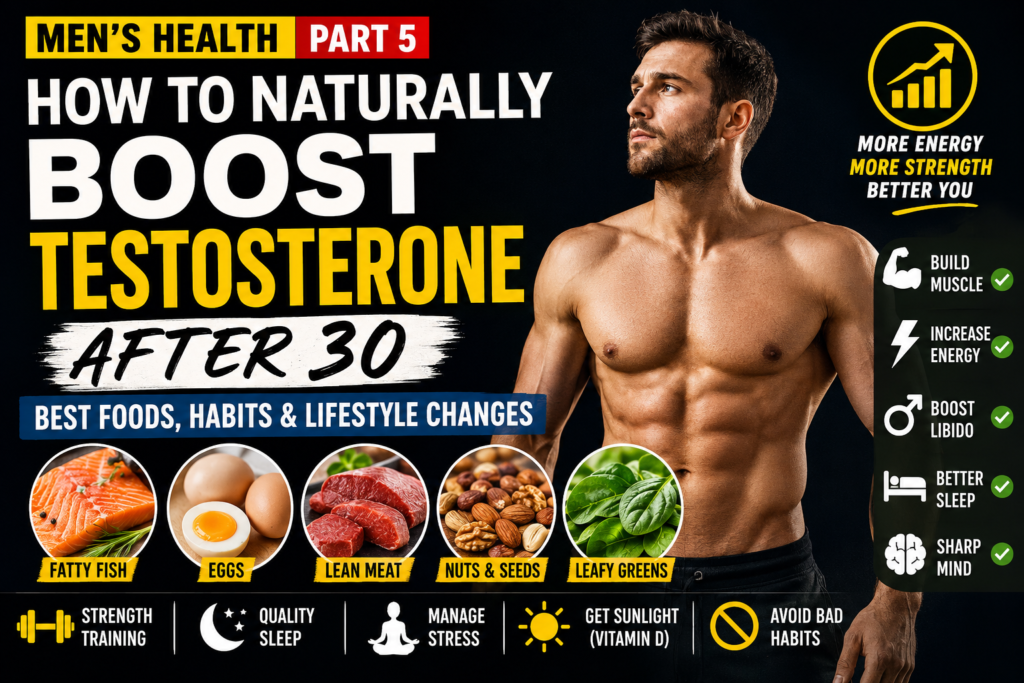
After age 30, many men notice that they no longer have the same energy, enthusiasm, or stamina as before. Feeling tired easily, fat starting to accumulate around the belly—many simply dismiss these as the “effects of aging.” However, a major reason behind this could be the gradual decline of the hormone Testosterone.
In us men’s bodies, the core foundation of energy, confidence, endurance, and physical and mental well-being is a special hormone—Testosterone. Muscle building, strong bones, facial hair growth (beard and mustache), a deep voice, fertility, intense passion for work, and boundless energy—testosterone acts as the craftsman behind all these things. Generally, after the age of 30, Testosterone levels may start to decrease at a rate of about 1% per year. Although it is not the same for everyone, an unhealthy lifestyle, lack of sleep, excessive mental stress, obesity, smoking, and alcohol can accelerate this decline even further. Many men fall victim to chronic fatigue, depression, increased abdominal fat, reduced sex drive, and muscle loss even before reaching the age of 40 or 45. They think that perhaps it is just because they are getting older.
In this detailed blog, we will discuss what Testosterone is, why it declines rapidly after 30, the main symptoms of low testosterone, the best foods to increase the hormone, the most effective lifestyle habits, and the mistakes that are critical to avoid.
What is Testosterone
Testosterone is an androgenic steroid hormone produced mainly in the testes (Testes). The signal to produce it comes from the pituitary gland in our brain, which secretes Luteinizing Hormone (LH) to stimulate the ‘Leydig Cells’ in the testes to produce testosterone.
Why Testosterone Starts to Decrease After 30
The decline of Testosterone is a natural biological process. Generally, after 30 years of age, Testosterone levels in men’s bodies can start to gradually decrease.
1. Ageing (Natural Aging Process)
As age increases, the efficiency of the testes (Testes) and the hormone-regulating parts of the brain (Hypothalamus and Pituitary Gland) gradually decreases. As a result, Testosterone production also begins to decrease.
2. Excess Belly Fat & Obesity
Excess belly fat increases the activity of an enzyme called Aromatase, which can convert a portion of Testosterone into Estrogen.
3. Poor Sleep
The body produces the most Testosterone during deep and adequate sleep. Therefore, sleeping less than 7 hours for long periods can disrupt Hormone Balance.
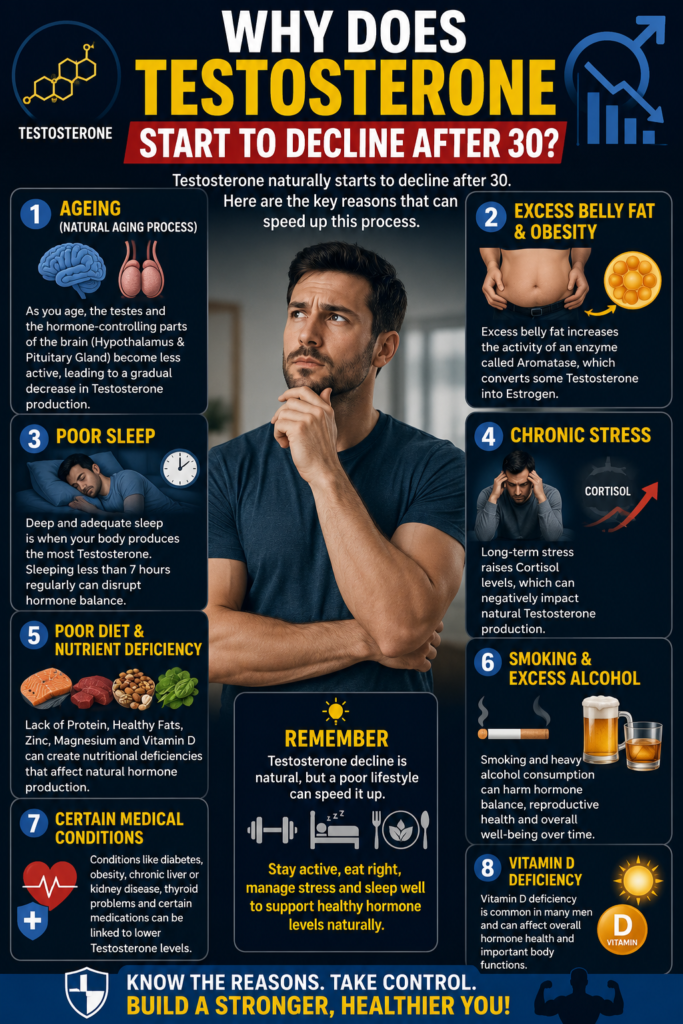
4. Chronic Stress
Long-term mental stress can increase Cortisol Hormone, which can affect the body’s natural Testosterone production.
5. Poor Diet & Nutrient Deficiency
Deficiencies in Protein, Healthy Fat, Zinc, Magnesium, and Vitamin D can create a lack of nutrients needed to support the body’s natural hormone production.
6. Smoking & Excess Alcohol
Smoking and excessive alcohol can have negative effects on hormone balance, reproductive health, and overall physical well-being in the long run.
7. Certain Medical Conditions
Diabetes, obesity, chronic liver or kidney disease, thyroid problems, and certain medications can also be associated with decreased Testosterone levels.
8. Vitamin D Deficiency
Vitamin D deficiency is seen in many men, and it can affect overall hormone health and various important body functions.
Warning Signs of Low Testosterone After 30
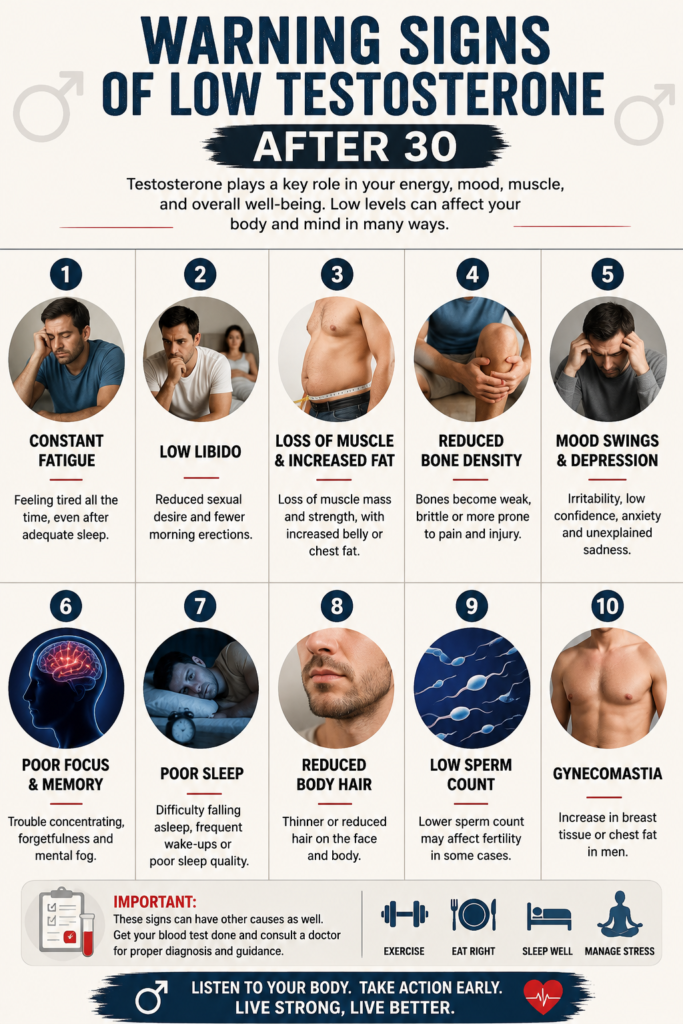
When Testosterone gradually decreases, its impact is not only on sexual health, but on the entire body and mind. To understand whether testosterone is decreasing in your body, along with laboratory blood tests, pay attention to the warning signs of your body below:
- Feeling tired all the time (Constant Fatigue)
Having low energy all day even after adequate sleep and getting tired easily. - Decreased sex drive (Low Libido)
Significantly reduced sexual interest or desire compared to before, and absent or decreased normal morning erections (Morning Erections). - Muscle loss and fat increase:
Decrease in muscle shape or firmness despite working out regularly, and fat accumulation particularly around the belly and chest. - Bones becoming weak (Reduced Bone Density)
Bones becoming brittle or easily feeling pain. - Extreme mood swings and depression:
Becoming extremely irritable over small things, loss of confidence, feeling fearful, and feeling down without any reason. - Decreased focus and memory (Poor Focus & Memory)
Trouble maintaining focus at work or repeatedly forgetting things. - Sleep problems (Poor Sleep)
Inability to fall asleep, waking up repeatedly, or poor sleep quality. - Reduced body hair (Reduced Body Hair)
Facial or body hair becoming thinner than before. - Decreased sperm count (Low Sperm Count)
In some cases, low Testosterone can also affect fertility. - Breast tissue enlargement (Gynecomastia)
An abnormal increase in fat or breast tissue in men’s chests.
Top 10 Foods to Naturally Increase Testosterone
There is no single “magic food” to increase Testosterone. Rather, there are certain nutritious foods that supply Zinc, Vitamin D, Magnesium, Healthy Fats, Protein, and other important nutrients.
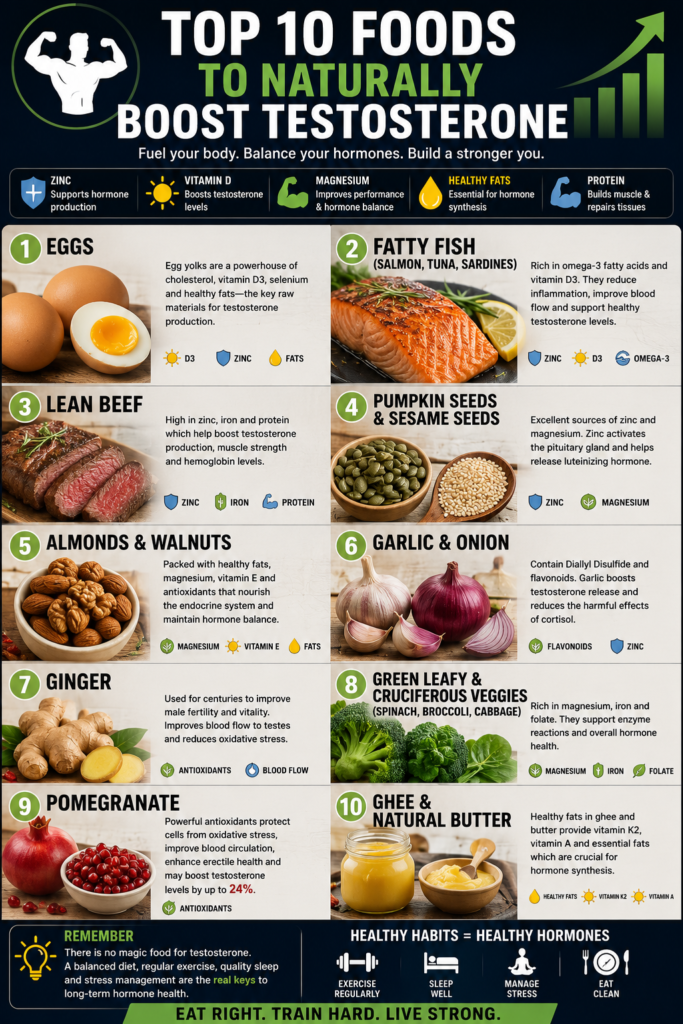
- Eggs
Egg yolk is called the powerhouse of testosterone. Many people throw away egg yolks out of fear of cholesterol, which is a grave mistake. Cholesterol is the main raw material for making testosterone hormone! In addition, egg yolks contain large amounts of Vitamin D3, Selenium, and Saturated Fat, which directly stimulate the testes. - Seafood & Fatty Fish (Fatty Fish)
Fatty fish like salmon, tuna, hilsa, sardines, and pomfret contain rich amounts of Omega-3 fatty acids and Vitamin D3. Omega-3 keeps blood vessels flexible and reduces inflammation inside the body, paving the way for testosterone production. - Lean Beef
Eating lean beef in moderation provides Zinc, Iron, and Protein. This helps in Testosterone production and aids in building Muscle Strength and Hemoglobin. - Pumpkin seeds, sesame & flaxseeds (Pumpkin Seeds & Sesame)
Pumpkin seeds are one of the best sources of Zinc and Magnesium. Zinc directly activates the pituitary gland, helping in the secretion of Luteinizing Hormone. - Almonds & Walnuts
Nuts contain Healthy Fat, Magnesium, Vitamin E, and Antioxidants. These directly nourish the endocrine system and maintain hormone balance. - Garlic and Onions
Garlic and onions contain Diallyl Disulfide and Flavonoids. The active ingredient in garlic works like magic to increase testosterone secretion and reduce the harmful effects of cortisol hormone. - Ginger (Ginger)
Ginger has been used for centuries to boost men’s fertility and stamina. Eating ginger regularly increases blood flow to the testes and reduces oxidative stress. - Green Cruciferous Vegetables
Spinach, broccoli, cabbage, and cauliflower contain Magnesium, Iron, and Folate. These assist in various enzyme reactions in the body. - Pomegranate (Pomegranate)
Pomegranates contain powerful Antioxidants, which help protect the body from Oxidative Stress, normalize blood circulation, improve erectile health, and help increase testosterone levels by up to nearly 24%. - Ghee & pure butter
Removing all fat from your diet stops testosterone production. Pure ghee and butter contain Vitamin K2, Vitamin A, and essential fats, which are extremely important for hormone synthesis.
Daily Habits & Lifestyle Changes That Naturally Boost Testosterone After 30
To increase Testosterone, just eating good food is not enough. Some daily healthy habits play an important role in supporting the body’s natural hormone production.
- Do Strength Training 3–4 days a week
Not all types of exercise increase testosterone. Squats, Deadlifts, Bench Presses, and Pull-ups release testosterone and growth hormone the most. Practice lifting moderate to heavy weights at least 3-4 days a week. - Sleep 7–9 hours daily
Most testosterone in men’s bodies is produced at night during deep sleep (especially during REM Sleep). - Maintain a Healthy Weight
Excess Belly Fat can have a negative impact on the body’s Hormone Balance. A body fat percentage between 8% and 15% in men is most ideal for testosterone. As soon as body fat goes above 20%, aromatase enzyme becomes active, and testosterone starts to decrease. - Cortisol and stress management
Chronic mental stress is the biggest enemy of testosterone. To reduce stress, practice 10-15 minutes of deep breathing exercises or meditation daily. - Eat food rich in adequate Protein, Healthy Fat, & Zinc
A balanced diet is extremely important for hormone production. Keep the following in your diet:- Eggs
- Fish
- Lean Meat
- Nuts
- Seeds
- Avocado
- Olive Oil
- Dairy Products
- Avoid Vitamin D deficiency
Vitamin D3 is actually not an ordinary vitamin; it is a pre-hormone. Expose your body to mild morning sunlight for 15-20 minutes daily. Vitamin D obtained from sunlight directly strengthens the Leydig cells in the testes and increases testosterone. - Limit Alcohol & quit Smoking
Smoking and excessive alcohol can have a negative impact on the body’s natural hormonal balance in the long run.
Conclusion
A slight drop in testosterone levels in the body after age 30 is a normal natural rule. But letting it fall unnaturally low due to an incorrect lifestyle is not wise at all. Rather, from this time onward, a foundation for long-term health can be built through proper eating habits, regular exercise, adequate sleep, and stress management.
Remember, there is no magic food or shortcut to increase Testosterone. Daily balanced meals, hard physical work, deep sleep, and a stress-free mindset are what can take your testosterone hormone back to its peak, just like in your younger days.
Frequently Asked Questions (FAQ)
1. Does Testosterone naturally decrease after 30?
Answer: Yes. Generally, after 30 years of age, Testosterone levels in many men can start to gradually decrease. However, it is not the same for everyone.
2. What should be the normal level of testosterone in the blood?
Answer: The normal level of Total Testosterone in an adult male’s body usually ranges between 300 to 1000 ng/dL. When it drops below 300 ng/dL, it is medically referred to as ‘low testosterone’ or ‘hypogonadism’.
3. How long does it take to naturally increase testosterone?
Answer: If you start eating the right food, lifting weights, getting good sleep, and reducing stress in a disciplined manner, you can generally feel a major change in your energy, mood, and physical strength within 3 to 6 months.
4. Should one take Testosterone Booster Supplements?
Answer: One should not use any Testosterone Booster just by looking at advertisements or on their own whim. If low Testosterone is suspected, get tested under a doctor’s advice and then take treatment or supplements if necessary.
5. Is there a direct relationship between masturbation and testosterone hormone?
Answer: There is no direct harmful relationship between masturbation and long-term blood testosterone levels. However, doing it excessively can cause physical fatigue and mental exhaustion.
6. When should one visit a doctor for Testosterone Replacement Therapy (TRT)?
Answer: If after trying naturally for 3-6 months your testosterone level remains below 300 ng/dL, you can consider TRT after consulting an experienced Endocrinologist.
Disclaimer
The information provided in this article is for educational and informational purposes only and should not be considered medical advice, diagnosis, or treatment. Always consult a qualified doctor or healthcare professional regarding any medical concerns, symptoms, or before making changes to your diet, exercise, or treatment plan. Never ignore professional medical advice or delay seeking treatment based on information from this website. Healthyora and the author are not responsible for any decisions or actions taken based on the content of this article.