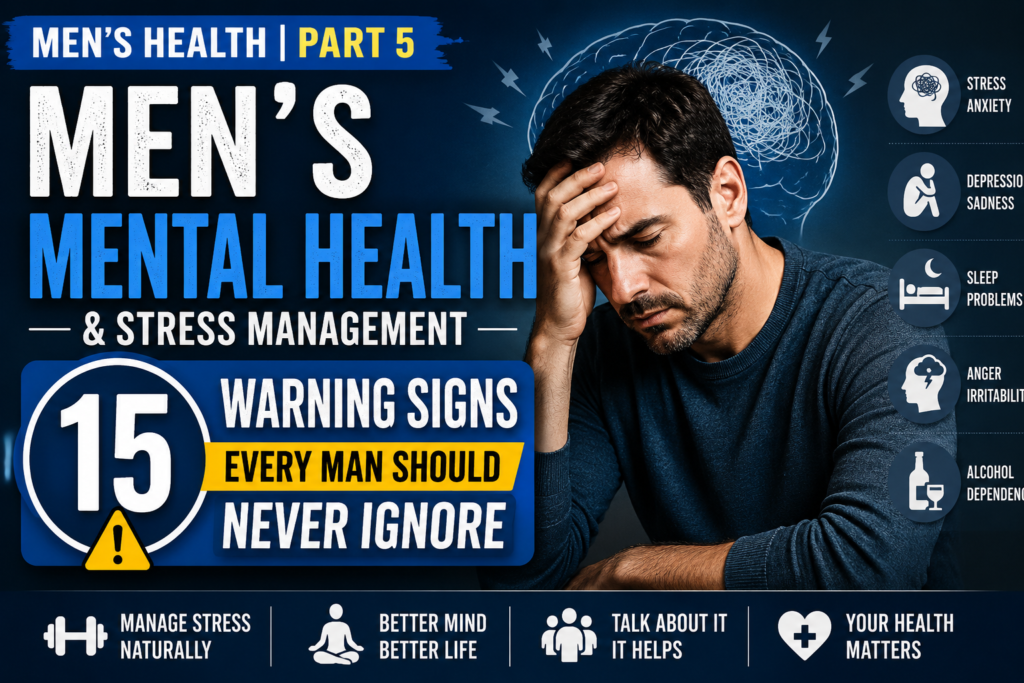
When we talk about men’s health, we usually discuss heart problems, diabetes, high blood pressure, cancer, or fitness. But there is a crucial topic that is often ignored—Mental Health.
In the present times, due to job pressure, business uncertainty, family responsibilities, financial problems, relationship tensions, and being digitally connected all the time, mental stress among men has increased significantly compared to the past. Various studies by medical science and the World Health Organization (WHO) show that mental health issues manifest in much more diverse and dangerous ways in men compared to women. Men do not easily express their depression or mental stress through tears. As a result, this silent suffering eventually turns into intense anger, irritability, excessive workaholism, or various harmful addictions. An even more terrifying statistic is that worldwide, the rate of suicide among men is about three to four times higher than that of women.
For this reason, taking care of mental health is just as urgent as taking care of physical health.
What you will learn in this episode:
- What is Mental Health?
- What is Stress and how does it affect the body?
- Main causes of mental stress in men
- Why do men hide their mental health problems?
- 15 Warning Signs
- How to practice Stress Management
- When to seek help from a doctor or Mental Health Professional
What is Mental Health?
Mental Health does not just mean the absence of mental illness. It refers to our emotional, psychological, and social state. It is where a person can manage their thoughts, feelings, and behavior, and cope with stress. They can maintain healthy relationships. In other words, mental health has an impact on everything.

What is Stress?
Stress is the natural reaction of the body and mind, which is created in a stressful or challenging situation. When Stress continues for a long time, the level of a Stress Hormone called Cortisol increases significantly in the body, gradually raising the risk of various health problems.
How does Stress affect the body?
If mental stress persists for a long time, various changes can be seen in the body—
- The risk of high blood pressure may increase.
- The probability of heart disease may rise.
- The immune system may weaken.
- Sleep problems can occur.
- Weight may increase, especially Belly Fat.
- The risk of Type-2 Diabetes may increase.
- Digestive problems may appear.
- Headaches or neck-shoulder pain can occur.
- Memory and concentration may decrease.
Main causes of mental stress in men
The causes are not the same for everyone. However, for most men, the following causes are most commonly seen—
1. Job or business pressure
Work pressure, meeting targets, and job uncertainty can increase mental stress.
2. Financial problems
Debt, household expenses, and anxiety about future financial security can be causes of long-term Stress.
3. Family responsibilities
Family responsibilities and relationship problems can impact mental health.
4. Lack of adequate sleep
Less sleep or irregular sleep does not allow the brain to rest, resulting in even more Stress.
5. Social Media & Digital Overload
Excessive Screen Time, Social Media Comparison, and the habit of being Online all the time can increase mental fatigue.
6. Physical illness
Diabetes, high blood pressure, or any other long-term illness can be a cause of mental stress.
7. Loneliness
Decreased communication with friends or family and not expressing one’s feelings can increase mental stress even further.
Why do men hide their mental health problems?
Men mostly hide their suffering due to a few specific reasons:
1. Social Stigma
Our society still believes that going to a psychiatrist/mental health doctor means the person is ‘mad’ or mentally incapable.
2. Provider Identity
Most men are the primary earners of the family. They think, if I break down mentally, what will happen to the whole family? Out of this thought, they suppress their problems.
3. Fear of Judgment
Men fear that if they talk about their mental suffering during hangouts with friends or at the workplace, others will make fun of them or consider them weak—this fear makes men isolated.
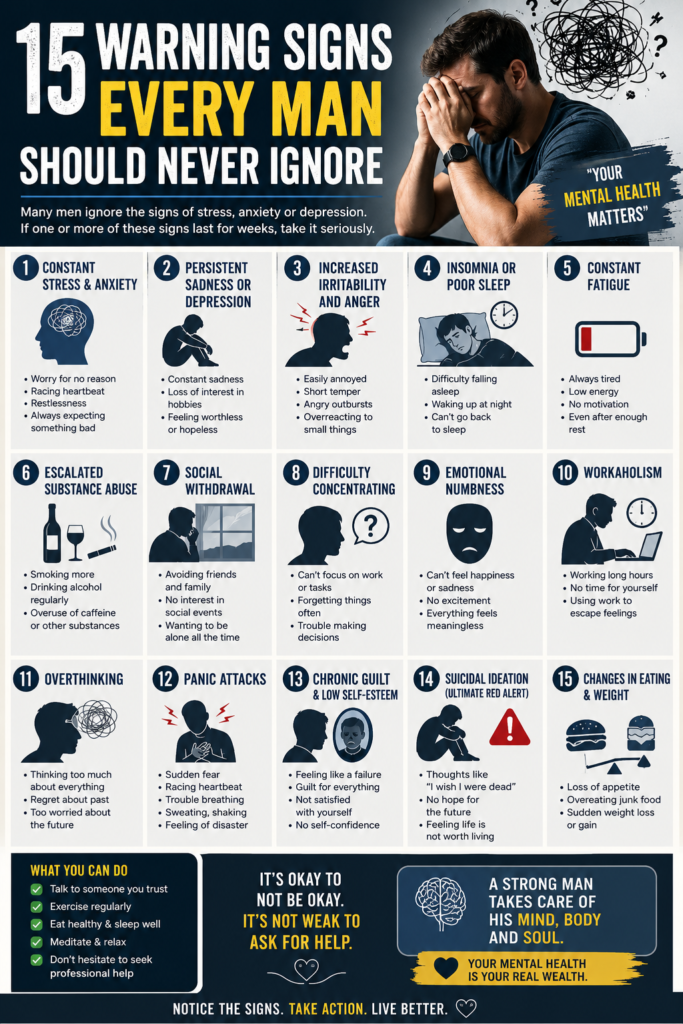
15 Warning Signs Every Man Should Never Ignore
Many men ignore mental stress or anxiety, considering it normal. If one or more of the following symptoms persist for a few weeks, the matter should be looked at seriously.
1. Constant Stress & Anxiety
Having feelings of anxiety, restlessness, or fear all the time without any specific reason can be a symptom of Anxiety.
- Anxiety without reason
- Heart palpitations
- Feeling restless
- Always feeling that something bad is going to happen
2. Persistent Sadness or Depression
Feeling sad for a few weeks or longer, not finding joy in anything, or feeling that life is meaningless can be symptoms of Depression.
- Being sad all the time
- Losing interest in previous hobbies
- Feeling worthless
3. Increased Irritability and Anger
While depression or exhaustion in women is usually expressed through indifference or crying, in men, it manifests through intense anger and an irritable mood. If you suddenly get violently angry or start screaming at people around you over minor issues, such as getting stuck in a traffic jam, understand that this is an expression of deep mental stress inside your mind. When the mind can no longer take the pressure, the anger comes out.
4. Insomnia or Poor Sleep
Mental stress directly impacts our sleep. Tossing and turning for hours after going to bed, the continuous wheel of thoughts spinning inside the head, waking up suddenly in the middle of the night, and then not being able to fall asleep again (Insomnia) are signs of mental anxiety.
5. Constant Fatigue
If you feel weak or tired all day even after getting enough sleep, it can be an indication of not just physical, but also mental problems.
6. Escalated Substance Abuse
To forget mental stress or inner pain, many men look for a path of temporary escape. Suddenly increasing the amount of smoking abnormally, taking shelter in alcohol or drinking every night, or consuming excessive tea and coffee.
7. Social Withdrawal
Keeping oneself isolated from everyone, not wanting to talk to anyone, or reluctance to go to social events is a common symptom of mental problems.
8. Difficulty Concentrating
Facing problems in maintaining focus during work, studies, or daily decision-making can be due to long-term Stress or Anxiety.
9. Emotional Numbness
Some people cannot express any emotion properly—whether it is sadness, joy, or love. Everything feels empty or meaningless.
10. Workaholism
To escape their loneliness or depression, many men voluntarily spend 12-14 hours at the office every day, and even sit with their laptops on holidays. They actually use work to run away from their inner feelings.
11. Overthinking
Thinking about the same thing repeatedly, regretting past mistakes, or being overly anxious about the future has a negative impact on mental health.
12. Panic Attacks
Sudden intense fear, heart palpitations, difficulty breathing, sweating, or feeling that something huge is happening—these can be symptoms of a Panic Attack.
13. Chronic Guilt and Low Self-Esteem
“I could do nothing for my family members, I am a failure, nothing will happen through me in life”—suffering from this kind of intense self-loathing and unreasonable guilt is a signal of extreme deterioration in men’s mental health.
14. Suicidal Ideation – Ultimate Red Alert
This is the biggest red alert of mental health. If thoughts ever come to mind like—”It would probably solve all problems if I died” or “There is no more hope in this life”, do not take it lightly even for a moment. This is the last cry of your extremely tired and broken mind.
15. Changes in eating habits and weight
Due to mental stress, a person’s eating habits can change completely. Many people completely lose the desire to eat food in the face of stress, as a result of which the body rapidly suffers from malnutrition and weight drops. Again, many people start eating extra junk food, sweets, or carbohydrate-rich food to gain mental peace, resulting in fat accumulating quickly around the belly.
How to practice Stress Management
1. Regular physical exercise
Exercise is effective not only for the body but also for the mind. Walking for 30 minutes every day or doing strength training releases endorphins and dopamine hormones from the brain, which naturally fix our mood and reduce depression.
2. Practice Meditation & Deep Breathing
The habit of Meditation and taking slow, deep breaths helps to calm the mind and reduce anxiety. Every morning, close your eyes for at least 10 minutes and focus on the pace of your breathing. In the beginning, doing it for 5–10 minutes every day is enough.
3. Sleep 7–9 hours daily
If you do not get enough sleep, Stress Hormones can increase. Therefore, practice sleeping and waking up at specific times every day.
4. Consume a healthy and balanced diet
Excessive Fast Food, Soft Drinks, and excessive sugar can have a negative impact on mental and physical health. Therefore, keep foods rich in magnesium, protein, and omega-3 (such as nuts, spinach, fish) in your diet.
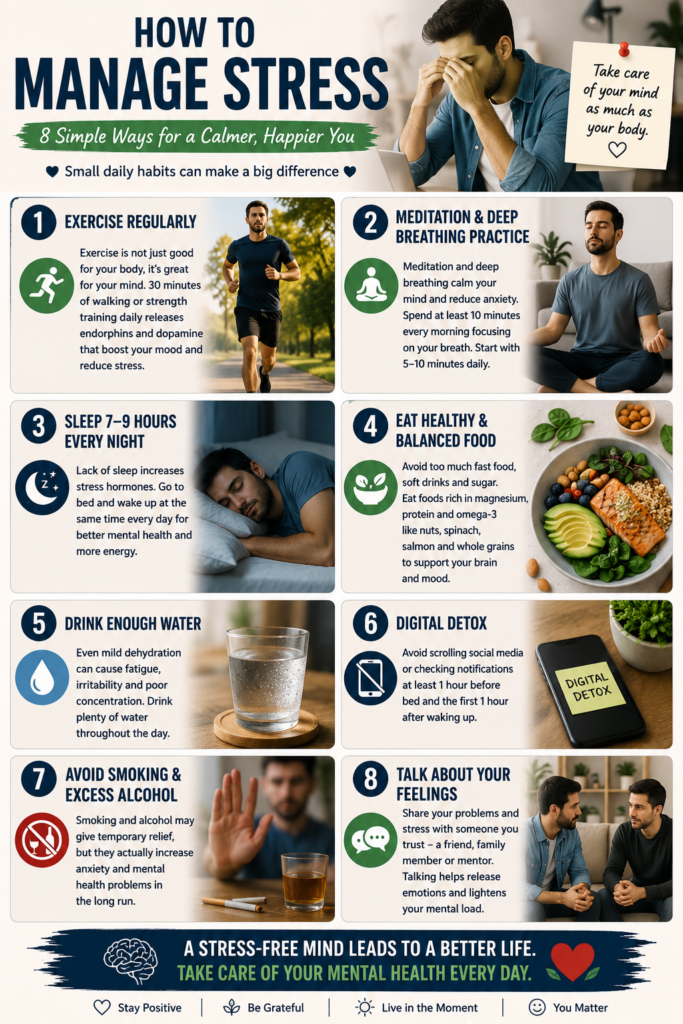
5. Drink adequate water
If there is a shortage of water in the body, fatigue, irritation, and concentration problems can appear. Try to drink adequate water throughout the day.
6. Digital Detox
At least 1 hour before going to sleep and the first 1 hour after waking up, completely stop scrolling through Facebook, Instagram, or notifications.
7. Avoid smoking and excessive Alcohol
Many people think these reduce Stress, but in reality, they can increase anxiety and mental problems even more in the long run.
8. Expressing feelings and hanging out
Share your suffering or mental stress openly with a very trusted friend or family member. The dense clouds accumulated inside become lighter just by speaking out the thoughts.
When should you seek help from a doctor or Mental Health Professional?
Mental problems are not imaginary matters. If the following situations do not come under control through domestic habits or one’s own efforts, help should be taken from a qualified Psychologist or Psychiatrist.
- Experiencing intense depression or anxiety for two weeks or longer.
- Having regular sleep problems (Insomnia).
- Being unable to concentrate on office, business, or studies.
- Isolating oneself from family and friends.
- Having problems controlling excessive anger, irritable mood, or emotions.
- Increased dependence on smoking, alcohol, or other addictions.
- Having thoughts of self-harm or suicidal thoughts.
Remember: Asking for help is not a sign of weakness; rather, it is proof of responsibility towards oneself.
Conclusion
Just like physical health, mental health is also an important foundation for a healthy life. Taking care of one’s own mental health, acknowledging one’s suffering when needed, and seeking help at the right time is not cowardice. Only when you are mentally healthy and calm can you protect the people around you.
Regular exercise, healthy eating habits, adequate sleep, Meditation, spending time with family, and taking expert advice if needed—these small habits can help maintain your mental well-being in the long run.
So, start talking to the person inside you from today! Love yourself, take care of yourself, stay mentally strong, and enjoy a beautiful and meaningful life!
FAQ
1. Why are the symptoms of depression in men different from women?
Answer: Women get the opportunity to express their sadness or pain socially (such as crying or talking). But men are taught to hide emotions from childhood. Therefore, depression in men is not expressed directly as sadness, but manifests in different ways as anger, an extremely irritable mood, excessive work addiction, or alcohol addiction.
2. Why is there so little discussion about men’s mental health?
Answer: In many societies, the concept is still prevalent that men must always remain strong and should not express their emotions. Due to this misconception, many men do not seek help in time.
3. Can mental stress directly create any physical disease?
Answer: Yes, absolutely. As a result of long-term mental stress, real physical diseases appear, such as high blood pressure, heart disease, Type-2 diabetes, fatty liver, severe gastric ulcers, and a decrease in the body’s immune system.
4. Are Stress and Anxiety the same thing?
Answer: No. Stress is usually a reaction to a specific stressful situation. On the other hand, Anxiety can create feelings of worry, restlessness, or fear for a long time, often without any clear reason.
5. A man very close to me is suffering mentally, how can I help him?
Answer: Do not go to give him any advice. Listen to him calmly without judging him foolishly (Without Judgment). Make him understand that you are by his side and encourage him to go to a mental health expert or psychologist.
Disclaimer
The information provided in this article is for educational and informational purposes only and should not be considered medical advice, diagnosis, or treatment. Always consult a qualified doctor or healthcare professional regarding any medical concerns, symptoms, or before making changes to your diet, exercise, or treatment plan. Never ignore professional medical advice or delay seeking treatment based on information from this website. Healthyora and the author are not responsible for any decisions or actions taken based on the content of this article.
luiyffvtgzreuihvpzgldtndndewfx